Martin Luther — "A woman is a human being with a womb."
A woman is a human being with a womb.
A woman is a human being with a womb.
Click any product to generate a realistic preview. Up to 3 at a time.
* Initial load can take up to 90 seconds — revising the preview in another color is nearly instant.
"To kill a peasant is not murder; it is helping to extinguish the conflagration. Let there be no half measures! Crush them! Cut their throats! Here, there, everywhere! Whoever can, strike, slay, stab, …"
"He who does not understand the devil, does not understand God."
"I cannot choose but adhere to the word of God, which has possession of my conscience; nor can I possibly, nor will I even make any recantation, since it is neither safe nor honest to act contrary to c…"
"To be sure, I would not execute a Jew; I would not even allow him to be a farmer, but I would drive him out of the country."
"The will is a beast of burden. If God mounts it, it wishes and goes as God wills; if Satan mounts it, it wishes and goes as Satan wills; Nor can it choose its rider... the riders contend for its posse…"
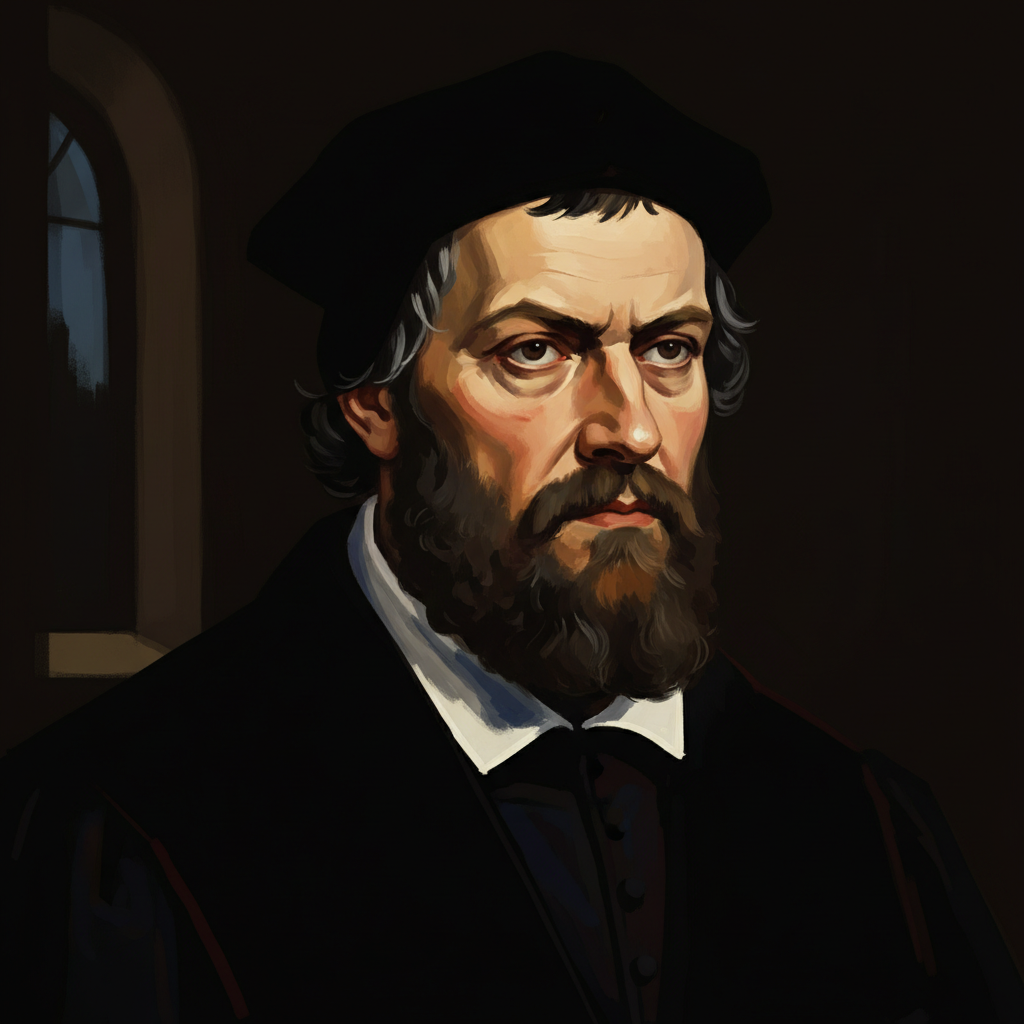
German theologian whose 95 Theses (1517) launched the Protestant Reformation and broke the Catholic Church's monopoly on Western Christianity. Closely associated with Philipp Melanchthon (Lutheran systematizer) and John Calvin (later Reformer who built on Luther's break). For an intellectual contrast, see Pope Leo X, Renaissance pope (1513-1521) — Leo X's indulgence sales triggered Luther's break and Leo excommunicated him in 1521 — Luther's entire Reformation is structured as a direct answer to the indulgence-funded Vatican Leo represented.
Found in 1 providers: deepseek
1 source checked
This statement defines a woman by her reproductive biology, framing childbearing capacity as central to female identity. It reduces womanhood to anatomy, treating the womb as the defining feature that distinguishes women from men. In plain modern terms, it argues that motherhood potential is what makes a woman a woman, rather than personality, intellect, achievements, or social role. It presents biology as destiny and purpose bundled together.
Luther, a former Augustinian monk who married ex-nun Katharina von Bora in 1525, openly rejected Catholic celibacy and championed marriage and procreation as godly callings. He fathered six children and praised Katharina as a household manager. His theology elevated domestic family life over monastic vows, and he repeatedly wrote that women were created primarily for bearing children, reflecting his literal reading of Genesis and his break from clerical celibacy.
In early-modern Europe, the Reformation was dismantling monasticism and redefining gender roles around the Protestant household. Maternal mortality was staggering, families averaged many pregnancies, and a woman's social worth was tightly bound to fertility and marriage. Humanist debates over women's nature, the querelle des femmes, were active, while reformers replaced the Virgin Mary ideal with the wife-mother model. Luther's Germany saw marriage become a civic and religious duty rather than a lesser spiritual path.
AI-generated insights based on extensive research and information for context. Factual errors? Email [email protected].
Your cart is empty