Moses — "And the children of Israel stripped themselves of their ornaments by the mount H…"
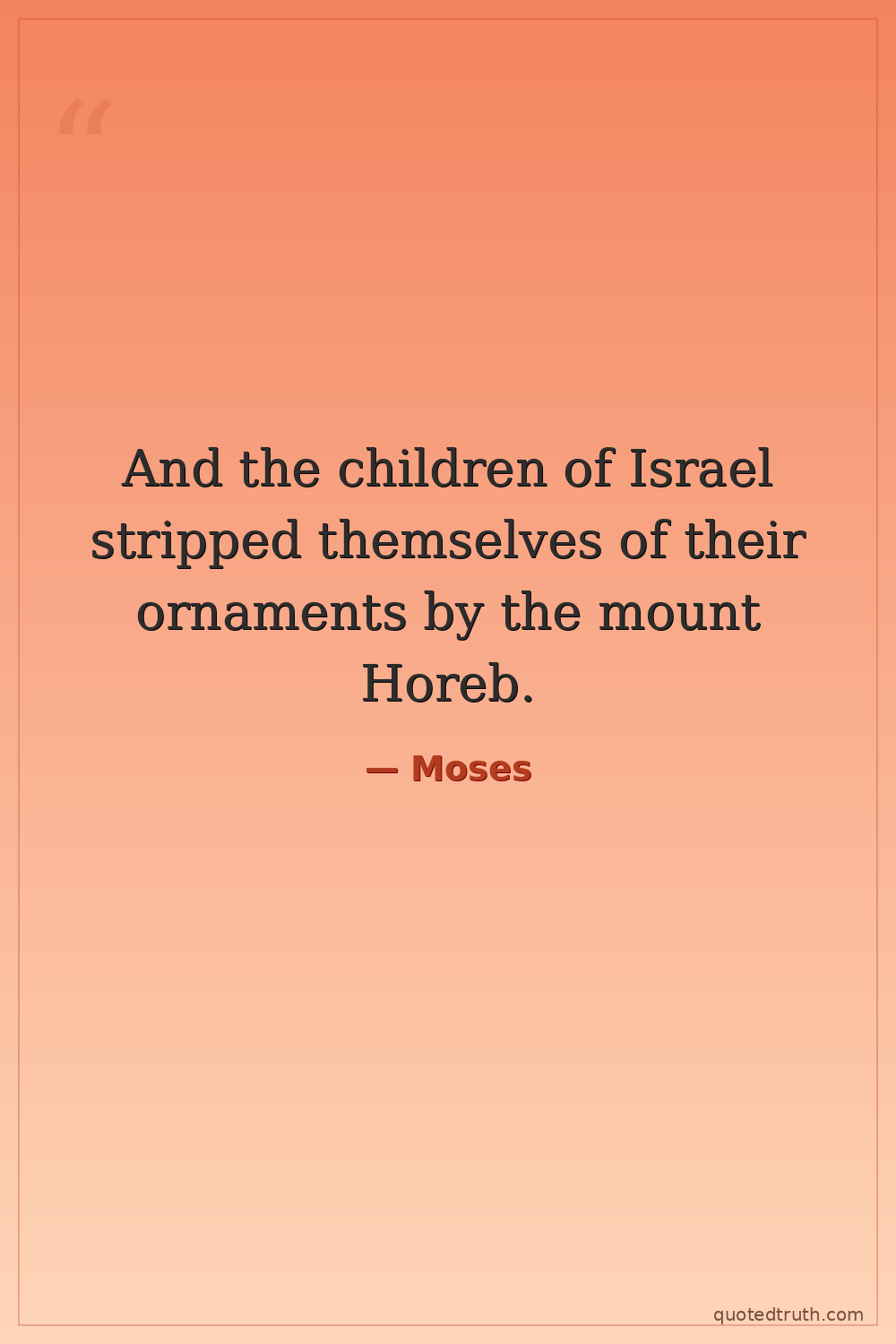
And the children of Israel stripped themselves of their ornaments by the mount Horeb.
And the children of Israel stripped themselves of their ornaments by the mount Horeb.
Click any product to generate a realistic preview. Up to 3 at a time.
* Initial load can take up to 90 seconds — revising the preview in another color is nearly instant.
"You shall not give false testimony against your neighbor."
"Doth God need my constant nagging?"
"The Lord your God is with you wherever you go."
"But as truly as I live, all the earth shall be filled with the glory of the Lord."
"Man does not live on bread alone but on every word that comes from the mouth of the LORD."
Exodus 33:6, describing the people's reaction to God's anger.
Date: c. 13th century BCE (biblical account)
GeneralFound in 1 providers: grok
1 source checked
After a serious wrongdoing, the people took off their jewelry and fine decorations as a public sign of grief, humility, and regret. Stripping away outward displays of wealth and beauty became a way of showing they were sorry and wanted to change. It captures the idea that genuine remorse often shows up as giving up status symbols, not just saying the right words.
Moses led the Israelites after they worshipped the golden calf, crafted from their own gold earrings. As lawgiver, he demanded visible repentance, not just private feelings. Removing ornaments at Horeb, the mountain where he received the Ten Commandments, directly mirrors the sin: the same jewelry that fueled idolatry now became the token of their turning back. It fits his role as stern mediator between a holy God and a wayward people.
In the ancient Near East around the 13th century BCE, jewelry signaled tribal identity, wealth, and devotion to specific gods; Egyptian and Canaanite amulets were worn as protective charms. Removing ornaments was a recognized mourning and penitential rite across the region. At Mount Horeb, freshly freed Hebrew slaves were forging a distinct covenant identity, rejecting the surrounding polytheistic culture where adornment and idol worship were tightly linked.
AI-generated insights based on extensive research and information for context. Factual errors? Email [email protected].
Your cart is empty