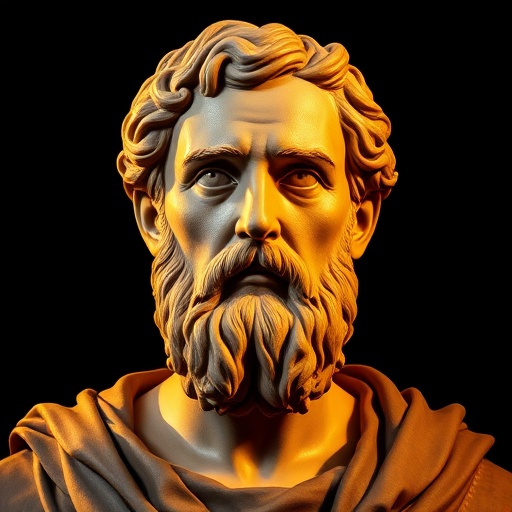
Saint Paul — "Awake to righteousness, and sin not; for some have not the knowledge of God: I s…"
Awake to righteousness, and sin not; for some have not the knowledge of God: I speak this to your shame.
Awake to righteousness, and sin not; for some have not the knowledge of God: I speak this to your shame.
Click any product to generate a realistic preview. Up to 3 at a time.
* Initial load can take up to 90 seconds — revising the preview in another color is nearly instant.
"For to me to live is Christ, and to die is gain."
"For I could wish that I myself were accursed from Christ for my brethren, my kinsmen according to the flesh."
"I have fought the good fight, I have finished the race, I have kept the faith."
"For the wages of sin is death; but the gift of God is eternal life through Jesus Christ our Lord."
"But I suffer not a woman to teach, nor to usurp authority over the man, but to be in silence."
1 Corinthians 15:34, a call to righteousness and shame for ignorance
Date: c. 53-57 CE
BiblicalFound in 2 providers: gemini,grok
2 sources checked
Wake up and start living rightly instead of drifting into wrong behavior. Some people in your community genuinely do not know God, and your sloppy conduct is part of why. The speaker is calling out spiritual laziness directly, telling listeners they should be embarrassed that their lifestyle is undermining the credibility of what they claim to believe and harming people still searching for truth.
Paul wrote this to the Corinthian church, a community he personally founded and felt responsible for. As a former Pharisee trained under Gamaliel, he prized rigorous moral discipline, and as a missionary he constantly worried that believers' bad behavior would discredit the gospel he traveled thousands of miles to preach. Publicly shaming a congregation was a rhetorical tool he used repeatedly in his letters to provoke reform.
First-century Corinth was a wealthy port city notorious across the Roman Empire for sexual permissiveness, drunken banquets, and idol worship. New Christian converts there were surrounded by pagan neighbors watching to see if this strange new faith produced different lives. Paul was writing around 55 CE, when Christianity was a tiny, suspect sect whose survival depended heavily on members behaving visibly better than the surrounding Greco-Roman culture.
AI-generated insights based on extensive research and information for context. Factual errors? Email [email protected].
Your cart is empty