John Wesley — "Beware of that smooth, plausible, pleasing voice, 'You may be saved, though you …"
Beware of that smooth, plausible, pleasing voice, 'You may be saved, though you keep your sins.'
Beware of that smooth, plausible, pleasing voice, 'You may be saved, though you keep your sins.'
Click any product to generate a realistic preview. Up to 3 at a time.
* Initial load can take up to 90 seconds — revising the preview in another color is nearly instant.
"I have often thought, that if I were to choose a place to preach in, it should be in the open air."
"I am not afraid that the people called Methodists should ever cease to exist either in Europe or America. But I am afraid lest they should only exist as a dead sect, having the form of religion withou…"
"What is the Lord’s Supper? It is a feast upon a sacrifice."
"I am a very little man, and I have a very little heart."
"It is not possible for any one to be a true Christian believer, and not be a lover of mankind."
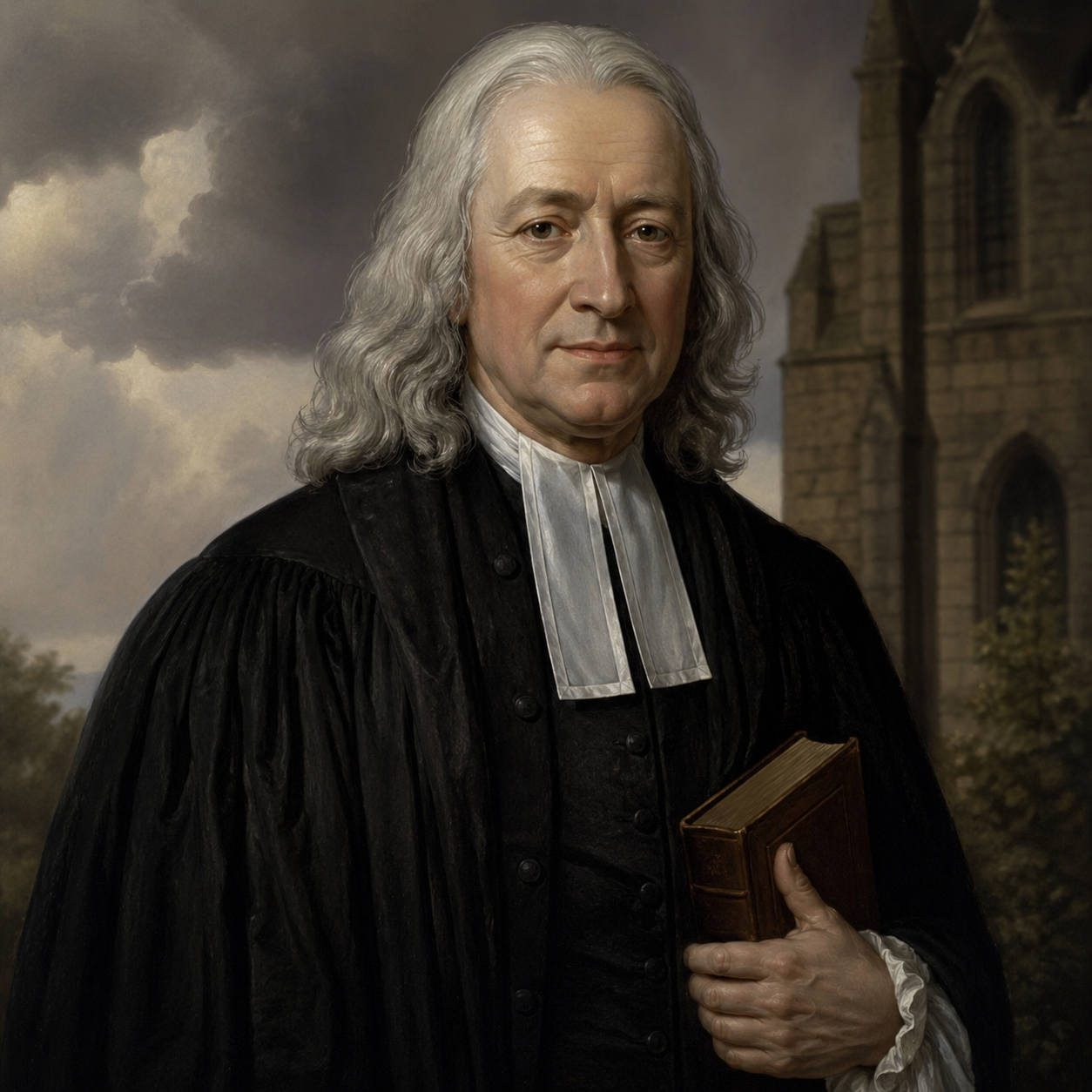
English Anglican cleric and founder of Methodism, whose open-air preaching and class-meeting structure created the largest 18th-century evangelical revival. Closely associated with Charles Wesley (his hymn-writing brother) and George Whitefield (early co-revivalist, later doctrinal opponent). For an intellectual contrast, see George Whitefield, Calvinist evangelical revivalist — Whitefield's predestinarian Calvinism vs Wesley's free-grace Arminian theology split the early Methodist movement permanently in the 1739-41 break. The founding evangelical Calvinist-Arminian schism — the two parallel evangelical traditions American Christianity descends from.
Found in 1 providers: grok
1 source checked
Be wary of comforting lies that tell you salvation is possible while you continue living in sin without change. True spiritual rescue requires transformation, not just a verbal claim. Anyone promising you can hold onto sinful habits and still be redeemed is deceiving you with attractive, easy words that feel good but corrupt genuine faith.
Wesley's entire ministry centered on sanctification — the active, ongoing process of becoming holy. He preached that genuine conversion produces visible moral change, founding the Methodist movement on disciplined, accountable community practice. His small-group 'class meetings' existed precisely to hold believers to behavioral transformation, directly opposing cheap grace theology that separated faith from conduct.
Eighteenth-century England saw widespread antinomianism — the belief that grace freed Christians from moral law entirely. The Church of England was often criticized as spiritually lax and comfortable. Wesley's evangelical revival directly challenged this cultural Christianity, where nominal belief coexisted with unchanged lives, drunkenness, exploitation, and immorality among both clergy and congregants.
AI-generated insights based on extensive research and information for context. Factual errors? Email [email protected].
Your cart is empty