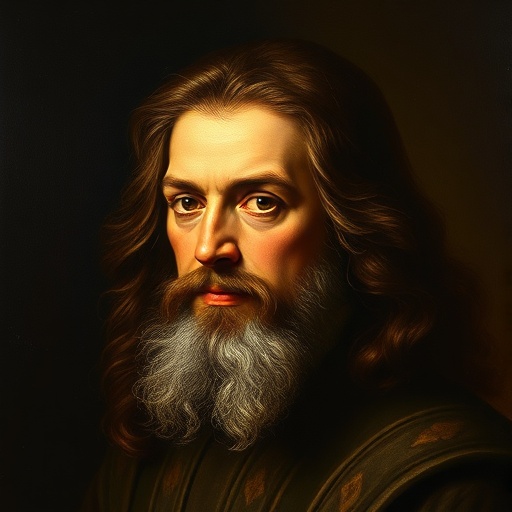
Leonardo da Vinci — "Blind ignorance misleads us and makes us content with this empty life."
Blind ignorance misleads us and makes us content with this empty life.
Blind ignorance misleads us and makes us content with this empty life.
Click any product to generate a realistic preview. Up to 3 at a time.
* Initial load can take up to 90 seconds — revising the preview in another color is nearly instant.
"The senses are of the earth, reason is of the soul."
"Just as a well-filled day brings blessed sleep, so a well-employed life brings a blessed death."
"The more subtle we are, the more we are deceived."
"I have offended God and mankind because my work didn't reach the quality it should have."
"Where there is shouting, there is no true knowledge."
Found in 1 providers: grok
1 source checked
Ignorance doesn't just leave gaps — it actively deceives, making a shallow, unexplored existence feel complete. When you don't know what you're missing, you stop searching. Complacency born of unknowing is the real danger. A life without curiosity and inquiry remains hollow, yet feels full to those living it. The warning is that contentment itself becomes the enemy when it stems from never having questioned anything deeply.
Da Vinci spent decades filling thousands of notebook pages studying anatomy, engineering, geology, botany, and optics — disciplines he largely taught himself. He dissected corpses, diverted rivers, and sketched flying machines centuries before aviation. His entire career was a living argument against intellectual complacency. This conviction that observation defeats ignorance drove him to produce both the Mona Lisa and detailed anatomical drawings of the human heart in the same lifetime.
The Renaissance was a deliberate break from medieval deference to Church authority, an era when curiosity itself had been suspect. In 15th–16th century Italy, humanists championed direct observation and classical learning, yet most people remained illiterate and bound by superstition. Scientific inquiry was emerging but fragile. Ignorance wasn't simply unfortunate — it was structurally enforced. Da Vinci's call to reject comfortable unknowing was both philosophically radical and personally risky.
AI-generated insights based on extensive research and information for context. Factual errors? Email [email protected].
Your cart is empty