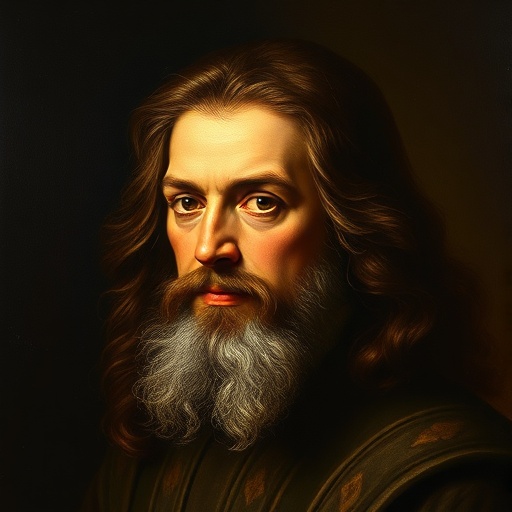
Leonardo da Vinci — "Life well spent is long."
Life well spent is long.
Life well spent is long.
Click any product to generate a realistic preview. Up to 3 at a time.
* Initial load can take up to 90 seconds — revising the preview in another color is nearly instant.
"The water that you touch in a river is the last of that which has passed, and the first of that which comes; so with present time."
"The wise man will want to be rich only in order to be able to help himself and his friends."
"The memory of all that is past is as nothing in comparison with the knowledge of what is to come."
"Among the great things which are to be found among us, the Being of Nothingness is the greatest."
"The soul desires to dwell with the body, because without the corporeal instruments, it can neither act nor feel."
Found in 1 providers: grok
1 source checked
The length of a life isn't measured in years but in how fully and purposefully it's lived. A life dense with learning, creation, and contribution feels expansive and complete regardless of its actual duration. A life squandered in passivity feels short and empty no matter how many years pass. What you do with your time — not how much of it you have — determines whether your life was truly long.
Da Vinci lived only 67 years yet produced the Mona Lisa, The Last Supper, precise anatomical drawings, engineering blueprints for flying machines, and thousands of notebook pages. He simultaneously pursued painting, sculpture, anatomy, geology, botany, and music. His relentless curiosity across every discipline he encountered embodied this conviction — every hour filled with observation, experiment, and creation made his relatively brief life feel extraordinarily vast by any measure of output.
Da Vinci lived during the Italian Renaissance (1452–1519), when humanism was reshaping how Europeans understood the purpose of a human life. Medieval theology had framed earthly existence as mere preparation for the afterlife; Renaissance thought elevated worldly achievement, knowledge, and craft as worthy ends. With Gutenberg's press spreading ideas rapidly and patrons like the Medici funding intellectual ambition, industrious lives became historically visible — and wasted potential carried genuine moral weight for the first time.
AI-generated insights based on extensive research and information for context. Factual errors? Email [email protected].
Your cart is empty