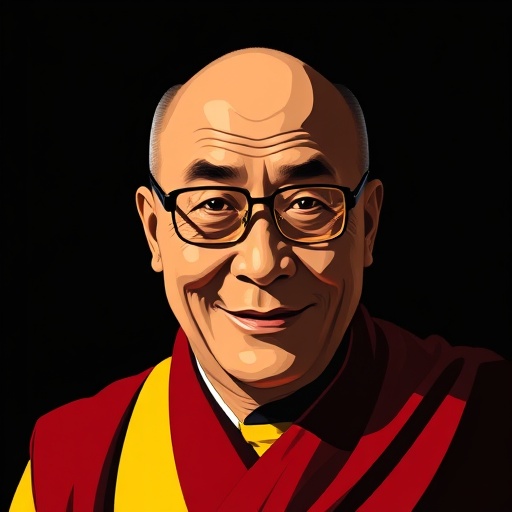
Dalai Lama (14th) — "Choose to be optimistic, it feels better."
Choose to be optimistic, it feels better.
Choose to be optimistic, it feels better.
Click any product to generate a realistic preview. Up to 3 at a time.
* Initial load can take up to 90 seconds — revising the preview in another color is nearly instant.
"The more time you spend thinking about yourself, the more suffering you will experience."
"My father was a farmer, my mother was a farmer. My family was very poor."
"We need to educate people about the importance of inner values."
"Sometimes I tease people, saying that I am 2000 years old."
"I consider myself a simple Buddhist monk. Nothing more, nothing less."
Found in 1 providers: grok
1 source checked
Optimism is a deliberate act, not a condition you wait to feel. You can choose your mental orientation regardless of circumstances. Beyond philosophy, there's a blunt practical point: optimism simply produces a better inner experience than pessimism. It's not denial of hardship but an active decision about how to carry yourself. You don't need special wisdom to start — the choice itself is the practice, and the reward is immediate.
Tenzin Gyatso has lived in exile since China's 1959 occupation of Tibet, losing his homeland and watching his people systematically displaced. Despite decades of political frustration and personal loss, he consistently projects warmth and humor in public. His Buddhist training frames mental states as trainable rather than fixed. This quote isn't abstract — it's a compression of how he has actually operated: maintaining genuine joy under conditions that would justify bitterness.
The Dalai Lama rose to global prominence during the late Cold War and post-9/11 decades, periods saturated with existential anxiety. The early 21st century brought climate dread, political polarization, and a documented mental health crisis — especially among younger generations drowning in pessimistic media cycles. His message that optimism is choosable rather than circumstantial directly challenged both secular nihilism and passive fatalism, offering a practical alternative that required no doctrine, just a decision.
AI-generated insights based on extensive research and information for context. Factual errors? Email [email protected].
Your cart is empty