Claude Monet — "England did not care for our paintings."
England did not care for our paintings.
England did not care for our paintings.
Click any product to generate a realistic preview. Up to 3 at a time.
* Initial load can take up to 90 seconds — revising the preview in another color is nearly instant.
"I can only draw what I see."
"I'm not performing miracles, I'm using up and wasting a lot of paint…"
"I'm absolutely disgusted with myself. I'm a failure."
"I'm sick of this weather. It's always raining or cloudy."
"I'm so fed up with painting. I wish I had never started."
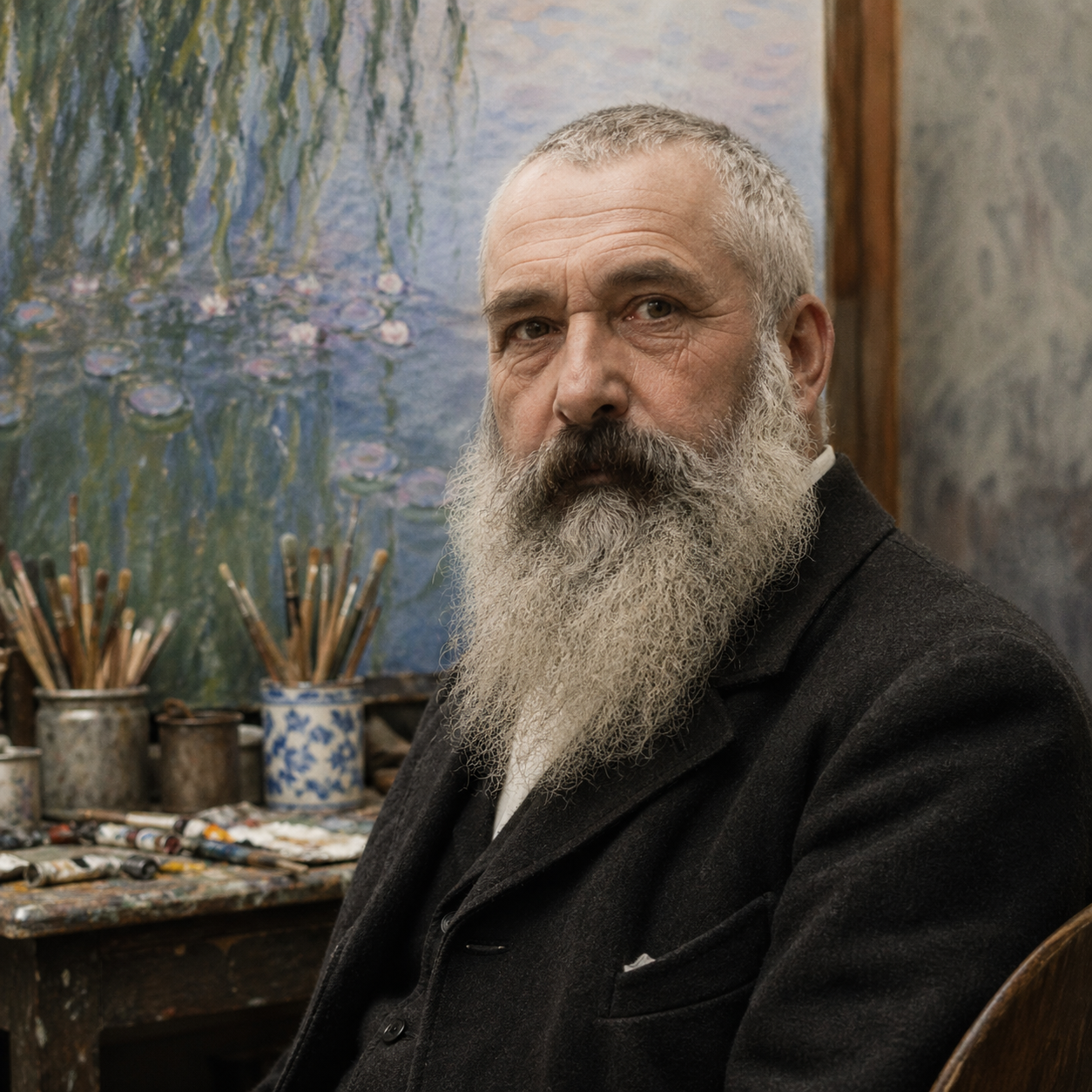
French Impressionist painter whose Impression, Sunrise (1872) named the movement, and whose late Water Lilies series anticipated 20th-century abstraction. Closely associated with Pierre-Auguste Renoir (Impressionist co-founder) and Camille Pissarro (Impressionist mentor figure). For an intellectual contrast, see the Académie des Beaux-Arts and the Salon, the French art establishment of the 1860s-70s — The Académie rejected Monet and the Impressionists throughout the 1860s-70s, forcing them to organize the 1874 Salon des Refusés that became Impressionism's launch. Monet's career is the canonical example of an artistic revolution that bypassed institutional gatekeeping — the Académie's rejection inadvertently created modernism.
Personal observation about the reception of Impressionist art in England
Date: Late 1800s
Art & CreativityFound in 1 providers: gemini
1 source checked
Your cart is empty