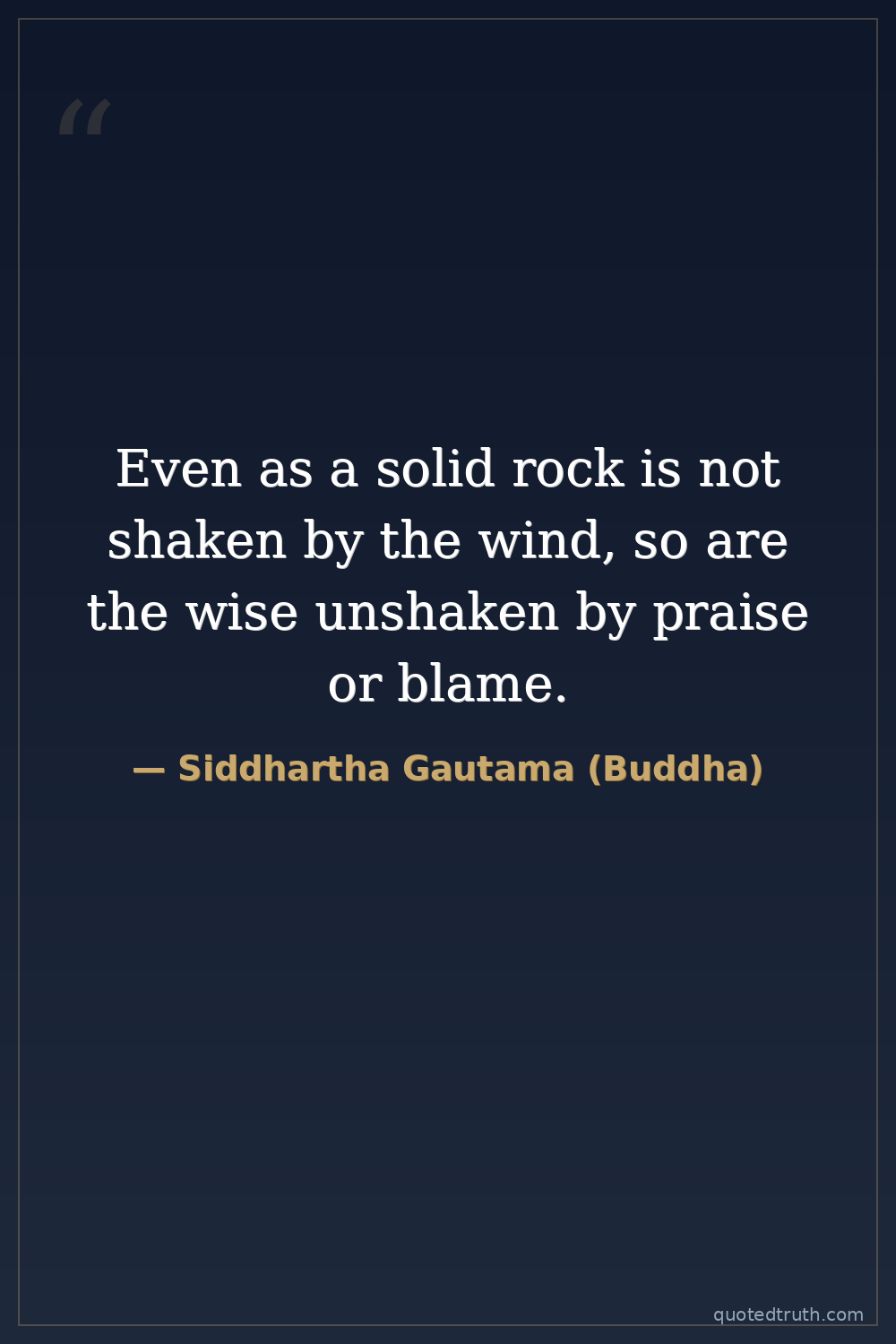
Siddhartha Gautama (Buddha) — "Even as a solid rock is not shaken by the wind, so are the wise unshaken by prai…"
Even as a solid rock is not shaken by the wind, so are the wise unshaken by praise or blame.
Even as a solid rock is not shaken by the wind, so are the wise unshaken by praise or blame.
Click any product to generate a realistic preview. Up to 3 at a time.
* Initial load can take up to 90 seconds — revising the preview in another color is nearly instant.
"The mind is everything. What you think you become."
"Thousands of candles can be lighted from a single candle, and the life of the candle will not be shortened. Happiness never decreases by being shared."
"If you truly loved yourself, you could never hurt another."
"To abstain from all evil, to cultivate the good, and to purify one's mind — this is the teaching of all Buddhas."
"Do not believe anything simply because you have heard it. Do not believe in traditions because they have been handed down for many generations. Do not believe anything because it is spoken and rumored…"
Found in 1 providers: grok
1 source checked
Stable people don't get rattled by what others say about them. Compliments don't inflate their ego, and criticism doesn't crush their spirit. They've built an inner foundation so steady that outside opinions—whether flattering or harsh—pass over them without disturbing who they are. Real wisdom means your sense of self doesn't rise and fall with every review, comment, or reaction from the crowd around you.
The Buddha spent six years as a wandering ascetic and faced constant judgment—praised as a teacher, dismissed as a dropout prince, challenged by rival philosophers. His entire awakening under the Bodhi tree involved resisting Mara's temptations of flattery and fear. Equanimity (upekkha) became one of his Four Sublime States, and teaching disciples to stay unmoved by the eight worldly winds—gain, loss, fame, disrepute, praise, blame, pleasure, pain—was central to his path.
In 5th-century BCE northern India, reputation governed everything in a rigid caste-and-honor society where Brahmin priests, kings, and competing Shramana movements fought publicly for followers. Wandering teachers were judged on crowd reactions and royal patronage. Siddhartha abandoned his Shakya princely status—a massive social blow—to seek truth outside this status game. His teaching on imperturbability directly challenged a culture where public praise and shame dictated identity, offering liberation from the tyranny of others' opinions.
AI-generated insights based on extensive research and information for context. Factual errors? Email [email protected].
Your cart is empty