Martin Luther — "Even if the Antichrist appears, what greater evil can he do than what you have d…"
Even if the Antichrist appears, what greater evil can he do than what you have done and do daily?
Even if the Antichrist appears, what greater evil can he do than what you have done and do daily?
Click any product to generate a realistic preview. Up to 3 at a time.
* Initial load can take up to 90 seconds — revising the preview in another color is nearly instant.
"If I profess with the loudest voice and clearest exposition every portion of the truth of God except precisely that little point which the world and the devil are at that moment attacking, I am not co…"
"A happy fart never comes from a miserable ass."
"We should not break our heads at work and injure our bodies … I myself used to do such things, and I have racked my brains because I still have not overcome the bad habit of overworking. Nor shall I o…"
"The peasants deserve death for three reasons: they have broken their oath of allegiance, they have committed murder, and they have robbed monasteries."
"I HAVE GREATER CONFIDENCE IN MY WIFE AND MY PUPILS THAN I HAVE IN CHRIST."
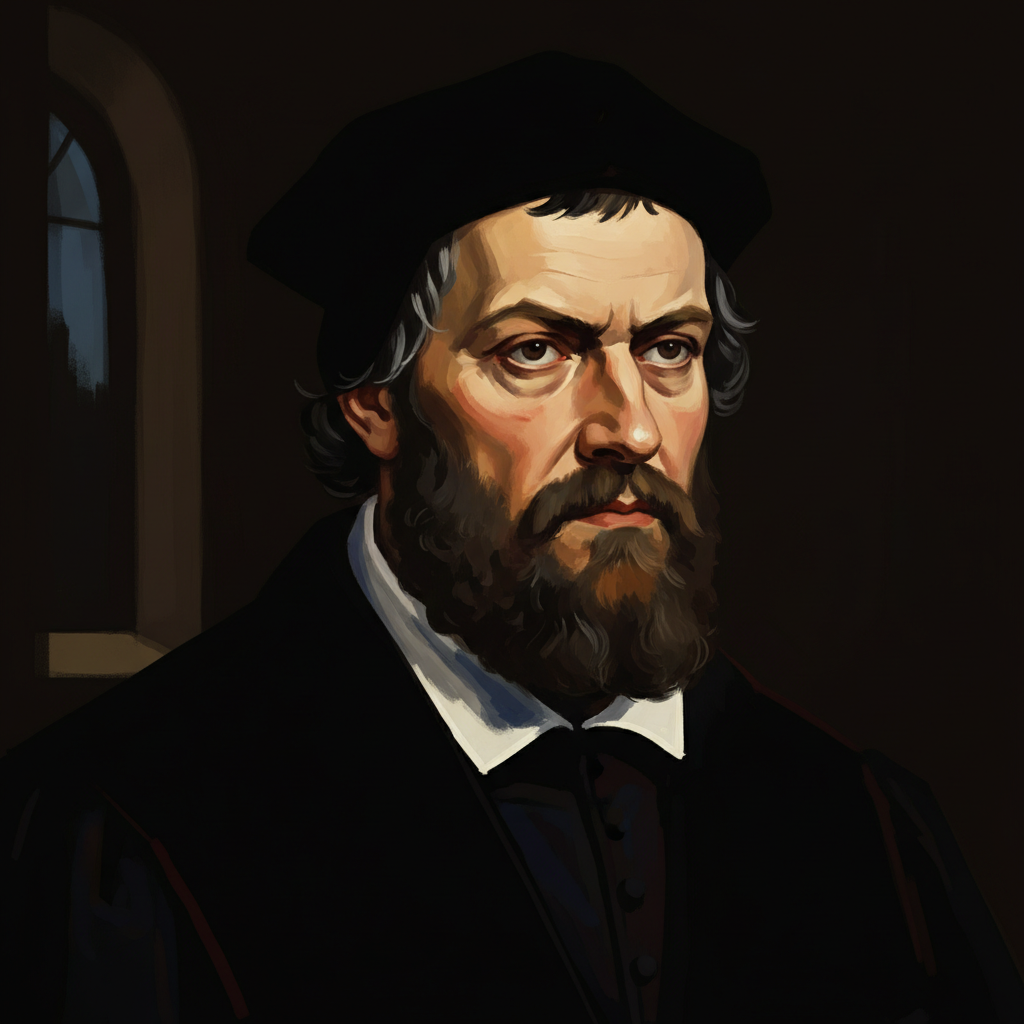
German theologian whose 95 Theses (1517) launched the Protestant Reformation and broke the Catholic Church's monopoly on Western Christianity. Closely associated with Philipp Melanchthon (Lutheran systematizer) and John Calvin (later Reformer who built on Luther's break). For an intellectual contrast, see Pope Leo X, Renaissance pope (1513-1521) — Leo X's indulgence sales triggered Luther's break and Leo excommunicated him in 1521 — Luther's entire Reformation is structured as a direct answer to the indulgence-funded Vatican Leo represented.
Found in 1 providers: gemini
1 source checked
The speaker confronts listeners with a sharp rhetorical challenge: the feared future villain could not possibly commit worse wrongs than the ones his audience already commits routinely. It flips the focus from distant apocalyptic threats to present moral failings, arguing that everyday corruption, hypocrisy, and sin are themselves catastrophic. The warning is inward: stop dreading a monster on the horizon and examine the damage you cause now.
Luther built his reformation around exposing ordinary sin and institutional corruption rather than chasing external enemies. As an Augustinian monk turned theologian, he preached total human depravity and justification by faith alone, insisting every believer confront personal guilt. He frequently accused the papacy of being the Antichrist, so inverting the image to indict daily behavior fits his pulpit style of shaming complacent Christians into repentance and reform.
In early sixteenth-century Germany, apocalyptic anxiety ran high: plague, Ottoman advances, peasant uprisings, and printing-press pamphlets fueled end-times speculation. Preachers routinely warned that the Antichrist was imminent, often identifying him with Rome or the Turks. Indulgence sales, clerical abuses, and widespread illiteracy in scripture created the moral landscape Luther attacked. Against this backdrop of doom-watching, redirecting attention from cosmic villains to personal sin was a pointed Reformation-era rebuke.
AI-generated insights based on extensive research and information for context. Factual errors? Email [email protected].
Your cart is empty