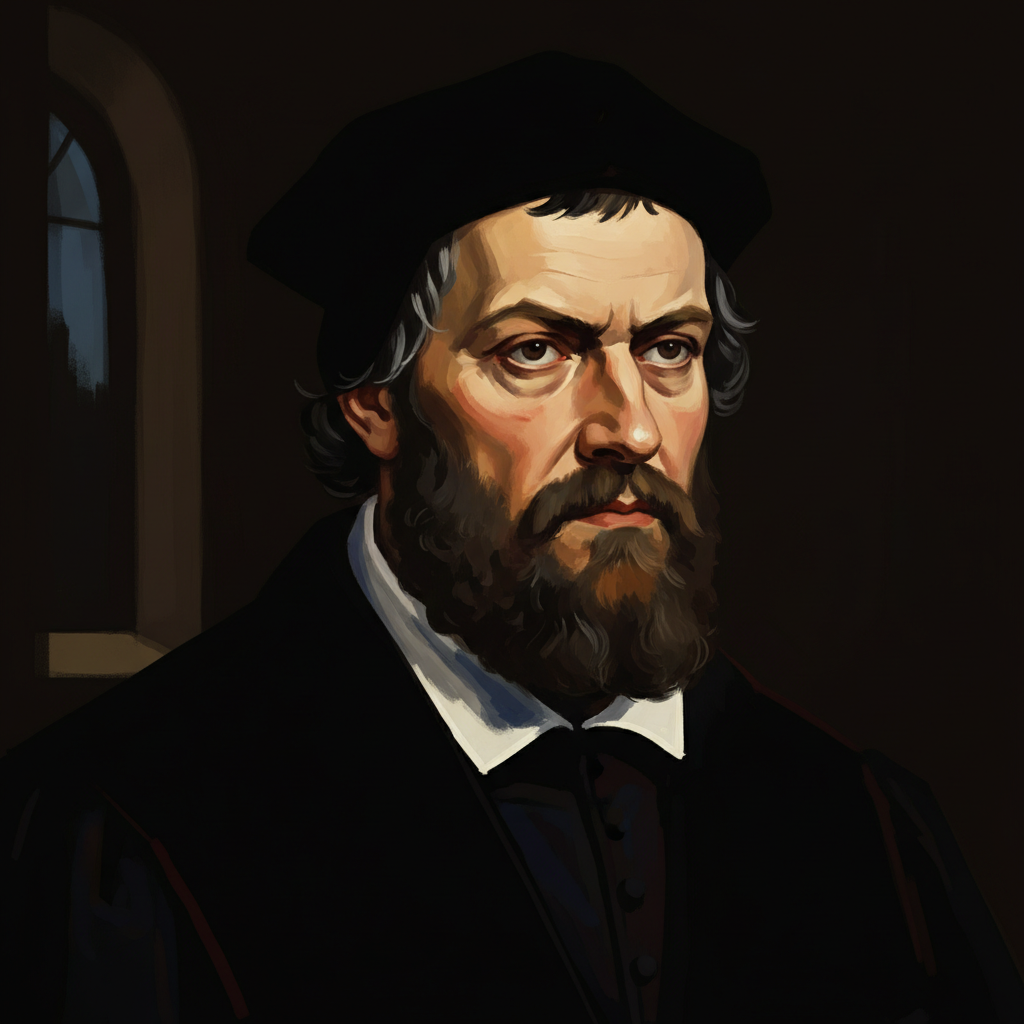
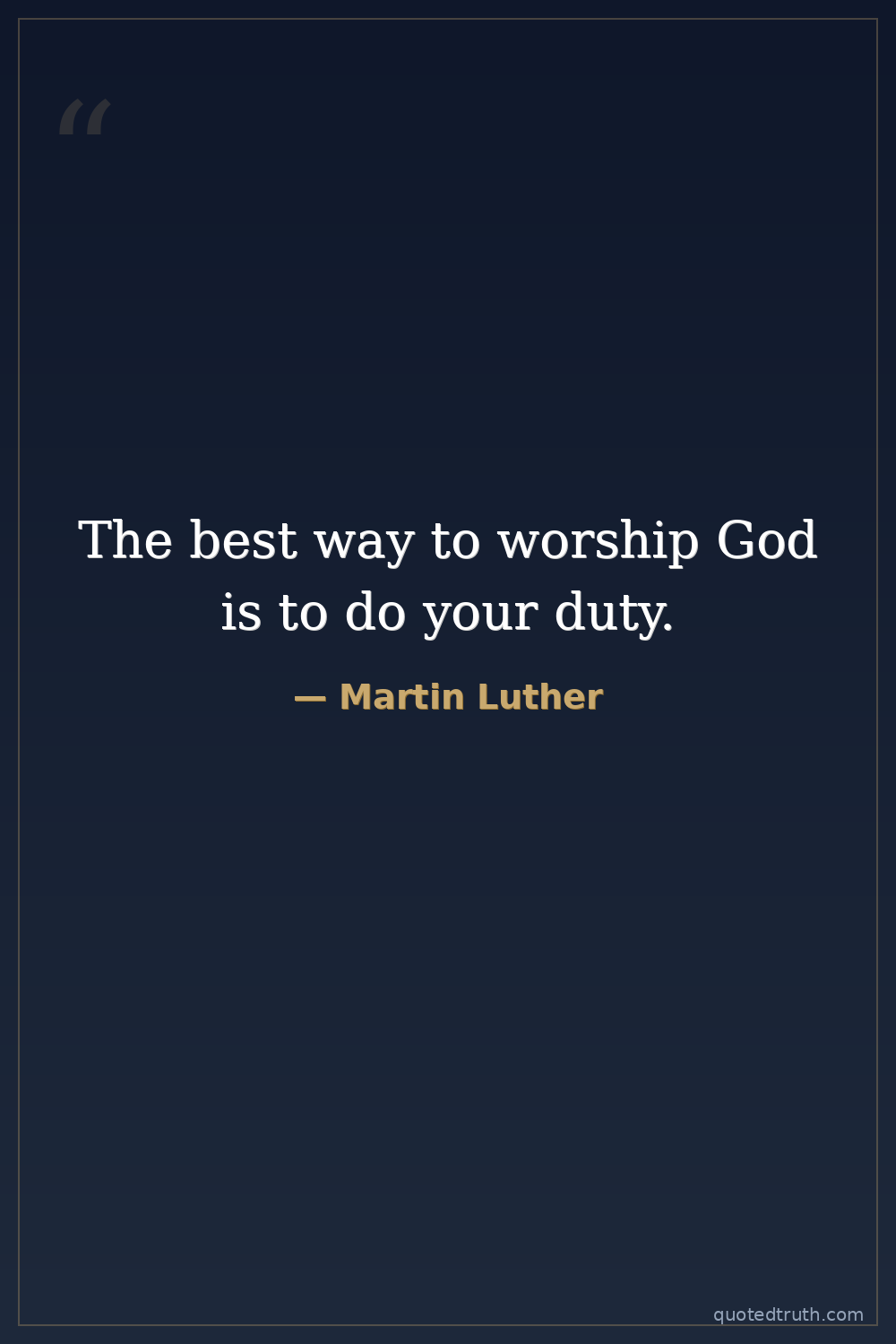
Martin Luther — "The best way to worship God is to do your duty."
The best way to worship God is to do your duty.
The best way to worship God is to do your duty.
Click any product to generate a realistic preview. Up to 3 at a time.
* Initial load can take up to 90 seconds — revising the preview in another color is nearly instant.
"Be a sinner and sin boldly, but believe and rejoice in Christ even more boldly, for he is victorious over sin, death, and the world."
"Whoever sticks his nose in every corner will get it stuck."
"We consider EVERYTHING allowable against the deception and depravity of the papal antichrist."
"We should not break our heads at work and injure our bodies … I myself used to do such things, and I have racked my brains because I still have not overcome the bad habit of overworking. Nor shall I o…"
"The hair on my head is a fine work of art, but it is not necessary for salvation."
German theologian whose 95 Theses (1517) launched the Protestant Reformation and broke the Catholic Church's monopoly on Western Christianity. Closely associated with Philipp Melanchthon (Lutheran systematizer) and John Calvin (later Reformer who built on Luther's break). For an intellectual contrast, see Pope Leo X, Renaissance pope (1513-1521) — Leo X's indulgence sales triggered Luther's break and Leo excommunicated him in 1521 — Luther's entire Reformation is structured as a direct answer to the indulgence-funded Vatican Leo represented.
Found in 1 providers: grok
1 source checked
Genuine devotion to God is shown through faithful action in everyday life, not just through prayer, ritual, or religious ceremony. Doing your work well, fulfilling your responsibilities to family and community, and meeting the obligations of your station are themselves acts of reverence. Worship is not confined to church walls or sacred hours; it lives in how you carry out the ordinary tasks placed before you with integrity and diligence.
Luther rejected the medieval idea that monks and priests held a higher spiritual calling than ordinary laborers. His doctrine of vocation taught that a farmer, cobbler, or mother served God through honest work just as fully as a clergyman. As an Augustinian monk turned reformer, he had personally lived both lives and concluded that hidden piety mattered less than faithful action in one's God-given station, dignifying common labor as sacred.
In early sixteenth-century Europe, the Catholic Church taught that monastic withdrawal, pilgrimages, indulgences, and sacramental rituals were the surest paths to salvation. Ordinary trades were considered spiritually inferior to clerical life. Luther's 1517 Ninety-Five Theses ignited the Reformation, challenging this hierarchy. By elevating secular duty to worship, he reshaped Protestant work ethics across Germany and beyond, dissolving the sacred-secular divide that had defined medieval Christendom for nearly a thousand years.
AI-generated insights based on extensive research and information for context. Factual errors? Email [email protected].
Your cart is empty