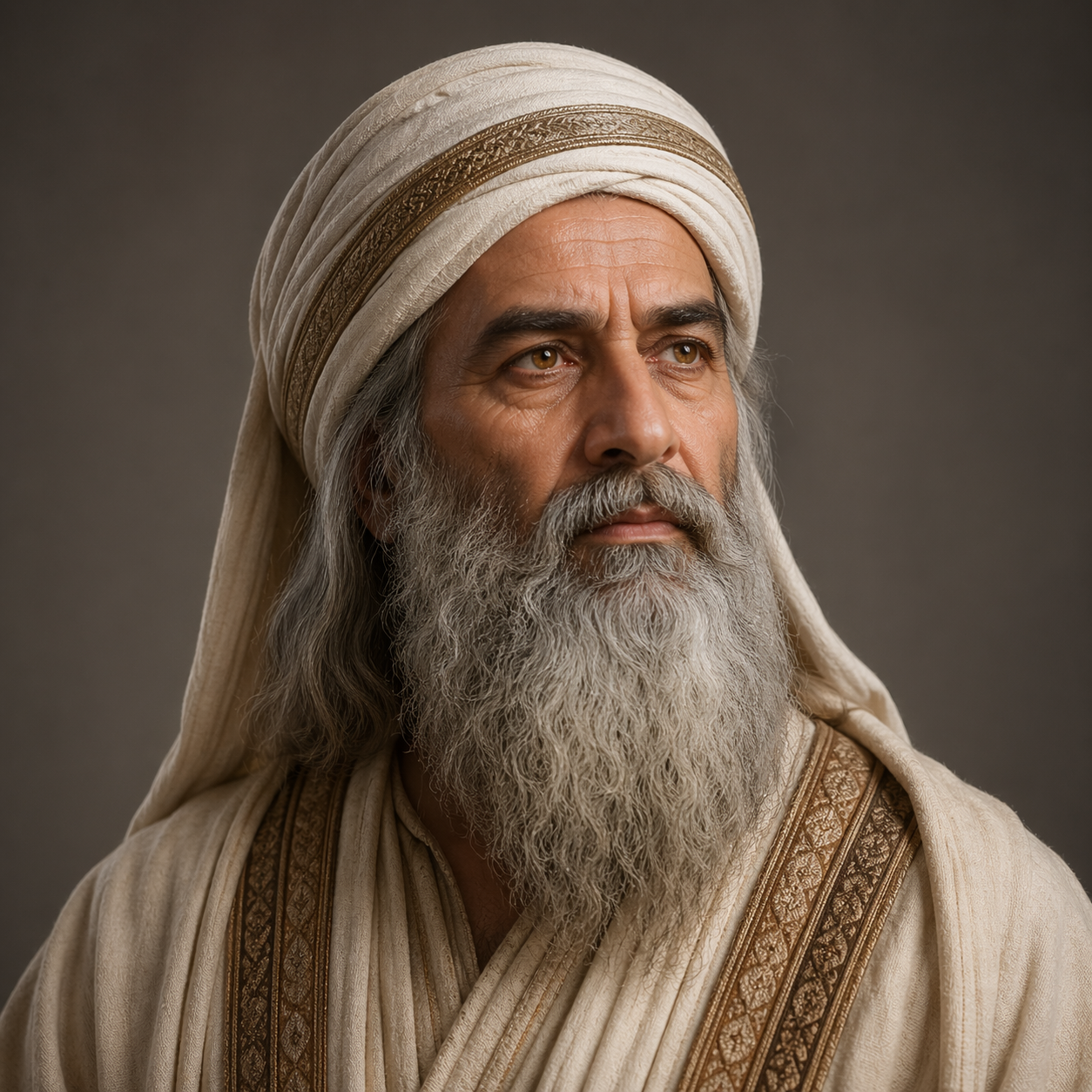
Zoroaster — "Everything that is created was first a Thought."
Everything that is created was first a Thought.
Everything that is created was first a Thought.
Click any product to generate a realistic preview. Up to 3 at a time.
* Initial load can take up to 90 seconds — revising the preview in another color is nearly instant.
"One good deed is worth a thousand prayers."
"The greatest battle is within oneself. And sometimes, that battle is with the urge to hit the snooze button."
"He who chooses the good mind, he who chooses righteousness, he who chooses the spirit of devotion, he shall attain immortality."
"The evil shall be cast into darkness, but the righteous shall walk in light."
"The wise Lord, Ahura Mazda, is the all-seeing, all-knowing, and all-just creator."
Iranian prophet who founded Zoroastrianism, the first major religion of cosmic dualism between good (Ahura Mazda) and evil (Angra Mainyu). Closely associated with The Buddha (near-contemporary Eastern moral-cosmological revolutionary). For an intellectual contrast, see Friedrich Nietzsche, German philosopher of 'beyond good and evil' — Nietzsche appropriated Zarathustra's name for Thus Spoke Zarathustra (1883) precisely to invert the original's moral cosmology — the historical Zoroaster founded the good-versus-evil framework Nietzsche's character announces the end of.
Found in 1 providers: gemini
1 source checked
Every object, institution, or outcome in the world began as a mental idea before it took physical form. Thought precedes action, and action precedes reality. What you choose to dwell on shapes what you eventually build, speak, or do. In practical terms, the quality of your life traces back to the quality of your thinking, because nothing reaches the outside world without first passing through the mind that conceived it.
Zoroaster taught that existence unfolds through three stages he called Humata, Hukhta, Hvarshta, meaning good thoughts, good words, and good deeds. Thought came first in that triad, the seed from which speech and action grew. As a reforming priest who reorganized ancient Iranian religion around moral choice, he treated the human mind as the true battleground between Ahura Mazda and the lie, making inner intention the origin of every ethical outcome.
Zoroaster lived in ancient Iran, likely between roughly 1500 and 1000 BCE, among pastoral tribes whose religion centered on ritual sacrifice, fire, and many nature gods. Literacy was rare and cosmology was dictated by priestly caste. Into that world he introduced a striking idea, that the invisible realm of thought had moral weight and cosmic consequence. Framing creation as beginning in mind, not in ritual act, was a radical inward turn for its age.
AI-generated insights based on extensive research and information for context. Factual errors? Email [email protected].
Your cart is empty