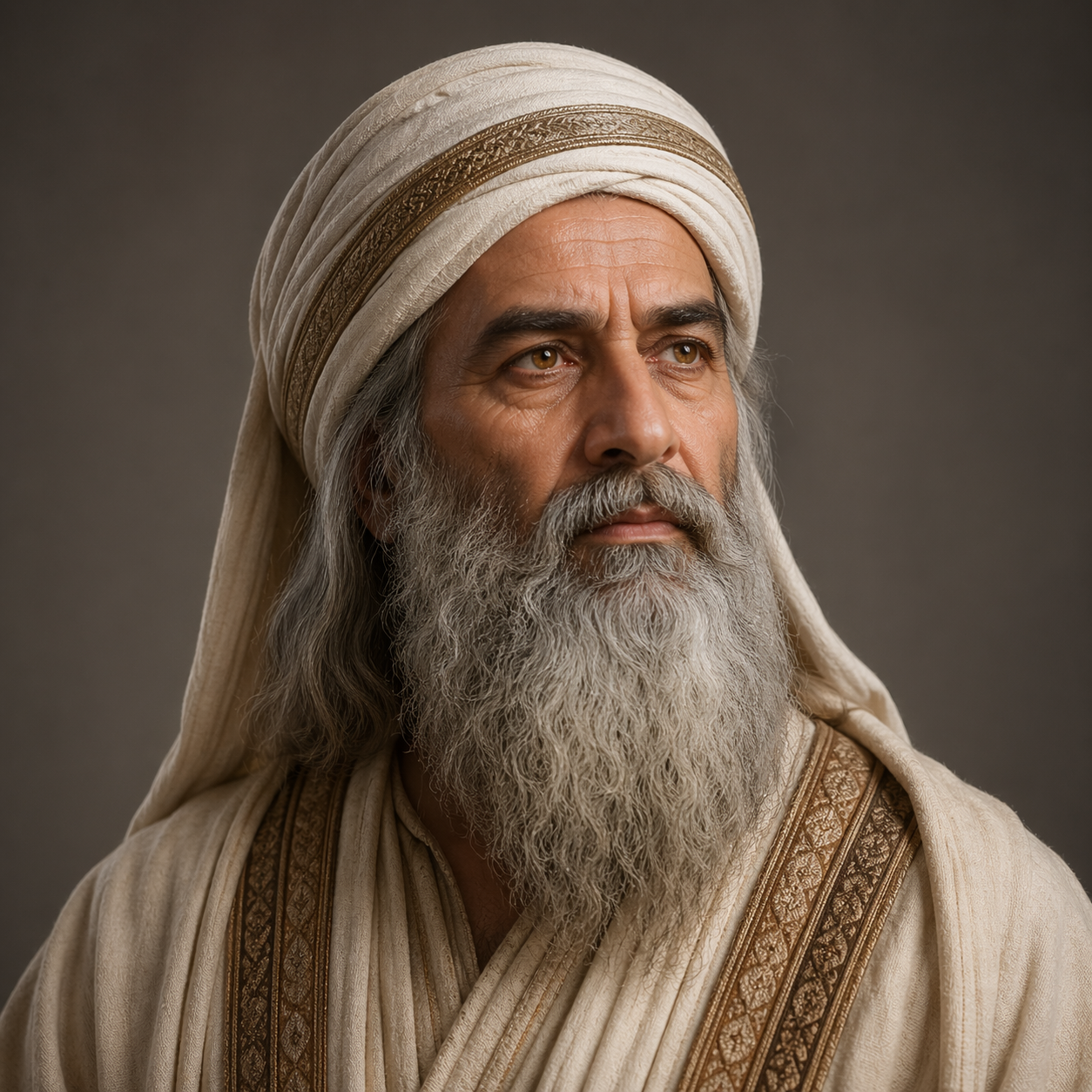
Zoroaster — "Evil to the evil, good reward to the good."
Evil to the evil, good reward to the good.
Evil to the evil, good reward to the good.
Click any product to generate a realistic preview. Up to 3 at a time.
* Initial load can take up to 90 seconds — revising the preview in another color is nearly instant.
"He who is good to the pious, he is good to himself, but he who is evil to the pious, he is evil to himself."
"He who is righteous, him I shall praise, but him who is wicked, him I shall denounce."
"The reward for righteousness is happiness, and for wickedness, unhappiness."
"May your wisdom grow with each passing day. And may your hair stay where it is."
"Speak the truth. Even if your voice cracks a little."
Iranian prophet who founded Zoroastrianism, the first major religion of cosmic dualism between good (Ahura Mazda) and evil (Angra Mainyu). Closely associated with The Buddha (near-contemporary Eastern moral-cosmological revolutionary). For an intellectual contrast, see Friedrich Nietzsche, German philosopher of 'beyond good and evil' — Nietzsche appropriated Zarathustra's name for Thus Spoke Zarathustra (1883) precisely to invert the original's moral cosmology — the historical Zoroaster founded the good-versus-evil framework Nietzsche's character announces the end of.
Found in 1 providers: deepseek
1 source checked
This saying expresses a moral law of consequence: your actions determine what comes back to you. People who do harm will eventually face harm, and people who act with integrity will receive genuine rewards. It is a clean cause-and-effect view of ethics, saying the universe keeps score fairly. No one escapes responsibility, and no good deed is wasted, even if the payoff is delayed.
Zoroaster built his entire religion around the choice between asha (truth, order) and druj (lie, chaos), teaching that each soul is judged at the Chinvat Bridge based on thoughts, words, and deeds. As a reformist priest who rejected the older polytheistic rituals, he reframed religion as personal moral accountability under Ahura Mazda. This quote is a compressed statement of that doctrine: free will plus certain judgment.
Zoroaster lived in Bronze Age or early Iron Age Persia, likely between 1500 and 1000 BCE, among tribal Indo-Iranian peoples whose religion centered on animal sacrifice, warrior gods, and ritual intoxicants. Morality was tribal and transactional. Against that backdrop, preaching a single wise creator and a universal moral ledger applied equally to kings and herders was radical. His ideas later shaped Persian empires and influenced Jewish, Christian, and Islamic eschatology.
AI-generated insights based on extensive research and information for context. Factual errors? Email [email protected].
Your cart is empty