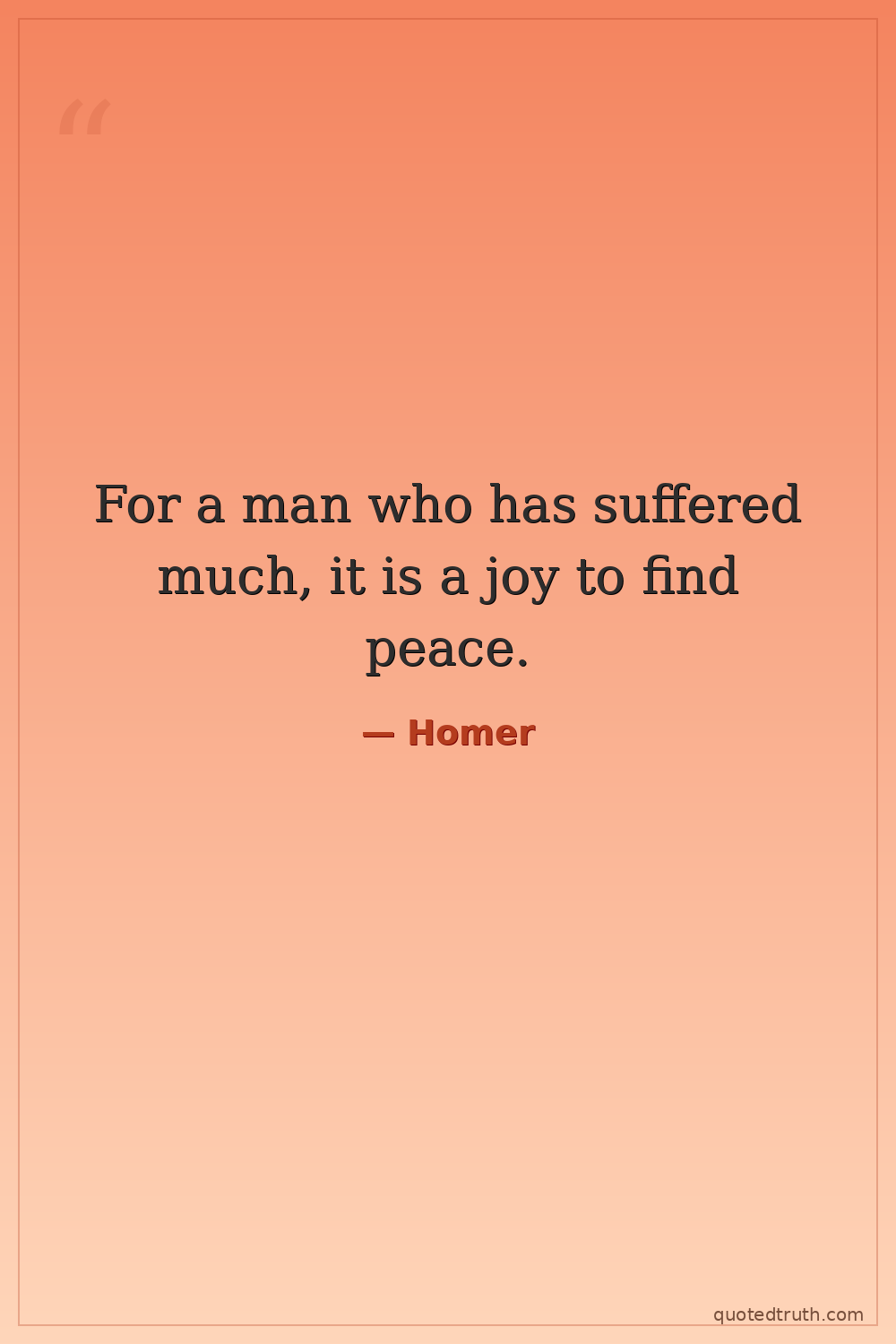
Homer — "For a man who has suffered much, it is a joy to find peace."
For a man who has suffered much, it is a joy to find peace.
For a man who has suffered much, it is a joy to find peace.
Click any product to generate a realistic preview. Up to 3 at a time.
* Initial load can take up to 90 seconds — revising the preview in another color is nearly instant.
"Even for the gods, it is not easy to know the minds of men."
"The day of our death is already fated."
"Nothing feebler than a man does the earth raise up, of all the things which breathe and move on the earth, for he believes that he will never suffer evil in the future, as long as the gods give him su…"
"The difficulty is to know when you have found your ideal."
"And overpowered by memory both men gave way to grief. Priam wept freely for man - killing Hector, throbbing, crouching before Achilles' feet as Achilles wept himself, now for his father, now for Patro…"
Greek epic poet traditionally credited with the Iliad and the Odyssey, the foundational works of Western literature. Closely associated with Hesiod (near-contemporary Greek poet of Theogony and Works and Days). For an intellectual contrast, see Plato, Greek philosopher of the Republic — Republic Book X bans the poets from the ideal city, with Homer as the explicit target — Plato argued Homer's gods set immoral examples and that poetry corrupts moral education. The founding philosophy-versus-poetry quarrel of Western thought.
Your cart is empty