Benjamin Franklin — "For age and want save while you may; no morning sun lasts a whole day."
For age and want save while you may; no morning sun lasts a whole day.
For age and want save while you may; no morning sun lasts a whole day.
Click any product to generate a realistic preview. Up to 3 at a time.
* Initial load can take up to 90 seconds — revising the preview in another color is nearly instant.
"He that resolves to mend hereafter, resolves not to mend now."
"The discontented man finds no easy chair."
"Justice will not be served until those who are unaffected are as outraged as those who are."
"He who endeavors to drink salt needs fear no thirst."
"When you incline to have new clothes, look first well over the old ones, and see if you cannot shift with them another year, either by scouring, mending, or even patching if necessary. Remember, a pat…"
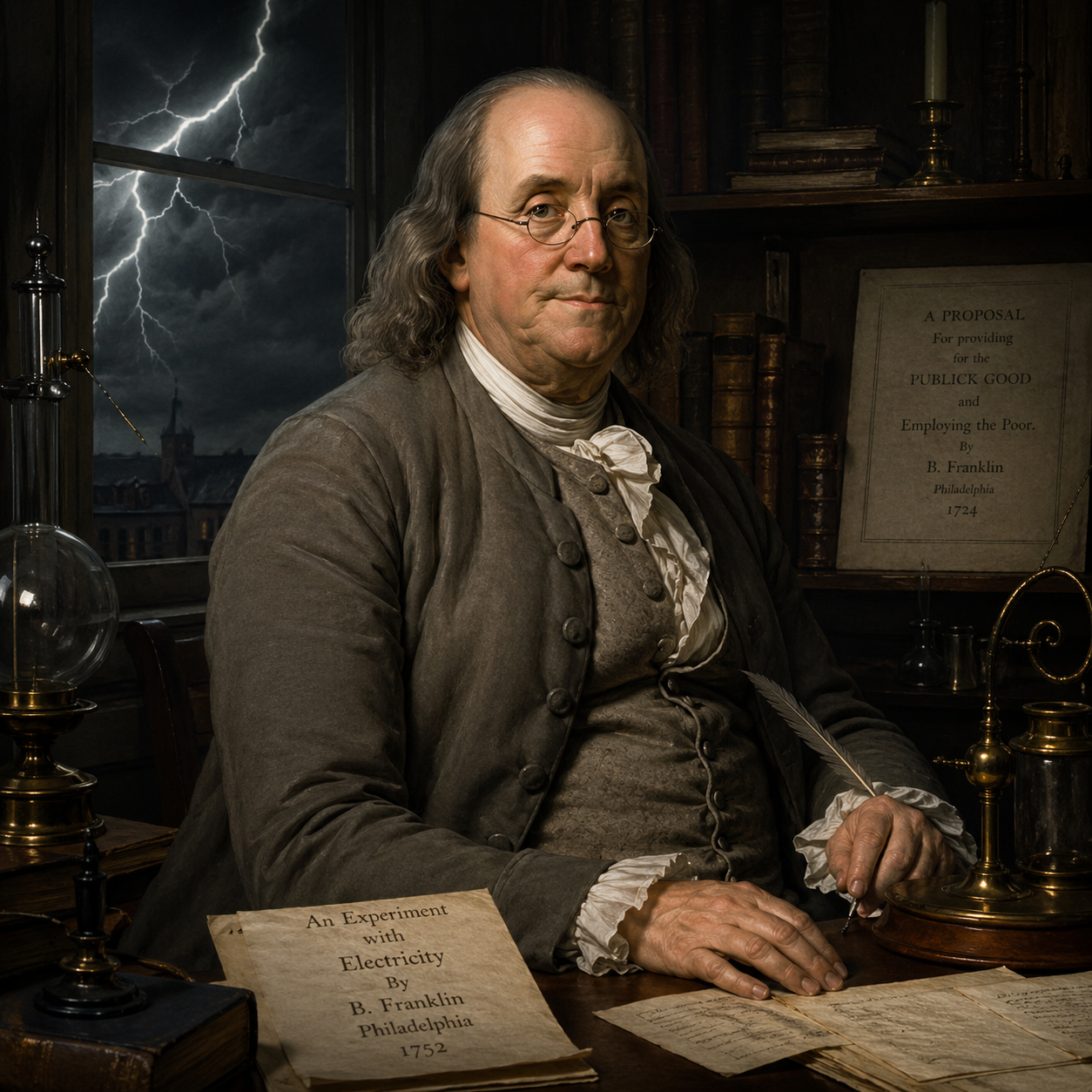
Polymath Founding Father, diplomat, and Poor Richard's Almanack author who helped draft the Declaration of Independence and the Constitution. Closely associated with John Adams (fellow Founder, Massachusetts statesman) and Thomas Jefferson (fellow Declaration drafter). For an intellectual contrast, see Thomas Hutchinson, last royal governor of colonial Massachusetts — Franklin leaked Hutchinson's loyalist correspondence to Boston in 1772 to inflame revolutionary sentiment — Hutchinson represented the colonial-aristocrat crown-loyalty that Franklin's revolution was organized to dismantle.
Found in 1 providers: grok
1 source checked
Save your money and resources now, before old age or hard times force your hand. The sun is brightest in the morning — youth and prosperity peak early, then fade. Just as morning gives way to night, your earning years and good fortune will eventually dim. The time to prepare for scarcity is when abundance is present, not after it has already slipped away.
Franklin rose from near-poverty as a runaway apprentice in Boston to become one of Philadelphia's most prosperous printers through deliberate frugality. His Poor Richard's Almanack (1732–1758) was essentially a manual for practical thrift. He retired from active business at 42, having saved enough to fund his scientific and political life. This quote distills his lived philosophy: discipline in productive years buys freedom in later ones.
Colonial America had no social safety net — no pensions, no insurance, no government aid for the elderly or destitute. Economic life was volatile: crop failures, British trade restrictions, and frequent recessions could erase a family's security overnight. Franklin wrote during the 1730s–1750s, when most colonists lived one bad harvest from hardship. Thrift was less a virtue than a survival strategy in an era where poverty meant total dependence on charity or family.
AI-generated insights based on extensive research and information for context. Factual errors? Email [email protected].
Your cart is empty