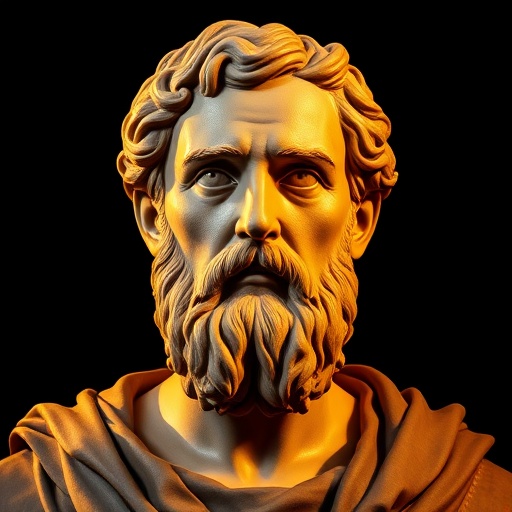
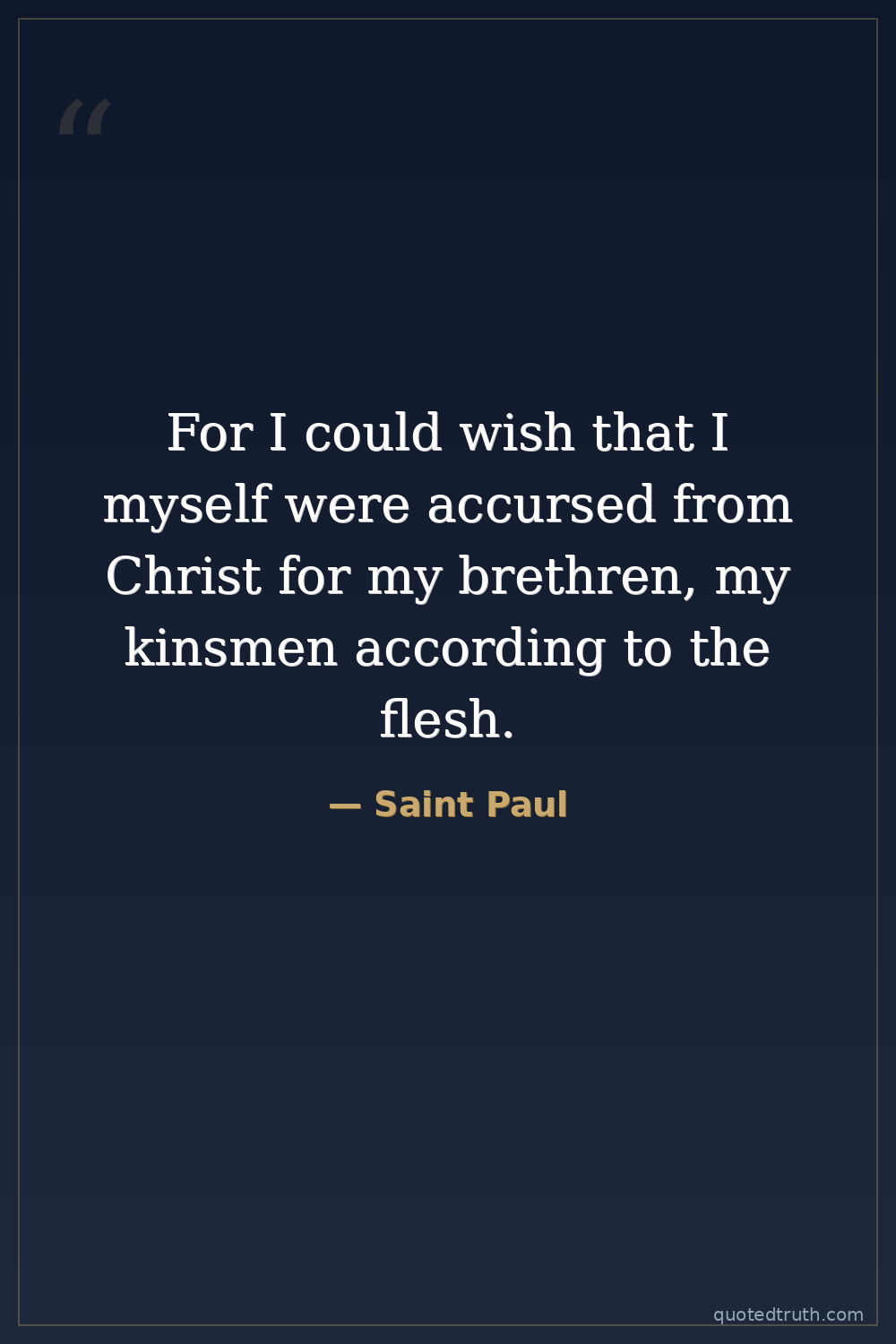
Saint Paul — "For I could wish that I myself were accursed from Christ for my brethren, my kin…"
For I could wish that I myself were accursed from Christ for my brethren, my kinsmen according to the flesh.
For I could wish that I myself were accursed from Christ for my brethren, my kinsmen according to the flesh.
Click any product to generate a realistic preview. Up to 3 at a time.
* Initial load can take up to 90 seconds — revising the preview in another color is nearly instant.
"If we live in the Spirit, let us also walk in the Spirit."
"Be angry, and do not sin: do not let the sun go down on your wrath."
"I say then, walk in the Spirit, and you shall not fulfill the lust of the flesh."
"Therefore, if anyone is in Christ, he is a new creation. The old has passed away; behold, the new has come."
"For Adam was first formed, then Eve. And Adam was not deceived, but the woman being deceived was in the transgression."
Found in 2 providers: gemini,grok
2 sources checked
Paul says he would willingly be cut off from Christ and damned if it meant his fellow Jews could be saved. He loves his own people so deeply that he would trade his own salvation for theirs. It is an extreme statement of self-sacrificing love, placing the spiritual rescue of others above his personal eternal reward.
Paul was born a Jew, trained as a Pharisee under Gamaliel, and once persecuted Christians before his Damascus conversion. Though called the Apostle to the Gentiles, he never abandoned his Jewish identity and carried grief that most fellow Jews rejected Jesus as Messiah. This verse from Romans 9 reveals the ache of a man torn between two communities, willing to be damned for the kin he could not convince.
In the first-century Roman Empire, Paul wrote as the early Jesus movement split from synagogue Judaism. Tensions rose between Jewish believers and Gentile converts, and most Jews rejected Christian claims. Rome tolerated Judaism as an ancient religion but viewed the new sect with suspicion. Paul's anguish reflects a painful moment when the gospel was spreading among Gentiles while his own people, the covenant heirs, largely turned away.
AI-generated insights based on extensive research and information for context. Factual errors? Email [email protected].
Your cart is empty