Saint Paul — "For we are glad, when we are weak, and ye are strong: and this also we wish, eve…"
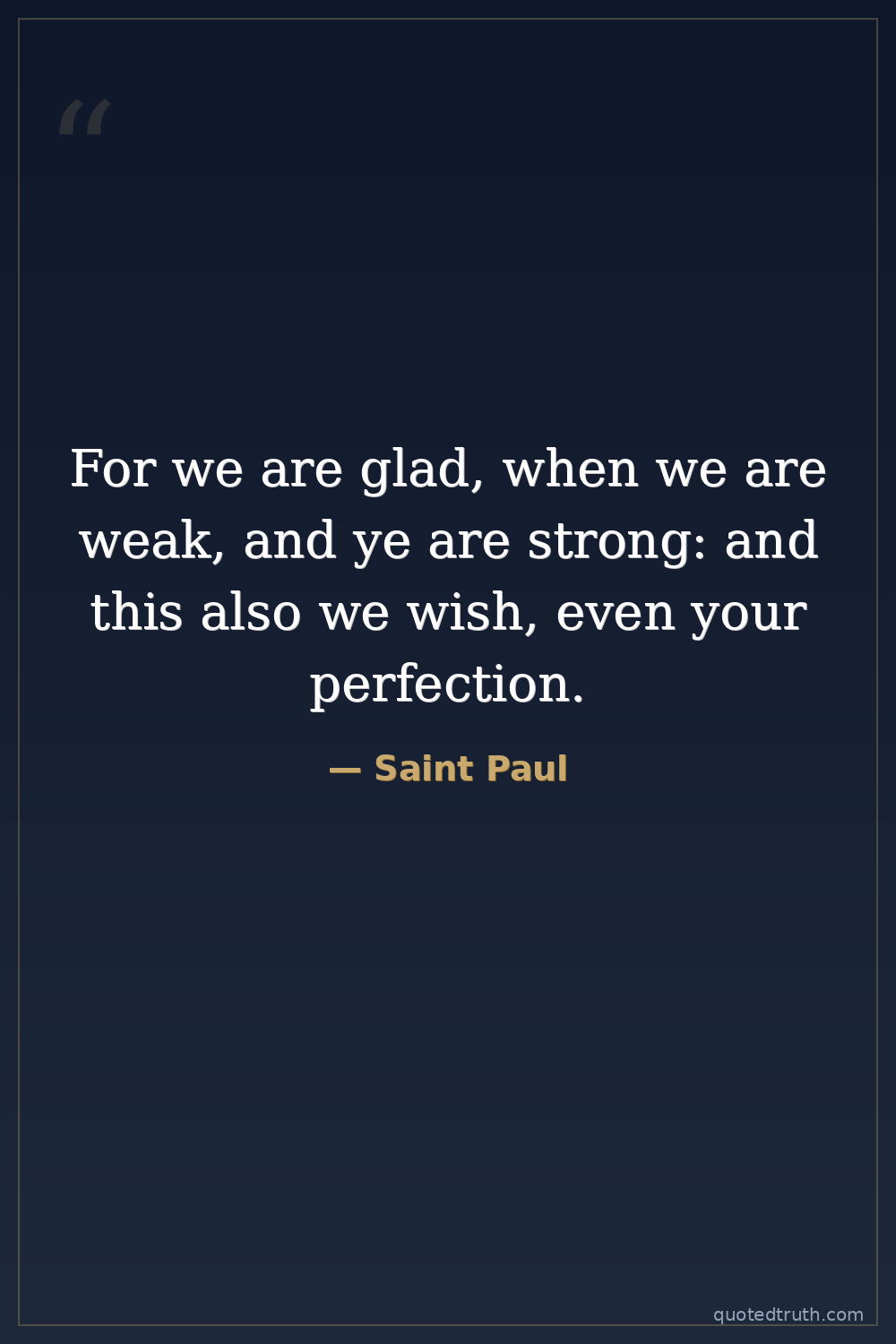
For we are glad, when we are weak, and ye are strong: and this also we wish, even your perfection.
For we are glad, when we are weak, and ye are strong: and this also we wish, even your perfection.
Click any product to generate a realistic preview. Up to 3 at a time.
* Initial load can take up to 90 seconds — revising the preview in another color is nearly instant.
"Not all of those who descend from Israel are Israel."
"If I speak in the tongues of men and of angels, but have not love, I am a noisy gong or a clanging cymbal."
"If any man love not the Lord Jesus Christ, let him be Anathema Maranatha."
"And unto the Jews I became as a Jew, that I might gain the Jews; to them that are under the law, as under the law, that I might gain them that are under the law; To them that are without law, as witho…"
"But God chose the foolish things of the world to shame the wise; God chose the weak things of the world to shame the strong."
Found in 1 providers: gemini
1 source checked
The speaker finds joy in his own weakness when those he cares about are spiritually strong. He is not competing with them or needing to look powerful himself. His deepest wish is their complete maturity and wholeness, even if that means he appears less impressive by comparison. Genuine love prioritizes another person's growth over one's own status or reputation.
Paul wrote this to the Corinthian church he founded, defending his ministry against rivals who mocked his unimpressive presence. A former Pharisee who persecuted Christians before his Damascus road conversion, he reframed his beatings, imprisonments, and physical frailty as credentials. His tentmaking trade kept him financially independent, and his letters consistently prize converts' maturity over personal vindication or authority.
First-century Corinth was a wealthy Roman trade hub obsessed with rhetorical skill, patronage, and public honor. Traveling sophists charged fees and flaunted eloquence to win followers. Paul's rivals used these standards to discredit him. Christianity was a tiny, illegal Jewish sect under suspicion from Rome, and house churches faced internal power struggles. Valuing weakness and another's growth inverted the honor-shame values that governed Greco-Roman civic life.
AI-generated insights based on extensive research and information for context. Factual errors? Email [email protected].
Your cart is empty