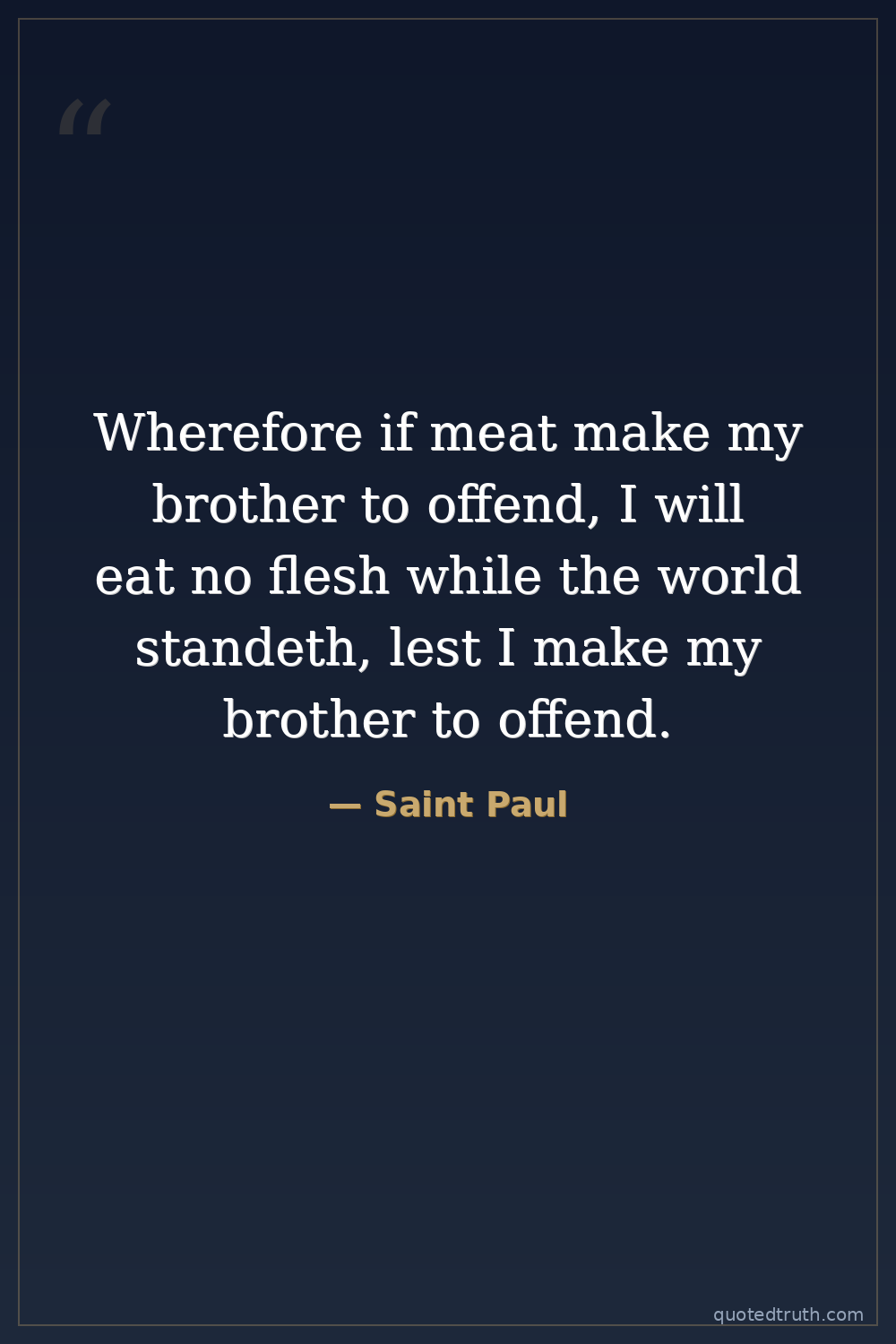
Saint Paul — "Wherefore if meat make my brother to offend, I will eat no flesh while the world…"
Wherefore if meat make my brother to offend, I will eat no flesh while the world standeth, lest I make my brother to offend.
Wherefore if meat make my brother to offend, I will eat no flesh while the world standeth, lest I make my brother to offend.
Click any product to generate a realistic preview. Up to 3 at a time.
* Initial load can take up to 90 seconds — revising the preview in another color is nearly instant.
"But if our gospel be hid, it is hid to them that are lost: In whom the god of this world hath blinded the minds of them which believe not, lest the light of the glorious gospel of Christ, who is the i…"
"For the message of the cross is foolishness to those who are perishing, but to us who are being saved it is the power of God."
"For I determined not to know any thing among you, save Jesus Christ, and him crucified."
"If then you have been raised with Christ, seek the things that are above, where Christ is, seated at the right hand of God."
"Submit to one another out of reverence for Christ."
Found in 1 providers: gemini
1 source checked
Paul is saying he will willingly give up eating meat forever if his food choices would cause another believer to stumble in their faith. Personal freedoms matter less than a fellow Christian's spiritual wellbeing. If something you have every right to do trips someone else up, the loving move is to set it aside. Rights yield to responsibility when another person's conscience is at stake.
Paul wrote this to the Corinthian church, which was fighting over whether eating meat sacrificed to pagan idols was acceptable. As a former Pharisee turned missionary to Gentiles, he constantly navigated clashing customs between Jewish and Greek converts. His ministry hinged on adapting personal practice for the gospel's sake, famously saying he became 'all things to all people' to win them over.
In first-century Corinth, most meat sold in markets had been ritually offered to Greek or Roman gods before butchering. Temple festivals doubled as civic social life, so refusing idol-meat meant social isolation. New Christians from pagan backgrounds still associated such meat with demonic worship, while mature believers saw idols as nothing. This split threatened to fracture the young, mixed-ethnicity churches Paul was planting across the Roman Empire.
AI-generated insights based on extensive research and information for context. Factual errors? Email [email protected].
Your cart is empty