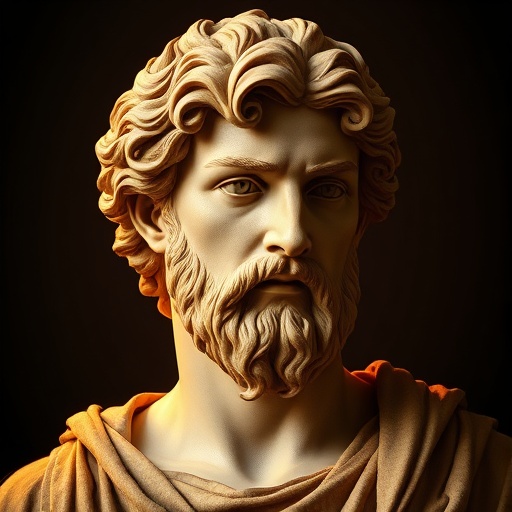
Virgil — "From a single crime, learn all."
From a single crime, learn all.
From a single crime, learn all.
Click any product to generate a realistic preview. Up to 3 at a time.
* Initial load can take up to 90 seconds — revising the preview in another color is nearly instant.
"Fortune sides with him who dares. / Audaces fortuna iuvat (latin)- Fortune favors the bold."
"Every man is chained to his own fate."
"Omnia vincit Amor; et nos cedamus Amori."
"Spes sibi quisque."
"Horresco referens."
Roman poet of the Augustan age whose Aeneid is the founding national epic of Rome and Western literature's most-imitated hexameter poem. Closely associated with Ovid (younger Augustan poet of Metamorphoses) and Horace (third Augustan-era major poet). For an intellectual contrast, see Lucan, Roman poet (39-65 CE) of the Pharsalia — Lucan's Pharsalia explicitly rejected Virgilian Augustan epic by writing a civil-war epic that refused divine machinery and treated Roman empire as tragedy rather than destiny. Lucan's Pharsalia is a 60-years-later rebuke of the Aeneid's imperial theology — civil war as crime instead of providence.
Your cart is empty