John Milton — "God doth not need either man's work or his own gifts; who best bear his mild yok…"
God doth not need either man's work or his own gifts; who best bear his mild yoke, they serve him best.
God doth not need either man's work or his own gifts; who best bear his mild yoke, they serve him best.
Click any product to generate a realistic preview. Up to 3 at a time.
* Initial load can take up to 90 seconds — revising the preview in another color is nearly instant.
"They also serve who only stand and wait."
"For liberty hath a sharp and double edge, fit only to be handled by just and virtuous men; to bad and dissolute, it becomes a mischief unwieldy in their own hands."
"Fame is no plant that grows on mortal soil."
"The childhood shows the man, as morning shows the day."
"When a man hath been labouring the hardest labour in the deep mines of knowledge, hath furnished out his mind through the whole cyclopædia, hath read the choicest authors, ancient and modern, cannot b…"
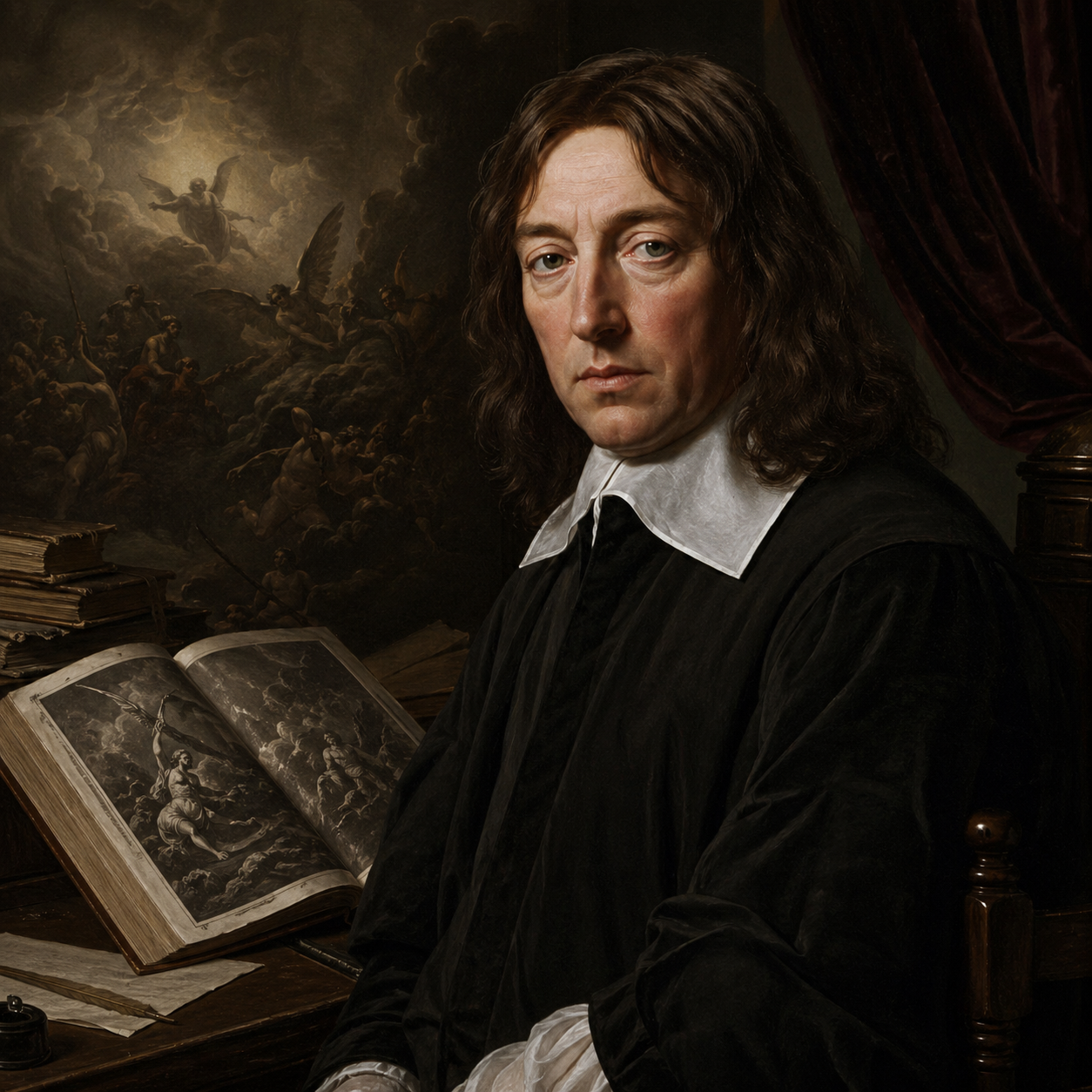
English poet whose Paradise Lost (1667) is the canonical English epic, written while blind during the Restoration after his service to Cromwell's Commonwealth. Closely associated with Andrew Marvell (Commonwealth poet and friend who protected Milton at the Restoration). For an intellectual contrast, see King Charles II's Restoration court, the courtly, sexually-libertine, theater-reopened world of 1660s London — Milton wrote Paradise Lost as a defeated Republican; the Restoration culture around him celebrated everything his Commonwealth had banned. The cleanest 'losing side writes the masterpiece' moment in English literature — Paradise Lost's Satan is freighted with the political defeat of the regicides Milton served.
Your cart is empty