John Milton — "Hence, loathed Melancholy, Of Cerberus and blackest Midnight born, In Stygian ca…"
Hence, loathed Melancholy, Of Cerberus and blackest Midnight born, In Stygian cave forlorn.
Hence, loathed Melancholy, Of Cerberus and blackest Midnight born, In Stygian cave forlorn.
Click any product to generate a realistic preview. Up to 3 at a time.
* Initial load can take up to 90 seconds — revising the preview in another color is nearly instant.
"Abashed the devil stood, and felt how awful goodness is."
"His words, like so many nimble and airy servitors, trip about him at command."
"For what can war but acts of war produce? And what can acts of war but wars breed?"
"No man…can be so stupid to deny that all men naturally were born free, being the image and resemblance of God himself."
"Lest we should be too much elated with our successes, or too much dejected by our misfortunes."
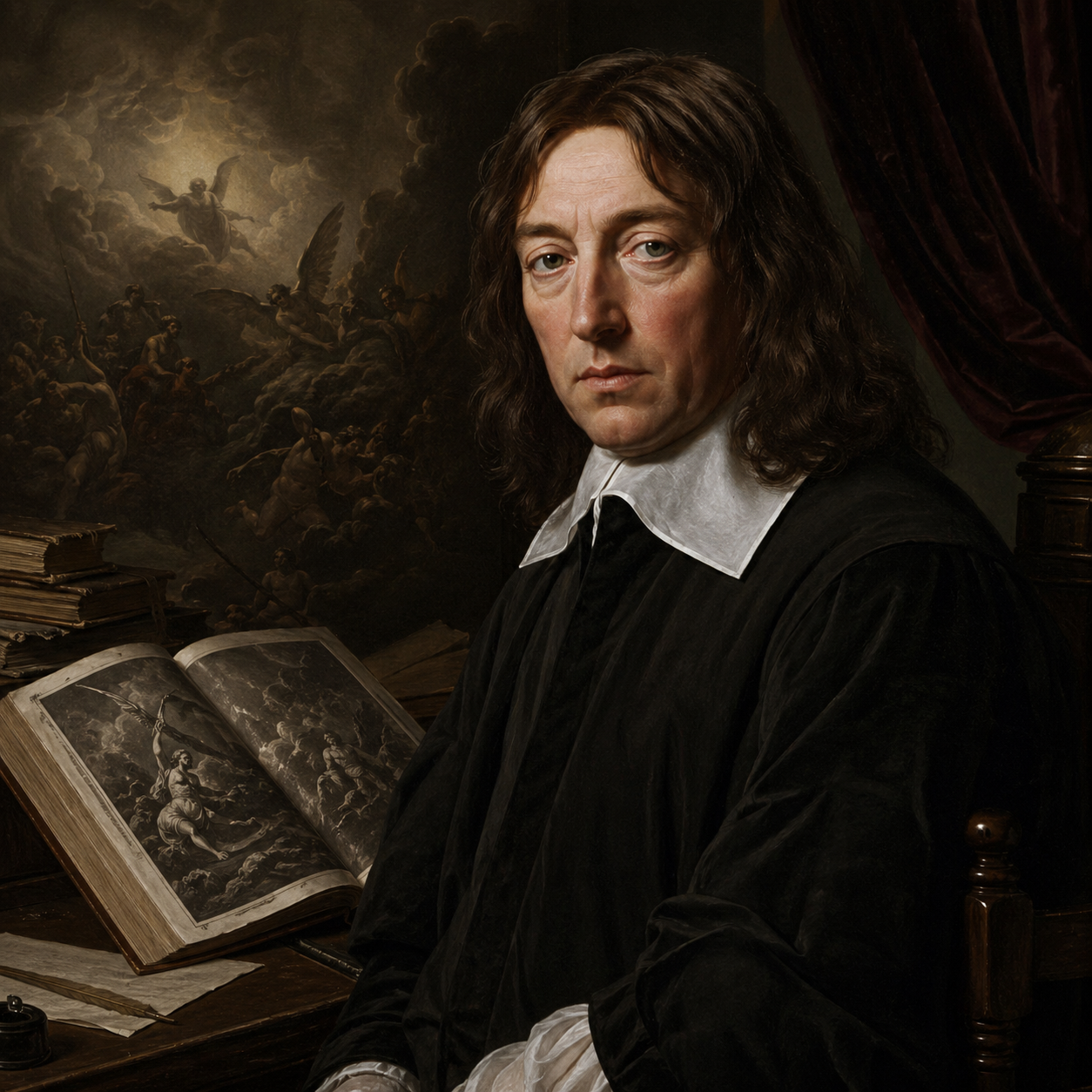
English poet whose Paradise Lost (1667) is the canonical English epic, written while blind during the Restoration after his service to Cromwell's Commonwealth. Closely associated with Andrew Marvell (Commonwealth poet and friend who protected Milton at the Restoration). For an intellectual contrast, see King Charles II's Restoration court, the courtly, sexually-libertine, theater-reopened world of 1660s London — Milton wrote Paradise Lost as a defeated Republican; the Restoration culture around him celebrated everything his Commonwealth had banned. The cleanest 'losing side writes the masterpiece' moment in English literature — Paradise Lost's Satan is freighted with the political defeat of the regicides Milton served.
Your cart is empty