Martin Luther — "God hides in order not to be found where humans want to find God. But God also h…"
God hides in order not to be found where humans want to find God. But God also hides in order to be found where God wills to be found.
God hides in order not to be found where humans want to find God. But God also hides in order to be found where God wills to be found.
Click any product to generate a realistic preview. Up to 3 at a time.
* Initial load can take up to 90 seconds — revising the preview in another color is nearly instant.
"The commandments are not given inappropriately or pointlessly; but in order that through them the proud, blind man may learn the plague of his impotence, should he try to do as he is commanded."
"Eating is a serious business. You must eat with delight and not as if you were doing penance."
"Therefore, dear Lords, help here, save here, release here, stab, smite, strangle here, whoever can. And if you die in it, blessed are you; for you die in obedience to God's Word and command (Rom. 13) …"
"Here I stand; I can do no other. God help me. Amen."
"For the ass will have blows, and the populace will be ruled by force. God knew this well, and therefore he put a sword into the hand of the rulers, not a fox's tail."
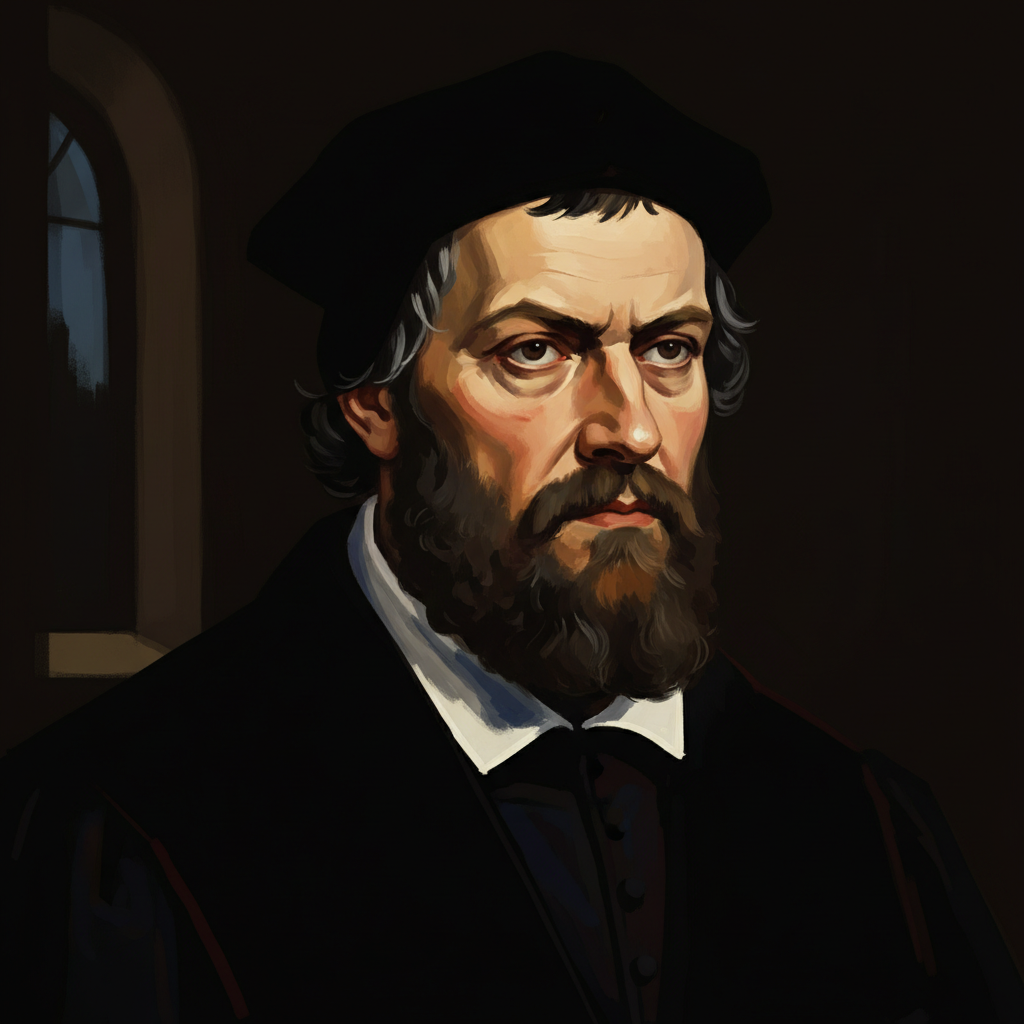
German theologian whose 95 Theses (1517) launched the Protestant Reformation and broke the Catholic Church's monopoly on Western Christianity. Closely associated with Philipp Melanchthon (Lutheran systematizer) and John Calvin (later Reformer who built on Luther's break). For an intellectual contrast, see Pope Leo X, Renaissance pope (1513-1521) — Leo X's indulgence sales triggered Luther's break and Leo excommunicated him in 1521 — Luther's entire Reformation is structured as a direct answer to the indulgence-funded Vatican Leo represented.
Found in 1 providers: gemini
1 source checked
Humans constantly try to locate God through methods of their own choosing—rituals, cleverness, visible power, or philosophical reasoning. This saying argues God deliberately refuses to appear on those terms, staying hidden from seekers who dictate the conditions. Yet God is not absent. God chooses specific places and means to be encountered, and only those who approach on God's terms, not their own, actually find what they are looking for.
Luther built his theology around the hidden God (Deus absconditus) revealed paradoxically in the suffering Christ on the cross, not in glory or human achievement. A former Augustinian monk tormented by self-driven attempts to earn salvation, he concluded God is found in Scripture, baptism, and the Lord's Supper—means God chose—rather than in indulgences, relics, or mystical ladders humans devised to climb toward heaven.
In early 16th-century Europe, the Catholic Church marketed access to God through pilgrimages, relics, indulgences, and a sacramental system requiring priestly mediation. Luther's 1517 Ninety-Five Theses and later writings challenged this entire economy of seeking God through human works and institutional gatekeeping. The printing press spread his argument across Germany rapidly, fueling the Reformation's claim that God comes to sinners on God's own terms through Word and faith alone.
AI-generated insights based on extensive research and information for context. Factual errors? Email [email protected].
Your cart is empty