Martin Luther — "The more you read the Bible, the more you will love it; the more you love it, th…"
The more you read the Bible, the more you will love it; the more you love it, the more you will read it.
The more you read the Bible, the more you will love it; the more you love it, the more you will read it.
Click any product to generate a realistic preview. Up to 3 at a time.
* Initial load can take up to 90 seconds — revising the preview in another color is nearly instant.
"I would not smell the foul odor of your name."
"Medicine causes illness, Mathematics melancholy, and Theology sinful people."
"Again, the Lord wills that whoever confesses his sins and believes the absolution should be forgiven. 'No,' says ass-pope fart, 'faith does nothing; but your own repentance and atonement do, as well a…"
"After the devil himself, there is no worse folk than the pope and his followers."
"For I know One who suffered and made satisfaction on my behalf. His name is Jesus Christ, Son of God, and where He is there I shall be also!"
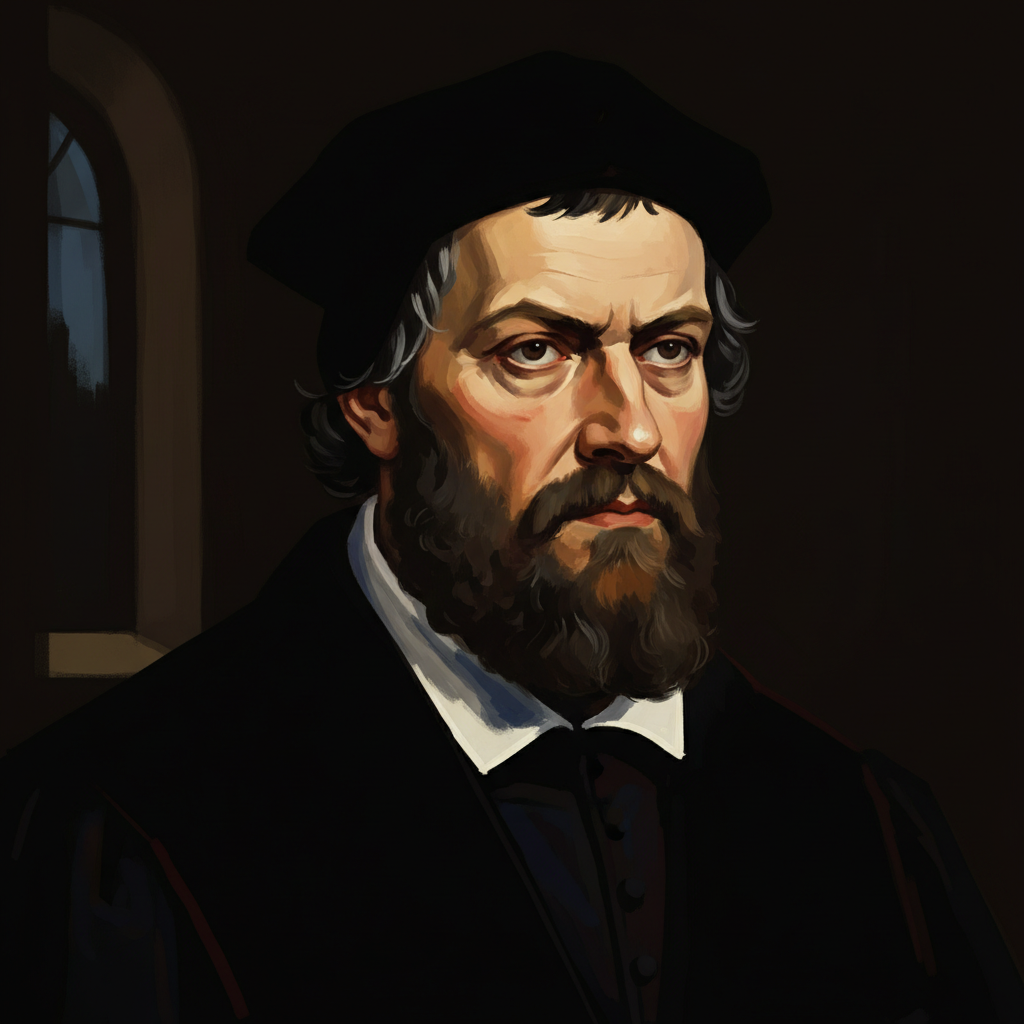
German theologian whose 95 Theses (1517) launched the Protestant Reformation and broke the Catholic Church's monopoly on Western Christianity. Closely associated with Philipp Melanchthon (Lutheran systematizer) and John Calvin (later Reformer who built on Luther's break). For an intellectual contrast, see Pope Leo X, Renaissance pope (1513-1521) — Leo X's indulgence sales triggered Luther's break and Leo excommunicated him in 1521 — Luther's entire Reformation is structured as a direct answer to the indulgence-funded Vatican Leo represented.
Found in 1 providers: grok
1 source checked
Reading scripture and loving scripture feed each other in a self-reinforcing cycle. The more time you spend with the text, the deeper your affection for it grows, and that affection in turn pulls you back to read more. It describes how genuine engagement with a meaningful book builds momentum: familiarity breeds attachment, and attachment drives further study, until the practice becomes its own reward.
Luther staked his entire reform movement on direct lay access to scripture, translating the Bible into vernacular German so ordinary people could read it themselves rather than depend on clerical interpretation. As a former Augustinian monk and theology professor at Wittenberg, he spent decades immersed in the text, and his doctrine of sola scriptura made personal Bible reading the foundation of Christian life. This quote distills his lifelong conviction that scripture rewards sustained attention.
In early sixteenth-century Europe, the Bible was largely a Latin clerical possession, inaccessible to most laypeople who relied on priests to mediate its meaning. Gutenberg's printing press, perfected decades earlier, was beginning to make books affordable, and Luther's 1522 German New Testament rode that wave to mass circulation. His call for personal Bible reading was radical: it transferred spiritual authority from the institutional Church to the individual reader, fueling the Reformation's split from Rome.
AI-generated insights based on extensive research and information for context. Factual errors? Email [email protected].
Your cart is empty