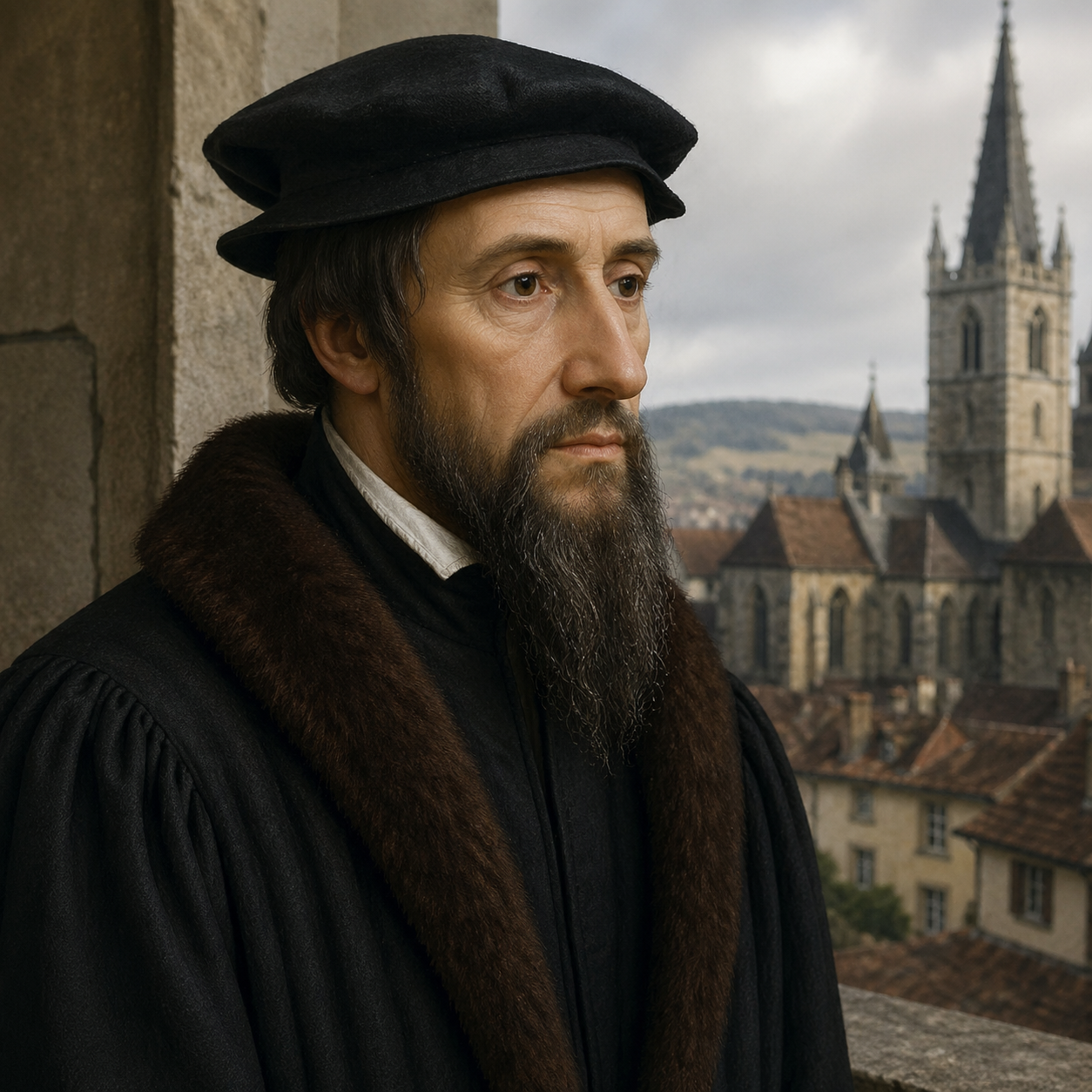
John Calvin — "God's justice or righteousness is manifest as the reprobate receive the eternal …"
God's justice or righteousness is manifest as the reprobate receive the eternal punishment they deserve.
God's justice or righteousness is manifest as the reprobate receive the eternal punishment they deserve.
Click any product to generate a realistic preview. Up to 3 at a time.
* Initial load can take up to 90 seconds — revising the preview in another color is nearly instant.
"The reason why some are saved and others perish is not to be sought in their own will, but in the secret counsel of God."
"The most perfect way of worshiping God is to live a holy life."
"The elect are saved by grace, and the reprobate are damned by justice."
"The reprobate are not without excuse, because their blindness is voluntary."
"God's ultimate discrimination rests solely on the freedom and sovereign will of God."
French theologian whose Institutes of the Christian Religion (1536) systematized Protestant Reformed doctrine, including predestination. Closely associated with Martin Luther (Reformation founder, Calvin's predecessor). For an intellectual contrast, see Jacobus Arminius, Dutch Reformed theologian (1560-1609) — Arminius's rejection of strict double-predestination founded Arminianism — the theological tradition modern Methodism, most evangelicalism, and Pentecostalism descend from. The Calvinist-Arminian debate has divided Protestantism for 400 years.
Found in 1 providers: gemini
1 source checked
God's justice is made visible not only through mercy toward the saved but equally through punishment of the reprobate — those predestined for damnation. This isn't cruelty but righteousness: the condemned receive exactly what their sins warrant. Divine justice demands accountability; grace for the elect and condemnation for the reprobate together complete the full picture of a holy, perfectly just God.
Calvin built his entire theological system around God's absolute sovereignty, articulated in his landmark Institutes of the Christian Religion (1536–1559). His doctrine of double predestination — God elects some to salvation, others to damnation — was his most controversial contribution. As Geneva's theocratic leader, Calvin enforced strict moral discipline, believing God's justice demanded visible consequences for sin, including the 1553 execution of heretic Michael Servetus.
The 16th-century Reformation shattered Catholic assumptions about salvation through sacraments and indulgences. Amid brutal religious wars, mass heresy trials, and the Council of Trent's counter-reforms, theologians urgently debated who could be saved and how God decided. Calvin's predestination doctrine answered with stark sovereignty: God's will — not human effort or church ritual — determined eternal fate, making divine justice both terrifying and absolute.
AI-generated insights based on extensive research and information for context. Factual errors? Email [email protected].
Your cart is empty