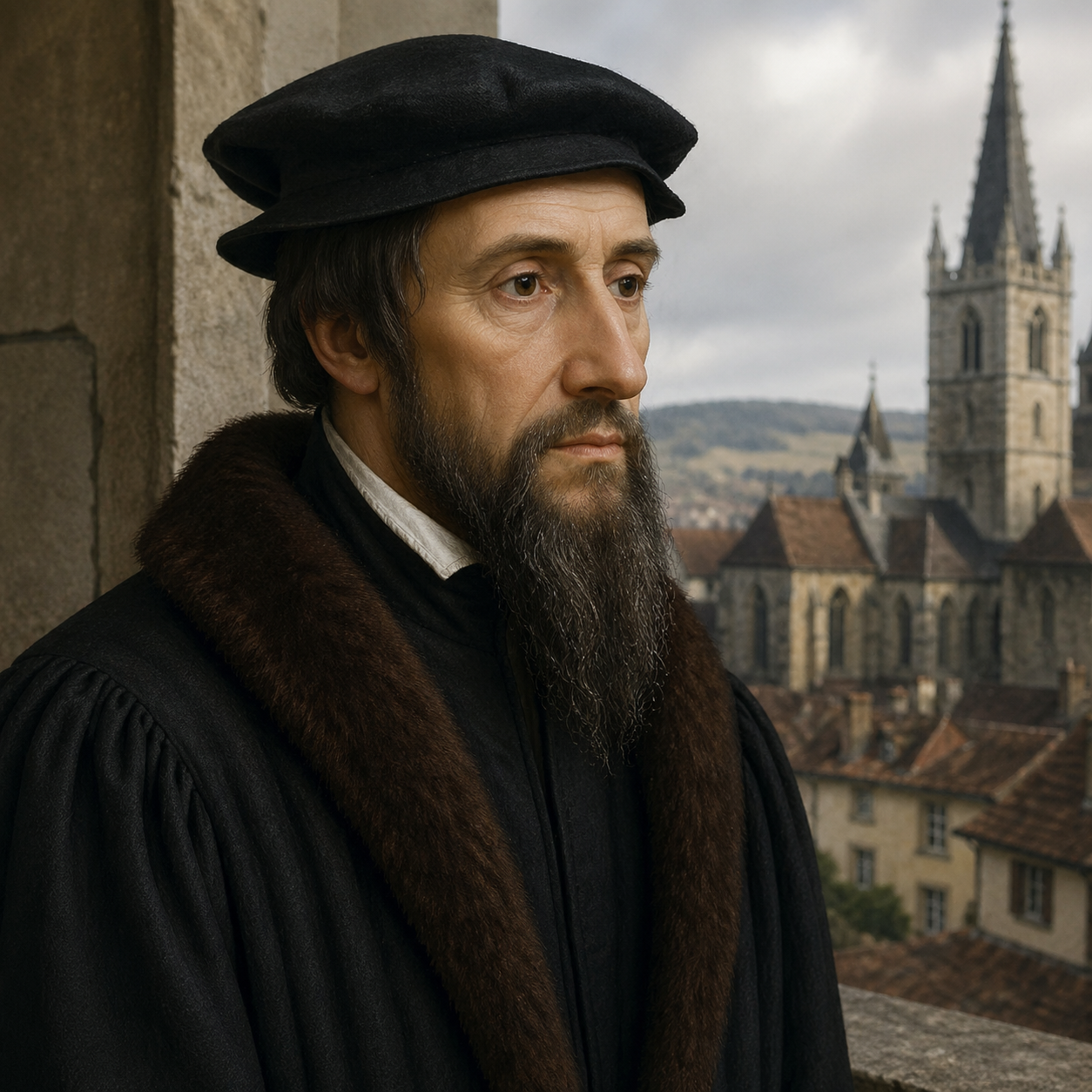
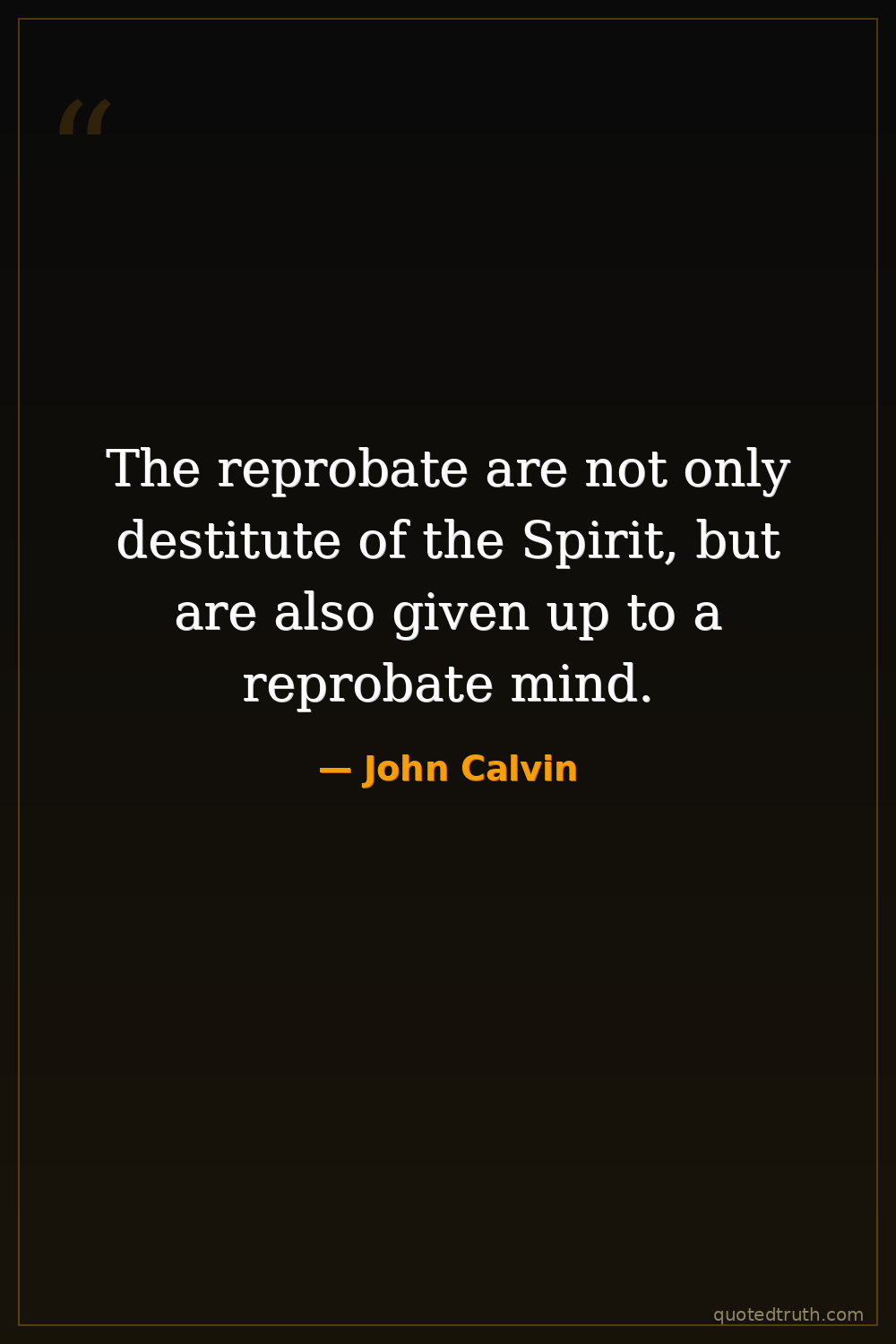
John Calvin — "The reprobate are not only destitute of the Spirit, but are also given up to a r…"
The reprobate are not only destitute of the Spirit, but are also given up to a reprobate mind.
The reprobate are not only destitute of the Spirit, but are also given up to a reprobate mind.
Click any product to generate a realistic preview. Up to 3 at a time.
* Initial load can take up to 90 seconds — revising the preview in another color is nearly instant.
"We are never so much ourselves as when we are in Christ."
"Ignorance is the mother of superstition."
"There is no worse screen to block out the Spirit than an overactive mind."
"The true knowledge of God consists in acknowledging him as our Father and Lord."
"All events are governed by God's secret plan."
French theologian whose Institutes of the Christian Religion (1536) systematized Protestant Reformed doctrine, including predestination. Closely associated with Martin Luther (Reformation founder, Calvin's predecessor). For an intellectual contrast, see Jacobus Arminius, Dutch Reformed theologian (1560-1609) — Arminius's rejection of strict double-predestination founded Arminianism — the theological tradition modern Methodism, most evangelicalism, and Pentecostalism descend from. The Calvinist-Arminian debate has divided Protestantism for 400 years.
Found in 1 providers: grok
1 source checked
Those condemned by God don't merely lack divine grace — they are actively surrendered to a corrupted, depraved way of thinking. It's a double condemnation: absence of the Holy Spirit leaves them spiritually dead, and God's withdrawal produces a mind incapable of righteous judgment. Their moral blindness isn't incidental but a consequence of divine abandonment, making their damnation both spiritual and intellectual.
Calvin built his entire theological system around sovereign predestination — God elects some to salvation and passes over others. This reflects his doctrine of double predestination, central to the Institutes of the Christian Religion. As Geneva's reformer governing both church and civil life, Calvin saw moral and intellectual corruption as evidence of reprobation, reinforcing his conviction that human reason without God's Spirit inevitably fails.
The Protestant Reformation shattered the Catholic Church's monopoly on salvation, forcing 16th-century Europe to debate grace, free will, and who could be saved. Calvin wrote amid these conflicts, pushing Luther's break further into systematic predestinarian theology. The Council of Trent reasserted Catholic free-will doctrine, making Calvin's stark counter-claim explosive in a continent already fracturing into religious wars and Inquisitions.
AI-generated insights based on extensive research and information for context. Factual errors? Email [email protected].
Your cart is empty