Laozi — "He who acts destroys; he who grasps loses."
He who acts destroys; he who grasps loses.
He who acts destroys; he who grasps loses.
Click any product to generate a realistic preview. Up to 3 at a time.
* Initial load can take up to 90 seconds — revising the preview in another color is nearly instant.
"The five colors make one blind in the eyes; the five tones make one deaf in the ears."
"If you want to awaken all of humanity, then awaken all of yourself. If you want to eliminate the suffering in the world, then eliminate all that is dark and negative in yourself. Truly, the greatest g…"
"Nature does not hurry, yet everything is accomplished."
"The Sage manages affairs without doing anything, and spreads doctrines without speaking."
"The sage governs by emptying senses and filling bellies."
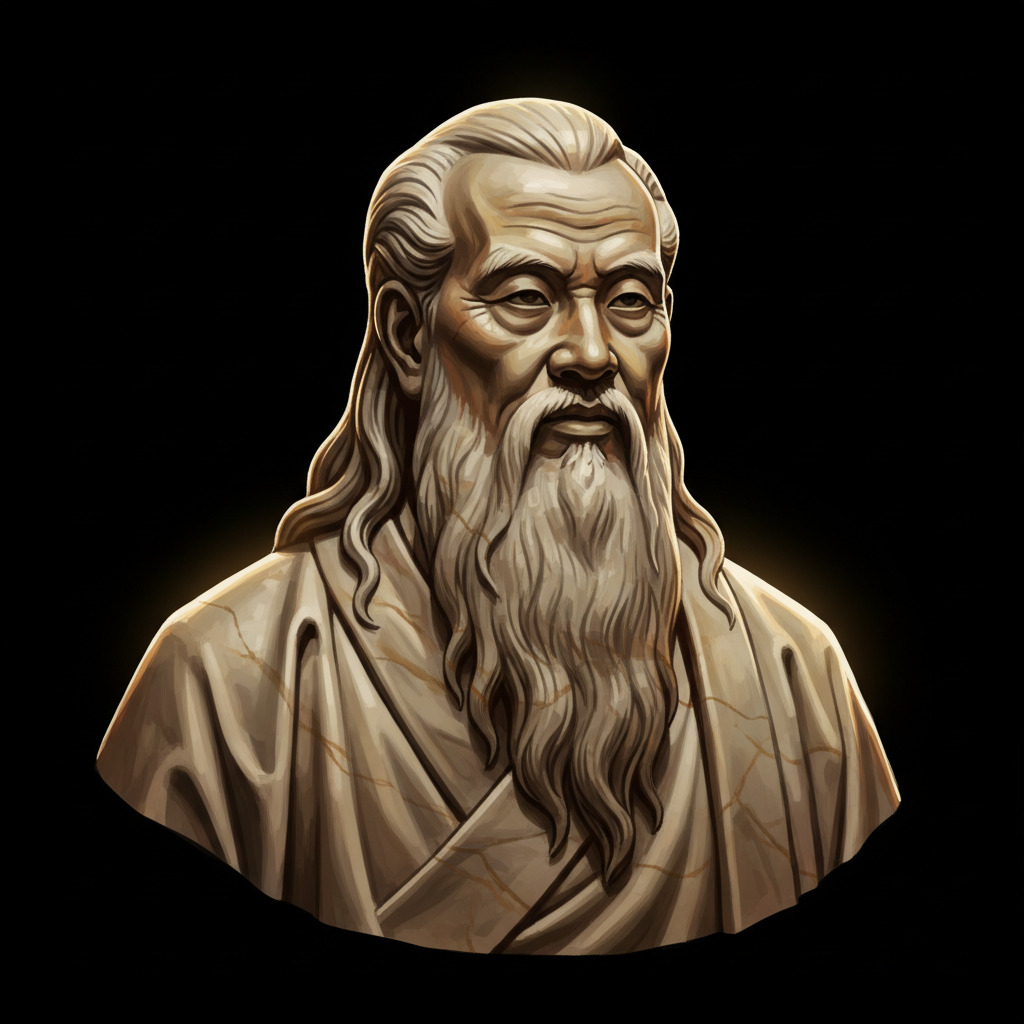
Reputed founder of Taoism and author of the Tao Te Ching, whose wu wei (effortless action) shaped East Asian philosophy. Closely associated with Zhuangzi (later Taoist who extended Laozi's framework). For an intellectual contrast, see Confucius, near-contemporary Chinese sage of social ritual and duty — Confucius systematized social order through ritual and hierarchy; Laozi argued that all such systems were the disease, not the cure — the two founding poles of Chinese moral philosophy.
Found in 2 providers: gemini,grok
2 sources checked
Forcing outcomes backfires, and clutching tightly to things makes you lose them. When you push too hard to control a situation, you break its natural rhythm and ruin what you wanted. When you hoard possessions, status, or relationships out of fear, you strangle them. The advice is to ease your grip, let events unfold, and trust that restraint often accomplishes more than aggressive effort or possessive attachment ever can.
Laozi built Taoism around wu wei, effortless action that works with nature rather than against it. Legend says he served as an archivist in the Zhou court, watched rulers exhaust themselves chasing power, and left westward disillusioned. This saying distills his core teaching: striving and grasping are self-defeating. His ideal sage governs by doing less, holds loosely, and lets the Tao move through events without interference or personal ambition.
Laozi lived during the late Zhou dynasty, around the 6th century BCE, as centralized authority crumbled into the Warring States era. Feudal lords waged constant war, hoarded land, and schemed for dominance, while peasants starved. Rival schools like Confucianism pushed ritual and active governance as the cure. Against that backdrop of frantic ambition and violent grasping, Laozi's counsel to act less and hold nothing was a radical rebuke of the age's entire political logic.
AI-generated insights based on extensive research and information for context. Factual errors? Email [email protected].
Your cart is empty