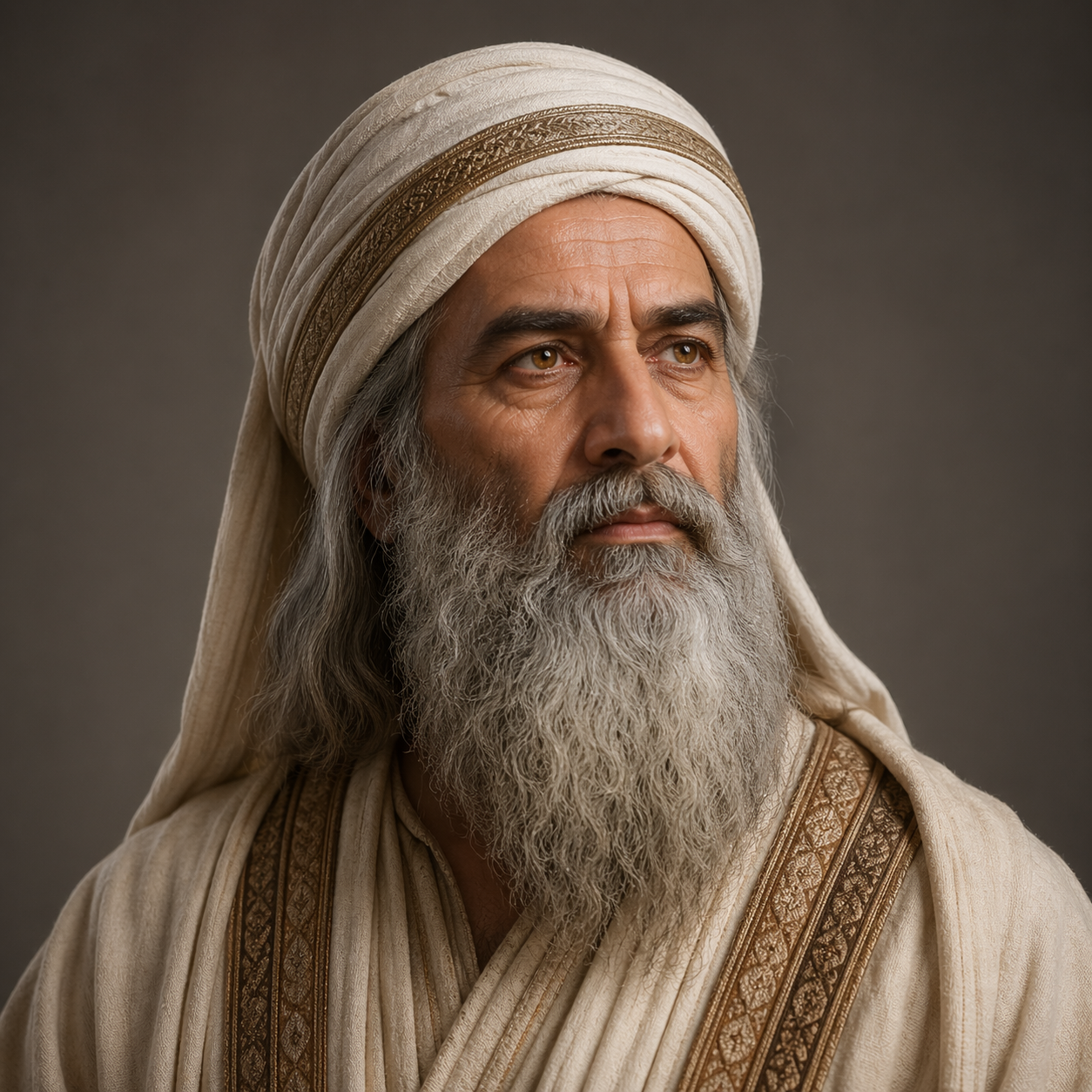
Zoroaster — "He who practices deception, O Mazda, he is the evil one, and he is the one who c…"
He who practices deception, O Mazda, he is the evil one, and he is the one who causes woe.
He who practices deception, O Mazda, he is the evil one, and he is the one who causes woe.
Click any product to generate a realistic preview. Up to 3 at a time.
* Initial load can take up to 90 seconds — revising the preview in another color is nearly instant.
"The universe is a battleground between the forces of good and evil, and each human being must choose a side."
"Happiness is a choice. And sometimes, that choice involves a really good piece of fruit."
"Whoso follows the teachings of Ahura Mazda, him Ahura Mazda will guide."
"I declare the truth to all who will listen."
"In the beginning there were two primal spirits, Twins spontaneously active, These are the Good and the Evil, in thought, and in word, and in deed. Between these two, let the wise choose aright. Be goo…"
Iranian prophet who founded Zoroastrianism, the first major religion of cosmic dualism between good (Ahura Mazda) and evil (Angra Mainyu). Closely associated with The Buddha (near-contemporary Eastern moral-cosmological revolutionary). For an intellectual contrast, see Friedrich Nietzsche, German philosopher of 'beyond good and evil' — Nietzsche appropriated Zarathustra's name for Thus Spoke Zarathustra (1883) precisely to invert the original's moral cosmology — the historical Zoroaster founded the good-versus-evil framework Nietzsche's character announces the end of.
Found in 1 providers: grok
1 source checked
Anyone who deliberately deceives others is fundamentally an evil person, and deception itself is what produces suffering in the world. The quote frames lying not as a minor moral failing but as the root mechanism by which harm spreads. Truthfulness is treated as the dividing line between good and evil people, and dishonesty is identified as the actual source of human misery rather than just one bad behavior among many.
Zoroaster built his entire religion around the cosmic battle between Asha (truth, order) and Druj (the Lie, deception). As a priest-prophet who reformed older Iranian polytheism into an ethical monotheism centered on Ahura Mazda, he taught that humans choose sides through their words and deeds. Calling deceivers evil reflects his core doctrine that lying literally aligns a person with the destructive spirit Angra Mainyu opposing Mazda.
Zoroaster lived in Bronze Age eastern Iran, likely between 1500 and 1000 BCE, among pastoral tribes worshipping many gods through cattle sacrifice and intoxicating rituals. Tribal raiding, broken oaths, and cattle theft were common social problems. By framing truthfulness as the supreme cosmic virtue and deceit as evil incarnate, Zoroaster offered an ethical framework that stabilized contracts, herding agreements, and tribal alliances in a society where a person's word carried legal and survival weight.
AI-generated insights based on extensive research and information for context. Factual errors? Email [email protected].
Your cart is empty