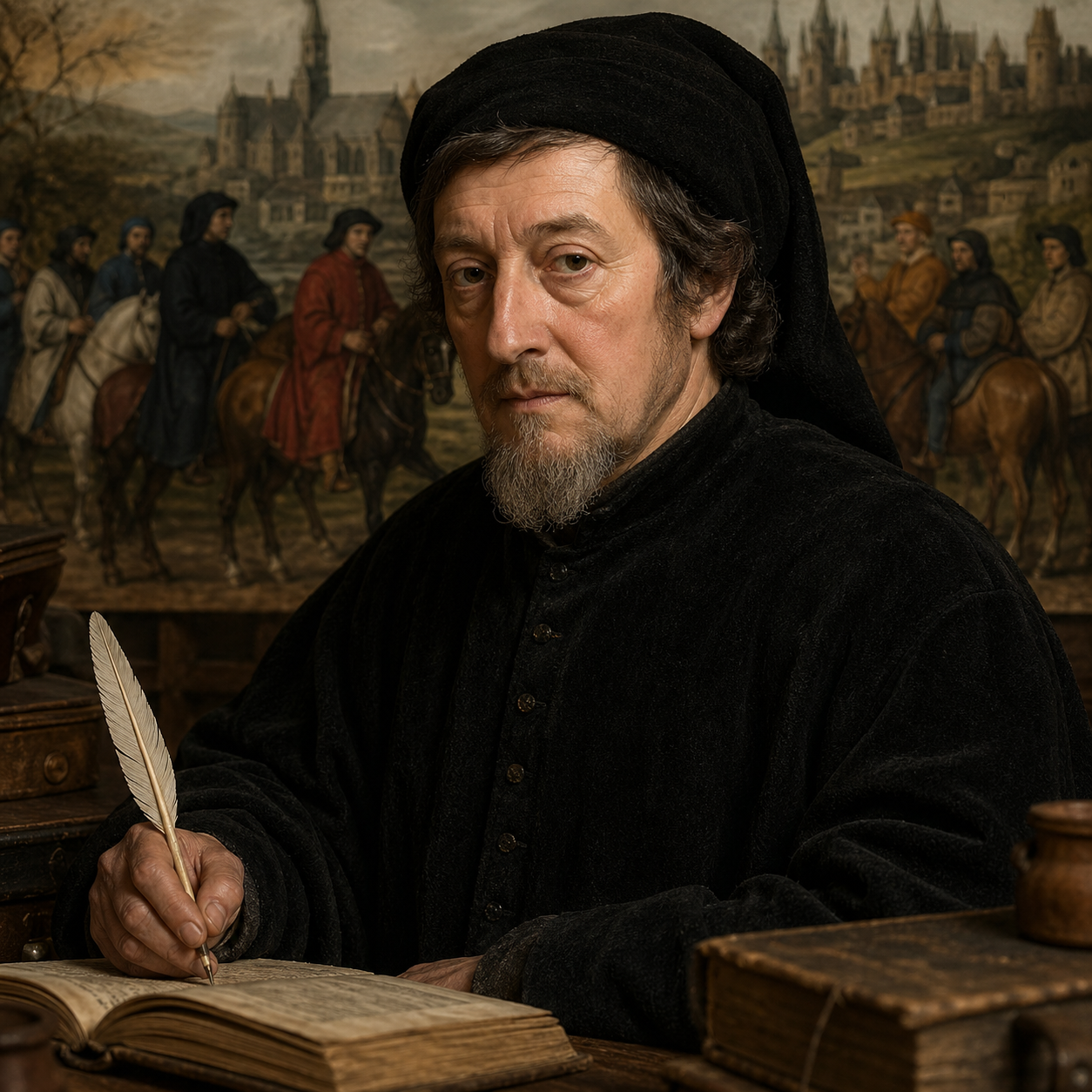
Geoffrey Chaucer — "His eyen twinkled in his heed aright As doon the sterres in the frosty nyght."
His eyen twinkled in his heed aright As doon the sterres in the frosty nyght.
His eyen twinkled in his heed aright As doon the sterres in the frosty nyght.
Click any product to generate a realistic preview. Up to 3 at a time.
* Initial load can take up to 90 seconds — revising the preview in another color is nearly instant.
"For trewely, I dar wel seye, to make it short, He was a verray parfit gentil knyght."
"Of smale houndes hadde she, that she fedde / With rosted flessh, or milk and wastel-breed."
"He coude songes make and wel endite, Juste and eek daunce, and wel purtreye and write."
"He loved hotte and to have his lecherye."
"She koude muchel of wandrynge by the weye. / Gat-tothed was she, soothly for to seye."
English poet, civil servant, and the father of English literature; The Canterbury Tales (~1387-1400) is the founding text of English-language storytelling. Closely associated with Giovanni Boccaccio (his Italian predecessor; the Decameron preceded the Canterbury Tales by ~40 years). For an intellectual contrast, see John Wycliffe, English theologian and Lollard reform-movement leader — Wycliffe and Chaucer were near-contemporaries in the same English Christian world — Chaucer's Wife of Bath and Pardoner are the canonical literary defense of fleshly humanity against the Lollard moral austerity that would later become English Puritanism. Earthy storytelling vs proto-Protestant moralism.
Your cart is empty