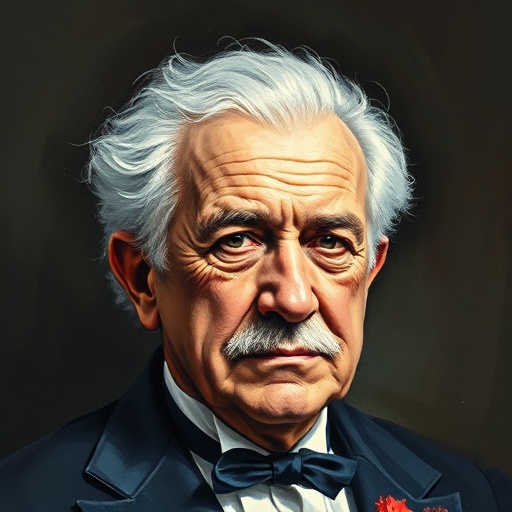
Thomas Edison — "I am a good listener, but I also have a great deal of patience."
I am a good listener, but I also have a great deal of patience.
I am a good listener, but I also have a great deal of patience.
Click any product to generate a realistic preview. Up to 3 at a time.
* Initial load can take up to 90 seconds — revising the preview in another color is nearly instant.
"I am long on ideas, but short on time. I expect to live to be only about a hundred."
"I'd put my money on the sun and solar energy. What a source of power! I hope we don't have to wait until oil and coal run out before we tackle that."
"I often think that the night is more alive and more richly colored than the day."
"I am more of a sponge than a scientist."
"I don't think there is any such thing as an immortal soul. I think that the soul is just a function of the brain, and when the brain dies, the soul dies."
Found in 1 providers: grok
1 source checked
The speaker claims two strengths that work together: hearing others out fully and waiting without frustration. Listening well means absorbing information before reacting, while patience means tolerating slow progress, repetition, or setbacks. Combined, these traits allow someone to gather input from many sources and then stick with a problem long enough to see it through. It frames success less as raw talent and more as steady attention and endurance over time.
Edison famously tested thousands of filament materials before settling on carbonized bamboo for the light bulb, calling genius one percent inspiration and ninety-nine percent perspiration. He ran Menlo Park as a collaborative lab, absorbing ideas from assistants like Batchelor and Upton. His partial deafness, he claimed, helped him concentrate and listen selectively. Holding 1,093 US patents required exactly the patient, methodical iteration and willingness to hear out colleagues that this quote describes.
Edison worked from the 1870s through the 1920s, the Second Industrial Revolution, when electricity, telegraphy, and recorded sound were being invented in real time. Research was shifting from lone tinkerers to organized industrial laboratories, which Edison pioneered at Menlo Park and West Orange. Competing against Tesla, Westinghouse, and Bell required both collaborative teamwork and stubborn persistence through failed prototypes, patent disputes, and the War of Currents, making listening and patience genuine professional assets.
AI-generated insights based on extensive research and information for context. Factual errors? Email [email protected].
Your cart is empty