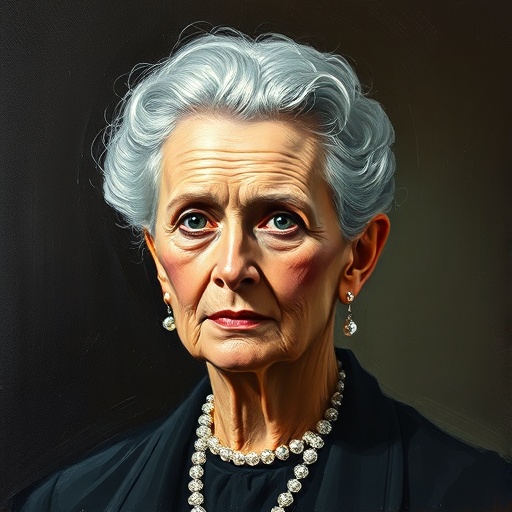
Marie Curie — "I am a Polish woman, and I am proud of it. And I am proud of my work. And I am p…"
I am a Polish woman, and I am proud of it. And I am proud of my work. And I am proud of my discoveries. And I am proud of my contributions to humanity.
I am a Polish woman, and I am proud of it. And I am proud of my work. And I am proud of my discoveries. And I am proud of my contributions to humanity.
Click any product to generate a realistic preview. Up to 3 at a time.
* Initial load can take up to 90 seconds — revising the preview in another color is nearly instant.
"You must never be fearful about what you are doing when it is right."
"The older one gets, the more one feels that the only thing that matters is to do one's duty."
"One never notices what has been done; one can only see what remains to be done."
"I am among those who think that science has great beauty."
"We must believe that we are gifted for something, and that this thing, at whatever cost, must be attained."
Found in 1 providers: grok
1 source checked
The speaker affirms a layered identity with quiet defiance: national heritage, daily labor, original breakthroughs, and lasting benefit to others. Each 'proud' builds on the last, refusing to rank them. It rejects any pressure to hide where she came from or minimize what she achieved. Pride here is not boasting but a public claim of ownership over who she is and what she made.
Marie Curie kept her Polish identity her whole life, naming the element polonium in 1898 after her occupied homeland. She discovered radium, won Nobel Prizes in Physics (1903) and Chemistry (1911), and ran mobile X-ray units in WWI. As a woman and immigrant in French science, she faced press attacks and academy rejection, making each clause of this statement a direct rebuttal to the slights she endured.
Poland did not exist as a sovereign state during most of Curie's life, partitioned between Russia, Prussia, and Austria until 1918. Women were barred from the French Academy of Sciences when she was denied a seat in 1911. Nationalism, xenophobia, and rigid gender roles defined European science. Publicly claiming Polish identity and female scientific authority in Paris was a political act, not a personal footnote, in that climate.
AI-generated insights based on extensive research and information for context. Factual errors? Email [email protected].
Your cart is empty