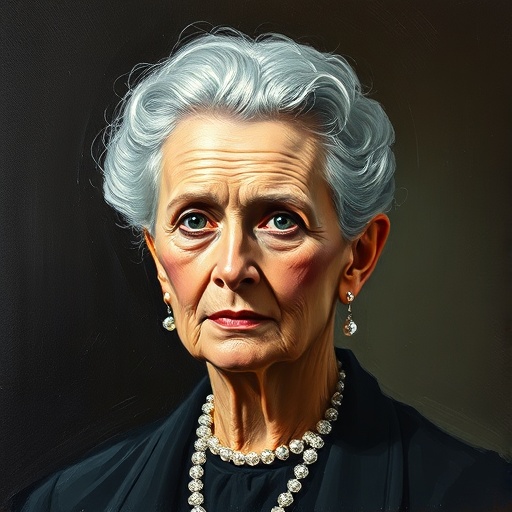
Marie Curie — "I am a scientist. I am a researcher. I am a discoverer. I am all of these things…"
I am a scientist. I am a researcher. I am a discoverer. I am all of these things. And I am proud of it.
I am a scientist. I am a researcher. I am a discoverer. I am all of these things. And I am proud of it.
Click any product to generate a realistic preview. Up to 3 at a time.
* Initial load can take up to 90 seconds — revising the preview in another color is nearly instant.
"Life is not easy for any of us. But what of that? We must have perseverance and above all confidence in ourselves. We must believe that we are gifted for something and that this thing must be attained…"
"I was only a student, but I was burning with desire to learn."
"We must believe in the human spirit, which is a powerful weapon."
"I am a Polish woman, and I am proud of it. And I am proud of my work. And I am proud of my discoveries. And I am proud of my contributions to humanity."
"I am a woman of science. I am a woman of reason. I am a woman of logic. I am a woman of truth. I am a woman of justice. I am a woman of peace. I am a woman of love. I am a woman of humanity. I am all …"
Found in 1 providers: grok
1 source checked
The speaker claims multiple professional identities at once and refuses to rank or hide any of them. Instead of picking one label, they embrace the full range of what they do: doing science, investigating problems, and finding new things. The closing line turns that list into a declaration of pride, pushing back against anyone who might expect modesty or a single tidy title.
Curie genuinely occupied every role she names. She ran lab experiments, led sustained research programs on uranium and thorium, and literally discovered two new elements, polonium and radium. She won Nobel Prizes in both Physics (1903) and Chemistry (1911), the only person to do so in two sciences. Asserting pride fits a woman who fought to be taken seriously in male-dominated labs and academies.
In late 19th and early 20th century Europe, women were largely barred from universities, laboratories, and scientific societies. France only reluctantly admitted women to advanced science, and the French Academy rejected Curie's membership in 1911. Radioactivity itself was a brand-new field, emerging alongside X-rays and atomic theory. A woman publicly claiming the titles scientist, researcher, and discoverer was a direct challenge to that era's gatekeeping.
AI-generated insights based on extensive research and information for context. Factual errors? Email [email protected].
Your cart is empty