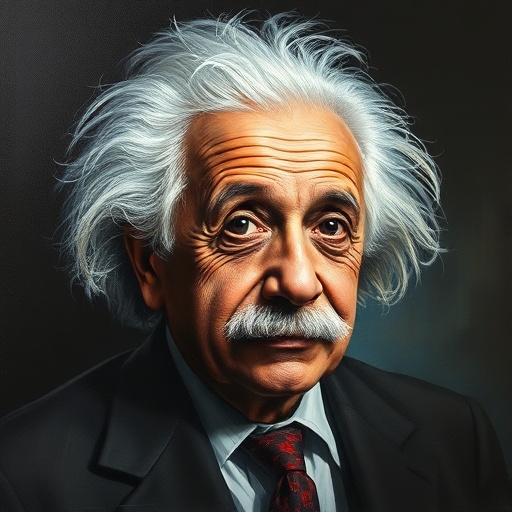
Albert Einstein — "I am against any form of violence, for I know that violence only leads to more v…"
I am against any form of violence, for I know that violence only leads to more violence.
I am against any form of violence, for I know that violence only leads to more violence.
Click any product to generate a realistic preview. Up to 3 at a time.
* Initial load can take up to 90 seconds — revising the preview in another color is nearly instant.
"The only reason for time is so that everything doesn't happen at once."
"It is not enough to teach a man a specialty. Through it he may become a kind of useful machine but not a harmoniously developed personality."
"Compound interest is the eighth wonder of the world. He who understands it, earns it... he who doesn't... pays it."
"Life without playing music is inconceivable for me. I live my daydreams in music. I see my life in terms of music. I get most joy in life out of music."
"Technological progress is like an axe in the hands of a pathological criminal."
Attributed, likely from his public statements against war and violence.
Date: Undetermined
WisdomFound in 1 providers: grok
1 source checked
Violence is a self-perpetuating cycle — using force to solve problems generates retaliation, escalation, and deeper conflict. True resolution requires nonviolent means. The speaker argues not merely that violence is morally wrong, but that it is pragmatically self-defeating: each act of violence plants seeds for the next, making it structurally incapable of producing lasting peace or justice.
Einstein witnessed firsthand the catastrophic violence of two World Wars and fled Nazi Germany in 1933. Though his letter to Roosevelt helped initiate the Manhattan Project, he spent his final decades in profound regret, championing nuclear disarmament and cofounding the Pugwash movement. A committed pacifist who supported conscientious objectors, he saw his own work weaponized and dedicated himself to opposing militarism.
Einstein lived through the atomic bombings of Hiroshima and Nagasaki, the Holocaust, and the dawn of Cold War nuclear brinkmanship. The mid-20th century saw unprecedented industrial-scale killing, making pacifist voices like Einstein's both urgent and politically embattled. The founding of the UN in 1945 and early antinuclear movements reflected global anxiety that unchecked violence would end civilization entirely.
AI-generated insights based on extensive research and information for context. Factual errors? Email [email protected].
Your cart is empty