Francis Crick — "I am an atheist, and I don't believe in God."
I am an atheist, and I don't believe in God.
I am an atheist, and I don't believe in God.
Click any product to generate a realistic preview. Up to 3 at a time.
* Initial load can take up to 90 seconds — revising the preview in another color is nearly instant.
"If you want to understand life, you have to understand DNA."
"If you want to understand function, study structure."
"An honest man, armed with all the knowledge available to us now, could only state that in some sense, the origin of life appears at the moment to be almost a miracle, so many are the conditions which …"
"If you want to get ahead in science, you have to be prepared to be a bit of a bastard."
"There is no ghost in the machine."
Found in 1 providers: grok
1 source checked
A direct, unambiguous declaration that Crick holds no belief in any god. The phrasing is deliberately redundant — naming the identity (atheist) and then stating the position (no belief) closes every interpretive escape hatch. He is not agnostic, not spiritual, not uncertain. It is a clean materialist stance: the universe requires no supernatural explanation, and he will not pretend otherwise to avoid controversy or social friction.
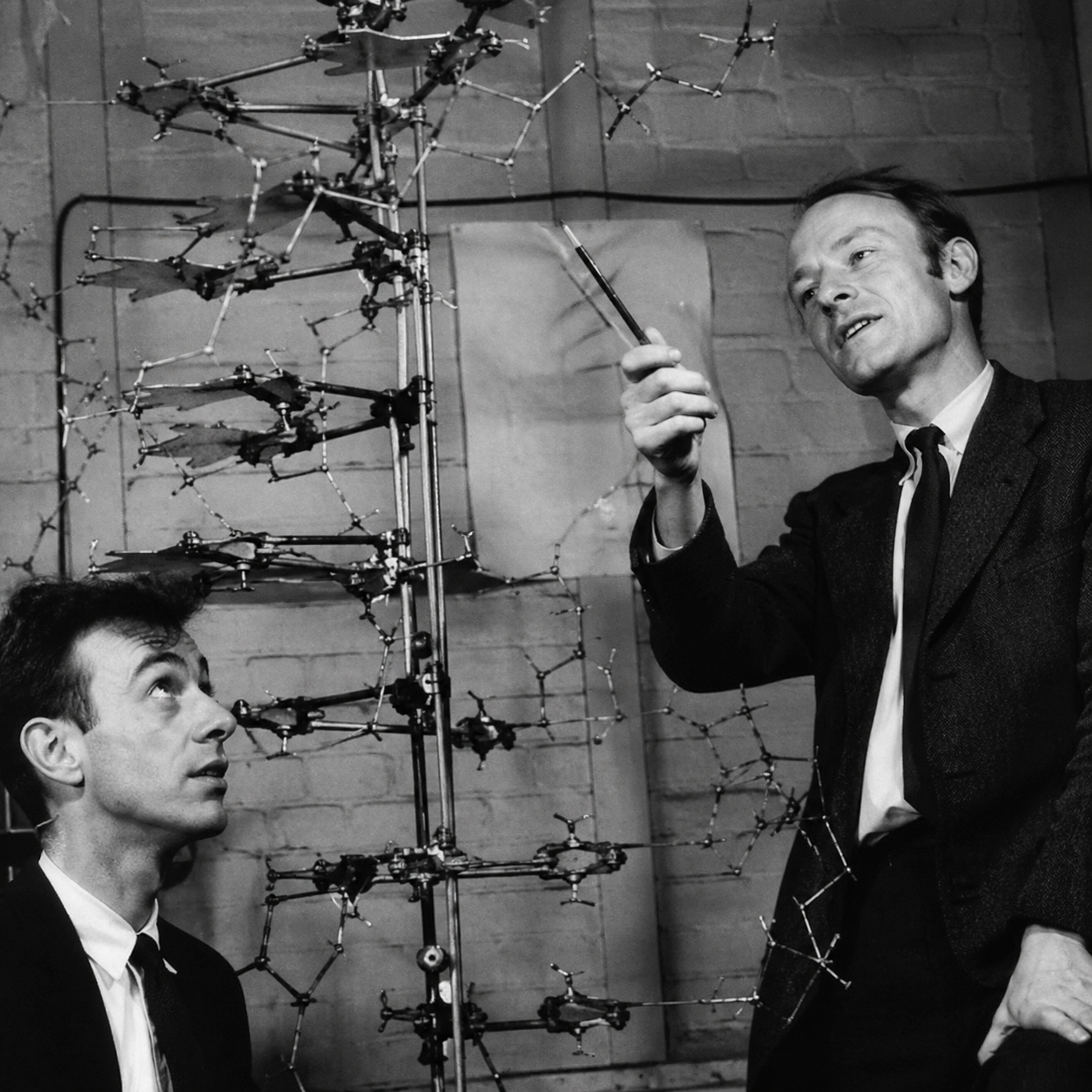
Crick spent his career dismantling mystical explanations of life. His 1953 double-helix discovery showed heredity was chemistry, not divine blueprint. He later dedicated decades to explaining consciousness as brain computation, explicitly calling the soul a fiction. His atheism was not a side opinion but the operating premise of his entire scientific program — that biology, mind, and identity are fully explicable through physical processes, with no remainder requiring God.
Crick worked through decades when declaring atheism openly carried real professional and social cost. The Cold War conflated godlessness with communism in Western culture. Yet simultaneous advances — the Modern Synthesis, molecular biology, the neuroscience revolution — made materialist explanations of life increasingly complete. Crick was among the generation of prominent scientists who stated their atheism plainly before the late-2000s New Atheist movement made such declarations mainstream and publicly accepted.
AI-generated insights based on extensive research and information for context. Factual errors? Email [email protected].
Your cart is empty