Francis Crick — "If you are honest, you will find that you are often wrong. But if you are not ho…"
If you are honest, you will find that you are often wrong. But if you are not honest, you will never find out.
If you are honest, you will find that you are often wrong. But if you are not honest, you will never find out.
Click any product to generate a realistic preview. Up to 3 at a time.
* Initial load can take up to 90 seconds — revising the preview in another color is nearly instant.
"I enjoy being controversial."
"We are just a collection of molecules."
"There is no scientific evidence for the existence of a soul."
"A theory that fits all the facts is bound to be wrong, as some of the facts will be wrong."
"The universe is far more strange and wonderful than we can imagine."
Found in 1 providers: grok
1 source checked
Intellectual honesty demands you admit when you're wrong. Self-deception may feel safer, but it locks you into errors you'll never correct. Being honest about your mistakes opens you to learning and improvement, even when it's uncomfortable. Dishonesty — whether lying to others or rationalizing to yourself — creates a closed loop where errors persist unchallenged. Only the honest thinker can grow, because only they allow reality to push back.
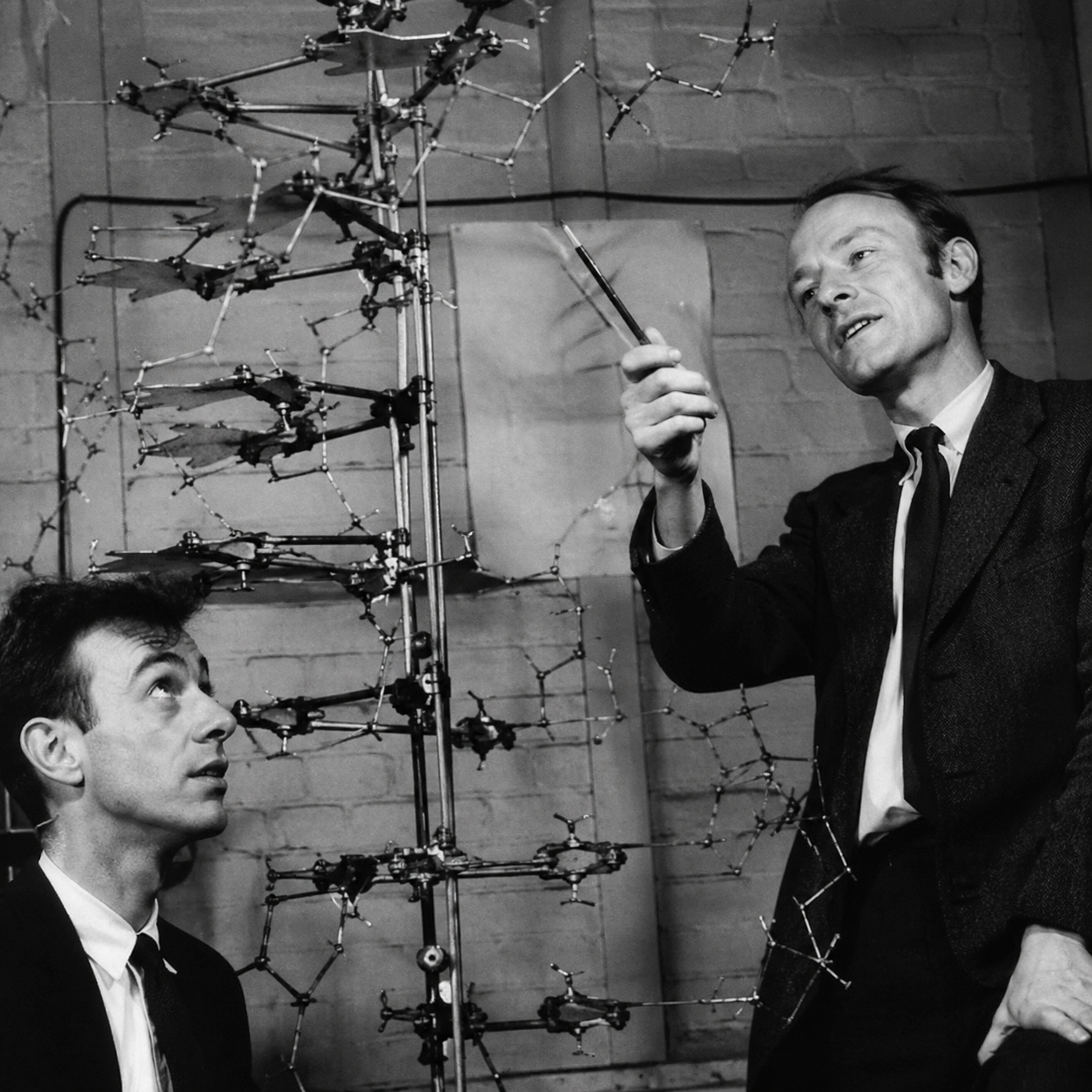
Crick co-discovered DNA's double helix in 1953 alongside Watson, a breakthrough requiring brutal self-correction — early models were wrong until Rosalind Franklin's X-ray data forced revision. Famously blunt and skeptical, Crick resigned from Churchill College over religious accommodation, wrote The Astonishing Hypothesis challenging the soul's existence, and spent his final decades openly probing consciousness. His career embodied the principle that intellectual progress demands unflinching honesty over comfort.
Crick worked through the mid-20th-century molecular biology revolution, when scientific consensus was routinely overturned. The 1950s through 1980s dismantled prior assumptions about genetics, heredity, and life's chemistry. Cold War competition intensified pressure to publish quickly and defend positions — making intellectual dishonesty tempting. Yet the era's greatest advances came precisely from scientists willing to admit error: the discovery of DNA itself required abandoning incorrect models under scrutiny.
AI-generated insights based on extensive research and information for context. Factual errors? Email [email protected].
Your cart is empty