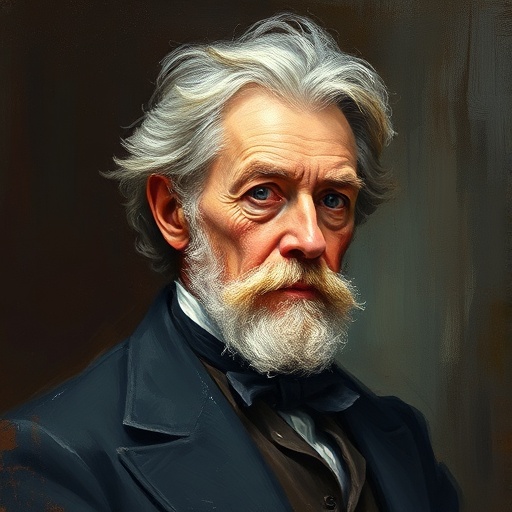
Michael Faraday — "I am content to be a humble laborer in the field of science."
I am content to be a humble laborer in the field of science.
I am content to be a humble laborer in the field of science.
Click any product to generate a realistic preview. Up to 3 at a time.
* Initial load can take up to 90 seconds — revising the preview in another color is nearly instant.
"I am busy just now again on the old subject of light and experiment, and hope to have some new views to bring out."
"The future of science lies in the hands of the young."
"The book of nature is written in the language of mathematics."
"It is not enough to know, we must apply. It is not enough to will, we must do."
"I am no poet, but if you think for a moment of the energy that is in a single drop of water, you will see a poetry in it."
Attributed, reflecting his humility despite his significant achievements.
Date: Mid 19th Century (approx.)
EducationalFound in 1 providers: grok
1 source checked
The speaker declares they are happy working modestly and diligently within science, without seeking fame, titles, or grand recognition. They compare themselves to a field worker, steadily contributing to a larger harvest of knowledge. It expresses a preference for patient, hands-on effort over prestige, and a willingness to let discoveries stand on their own merits rather than on the reputation of the person producing them.
Faraday came from poverty, apprenticed as a bookbinder, and had almost no formal education before entering the Royal Institution as a lab assistant. He famously refused a knighthood and declined the presidency of the Royal Society, preferring lab work over honors. A devout Sandemanian Christian, he viewed science as service. This humble-laborer self-image fits a man who ran experiments himself, mentored publicly through Christmas Lectures, and never chased status despite discovering electromagnetic induction.
Faraday worked in early-to-mid 1800s Britain, when science was shifting from aristocratic hobby to professional discipline. The Royal Society still skewed gentlemanly, yet industrialization demanded practical researchers who got their hands dirty with coils, magnets, and chemicals. Electromagnetism, electrolysis, and the telegraph were transforming daily life. Public lectures at the Royal Institution democratized knowledge, and humble self-presentation resonated in a Victorian culture that prized moral character, diligence, and Christian modesty alongside intellectual achievement.
AI-generated insights based on extensive research and information for context. Factual errors? Email [email protected].
Your cart is empty