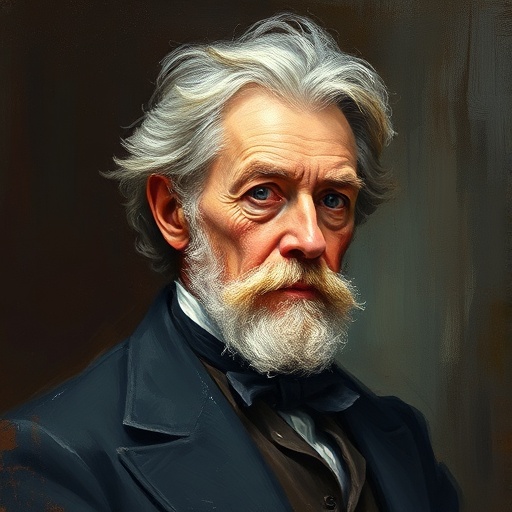
Michael Faraday — "It is not enough to know, we must apply. It is not enough to will, we must do."
It is not enough to know, we must apply. It is not enough to will, we must do.
It is not enough to know, we must apply. It is not enough to will, we must do.
Click any product to generate a realistic preview. Up to 3 at a time.
* Initial load can take up to 90 seconds — revising the preview in another color is nearly instant.
"The important thing is to know how to take a hint, to seize upon the suggestion, however small, and to extract its full value."
"The future of science lies in the hands of the young."
"Let us now consider, for a little while, how wonderfully we stand upon this world. Here it is we are born, bred, and live, and yet we view these things with an almost entire absence of wonder to ourse…"
"I have always tried to make my lectures as clear and simple as possible, so that they may be understood by all."
"I have often regretted that I was not able to pursue a more regular course of study."
Often attributed to Goethe, but sometimes associated with Faraday's practical approach.
Date: Mid 19th Century (approx.)
WisdomFound in 1 providers: grok
1 source checked
Knowledge and intention have no value until they produce action. Understanding a concept or wanting a result is only the starting point; the real measure is whether you translate that understanding into practical work and whether you follow through on your resolve. Thinking and wishing are preparation, not achievement. What counts is execution.
Faraday embodied this. A bookbinder's apprentice with almost no formal schooling, he built his reputation by relentless hands-on experimentation, not theory alone. His discovery of electromagnetic induction in 1831 came from thousands of patient bench trials. He also kept meticulous notebooks and turned abstract ideas about fields into working motors, generators, and transformers.
Faraday worked in early-to-mid 1800s Britain during the Industrial Revolution, when steam, iron, and factories were reshaping society and applied science was displacing pure natural philosophy. The Royal Institution, where he lectured, pushed science toward public demonstration and usefulness. His electromagnetic work directly enabled the electric age, telegraphy, and power generation, making the gap between knowing and doing economically enormous.
AI-generated insights based on extensive research and information for context. Factual errors? Email [email protected].
Your cart is empty