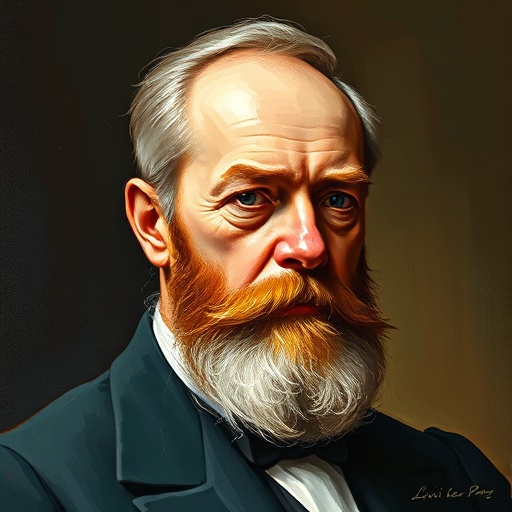
Louis Pasteur — "I am convinced that a day will come when every disease will have its specific re…"
I am convinced that a day will come when every disease will have its specific remedy.
I am convinced that a day will come when every disease will have its specific remedy.
Click any product to generate a realistic preview. Up to 3 at a time.
* Initial load can take up to 90 seconds — revising the preview in another color is nearly instant.
"The day will come when the microbe is both friend and foe."
"The study of nature is always a source of profound joy."
"I owe everything to my wife, who has always encouraged me and shared my enthusiasm."
"Let me tell you the secret that has led me to my goal: my strength lies solely in my tenacity."
"A bottle of wine contains more philosophy than all the books in the world."
Attributed, expressing his optimism for the future of medicine.
Date: Late 19th Century (approx.)
WisdomFound in 1 providers: grok
1 source checked
Pasteur is expressing optimistic faith that medicine will eventually identify a targeted cure for every illness. He believes science will progress to the point where each disease is matched with its own precise treatment, rather than relying on general or symptomatic care. It is a prediction that humanity will solve sickness systematically, one condition at a time, through discovery and rigorous research.
Pasteur revolutionized medicine by proving germs cause disease, developing pasteurization, and creating vaccines for rabies, anthrax, and chicken cholera. His germ theory directly enabled targeted remedies, so this prediction mirrors his life's work. Having watched vaccines save lives, including a boy bitten by a rabid dog in 1885, he had firsthand evidence that specific pathogens yielded specific cures, fueling his conviction about medicine's future trajectory.
Pasteur lived from 1822 to 1895, during medicine's transformation from superstition and miasma theory into evidence-based science. Cholera, tuberculosis, and smallpox ravaged Europe, while surgeons operated without antiseptics. Koch was identifying bacterial pathogens, Lister was pioneering antiseptic surgery, and vaccines were emerging. This era witnessed disease causation finally becoming understood, making Pasteur's confidence reasonable rather than fanciful as germ theory replaced centuries of medical guesswork.
AI-generated insights based on extensive research and information for context. Factual errors? Email [email protected].
Your cart is empty