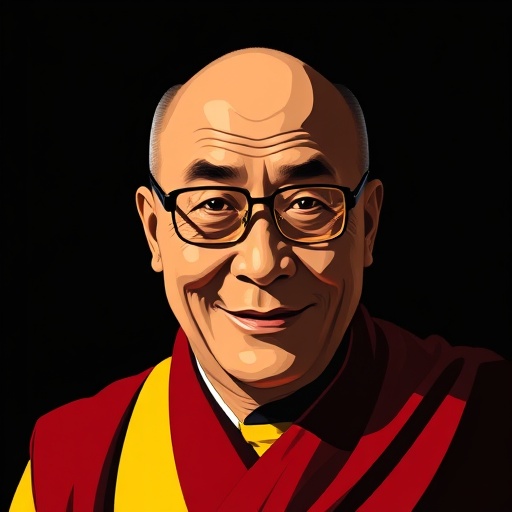
Dalai Lama (14th) — "I am just one human being. I am not special."
I am just one human being. I am not special.
I am just one human being. I am not special.
Click any product to generate a realistic preview. Up to 3 at a time.
* Initial load can take up to 90 seconds — revising the preview in another color is nearly instant.
"The ultimate source of happiness is not money and power, but warm-heartedness."
"A good friend who always tells you the truth is a blessing."
"When we feel love and kindness toward others, it not only makes others feel loved and cared for, but it helps us also to develop inner happiness and peace."
"We are visitors on this planet. We are here for ninety or one hundred years at the very most. During that period, we must try to do something good, something useful, with our lives. If you contribute …"
"I think the very purpose of our life is to seek happiness."
Found in 1 providers: grok
1 source checked
Despite holding immense global authority, the speaker claims no higher worth than any other person. This is radical humility — a direct challenge to status-obsessed culture, where titles and influence are mistaken for intrinsic superiority. It insists that wisdom and moral worth aren't exclusive to leaders or elites. The underlying message: every human being shares the same fundamental nature, and no amount of reverence or recognition changes that basic equality.
Tenzin Gyatso is venerated by millions as a reincarnate deity — the living embodiment of Avalokiteśvara, bodhisattva of compassion — yet he routinely identifies as 'a simple monk.' Since China's 1959 occupation forced him into exile in Dharamsala, India, he has led a global peace movement while actively resisting god-king mythology. His core Buddhist practice centers on dissolving ego and recognizing the equal Buddha-nature in all sentient beings.
The Dalai Lama's life spans an era of totalitarian personality cults — Mao, Stalin, Kim Jong-il — where leaders demanded near-divine reverence backed by state power. Simultaneously, late-20th-century celebrity culture and 24-hour media turned spiritual figures, politicians, and activists into global icons. His own exile from Tibet, where theocratic tradition granted him god-king status, sharpens the irony: the man the world most wanted to elevate kept insisting on his ordinariness.
AI-generated insights based on extensive research and information for context. Factual errors? Email [email protected].
Your cart is empty