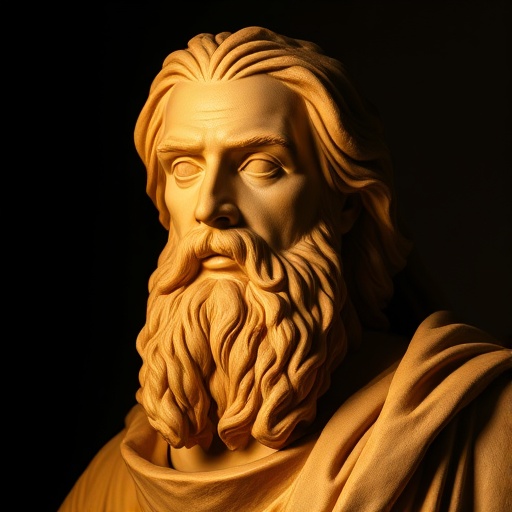
Moses — "I am who I am."
I am who I am.
I am who I am.
Click any product to generate a realistic preview. Up to 3 at a time.
* Initial load can take up to 90 seconds — revising the preview in another color is nearly instant.
"You shall not muzzle an ox while it is treading out the grain."
"See, I have set before you today life and prosperity, death and destruction."
"Thou shalt not suffer a witch to live."
"The Lord bless you and keep you; the Lord make his face shine upon you and be gracious to you; the Lord lift up his countenance upon you and give you peace."
"You shall not plant your field with two kinds of seed."
Exodus 3:14, God speaking to Moses from the burning bush.
Date: c. 13th-15th century BCE (traditional dating)
WisdomFound in 2 providers: grok,gemini
2 sources checked
The statement asserts pure, self-defining existence. The speaker claims an identity that is not borrowed, explained, or justified by anything outside itself. It refuses to be reduced to a title, role, or category. Rather than offering a description that can be measured or compared, it declares a being whose reality is complete in itself, answerable to no external frame of reference or expectation.
Moses reportedly heard this phrase from the burning bush when he asked the divine name before returning to Egypt. As the reluctant prophet who led enslaved Hebrews out of Pharaoh's grip and delivered the Ten Commandments at Sinai, Moses built an entire legal and religious tradition around a God who could not be named like local idols. The words anchored his mission, his law code, and his confrontation with Egypt's many-named pantheon.
In the Late Bronze Age Near East, gods were typically bound to places, families, or natural forces, each with specific names granting worshipers leverage through ritual. Egypt alone venerated dozens of named deities with carved images. A divinity who answered only with self-existence broke that bargaining framework entirely. For Hebrew slaves surrounded by Egyptian temple culture, the phrase introduced a radically different theology that would later shape Judaism, Christianity, and Islam.
AI-generated insights based on extensive research and information for context. Factual errors? Email [email protected].
Your cart is empty