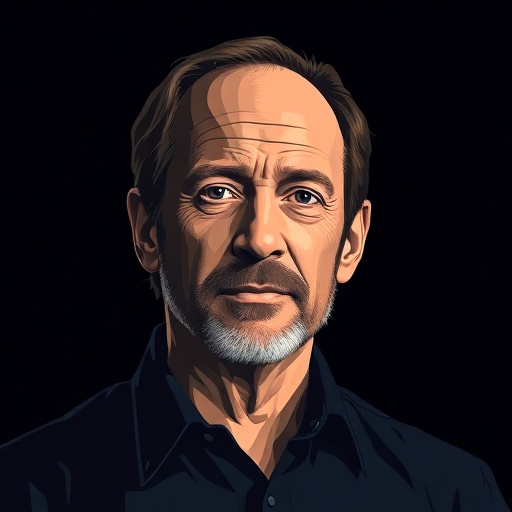
Tim Berners-Lee — "I believe in the power of the web to transform lives."
I believe in the power of the web to transform lives.
I believe in the power of the web to transform lives.
Click any product to generate a realistic preview. Up to 3 at a time.
* Initial load can take up to 90 seconds — revising the preview in another color is nearly instant.
"I’m worried about the future of the web, but I’m also optimistic."
"The web is a work in progress. We need to keep working on it to make it better."
"The web was designed to be a universal space of information, not a collection of walled gardens."
"The web is a tool for freedom."
"We need to educate people about the dangers of the web, as well as its benefits."
British computer scientist who invented the World Wide Web at CERN in 1989 and founded the W3C, championing open web standards. Closely associated with Vint Cerf (TCP/IP co-creator and 'father of the internet') and Marc Andreessen (Mosaic browser creator and Netscape co-founder). For an intellectual contrast, see Mark Zuckerberg, Facebook (Meta) founder — Zuckerberg's walled-garden Facebook is the canonical contemporary opposite of Berners-Lee's open-web vision; Berners-Lee's Solid project and 'recapture the web' essays are explicitly written as a rebuttal to the platform-monopoly model Facebook pioneered.
Found in 1 providers: grok
1 source checked
The internet has genuine capacity to change how people live — enabling education, economic opportunity, political voice, and human connection across barriers of geography, class, and circumstance. This is not passive optimism but an active conviction that open, accessible digital infrastructure reshapes what ordinary people can do, know, and become in their daily lives.
Berners-Lee invented the Web in 1989 at CERN, then gave it away freely — no patent, no royalty. He later founded the World Wide Web Consortium and the Web Foundation to keep it open and equitable. His entire post-invention career fighting for net neutrality, digital rights, and the Contract for the Web reflects this belief translated into decades of sustained advocacy.
Berners-Lee proposed the Web in 1989 and saw it explode through the 1990s dot-com boom, then witness early 2000s consolidation into corporate platforms. By the 2010s, the Arab Spring showed political transformation potential while surveillance capitalism showed darker possibilities. His statement carries weight precisely because he watched both utopian and dystopian trajectories unfold firsthand, yet maintained conviction.
AI-generated insights based on extensive research and information for context. Factual errors? Email [email protected].
Your cart is empty