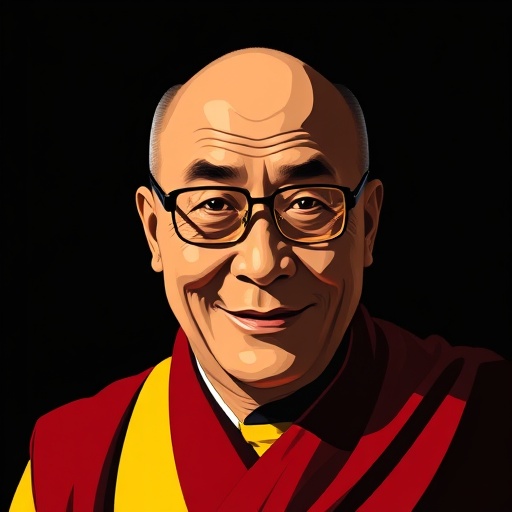
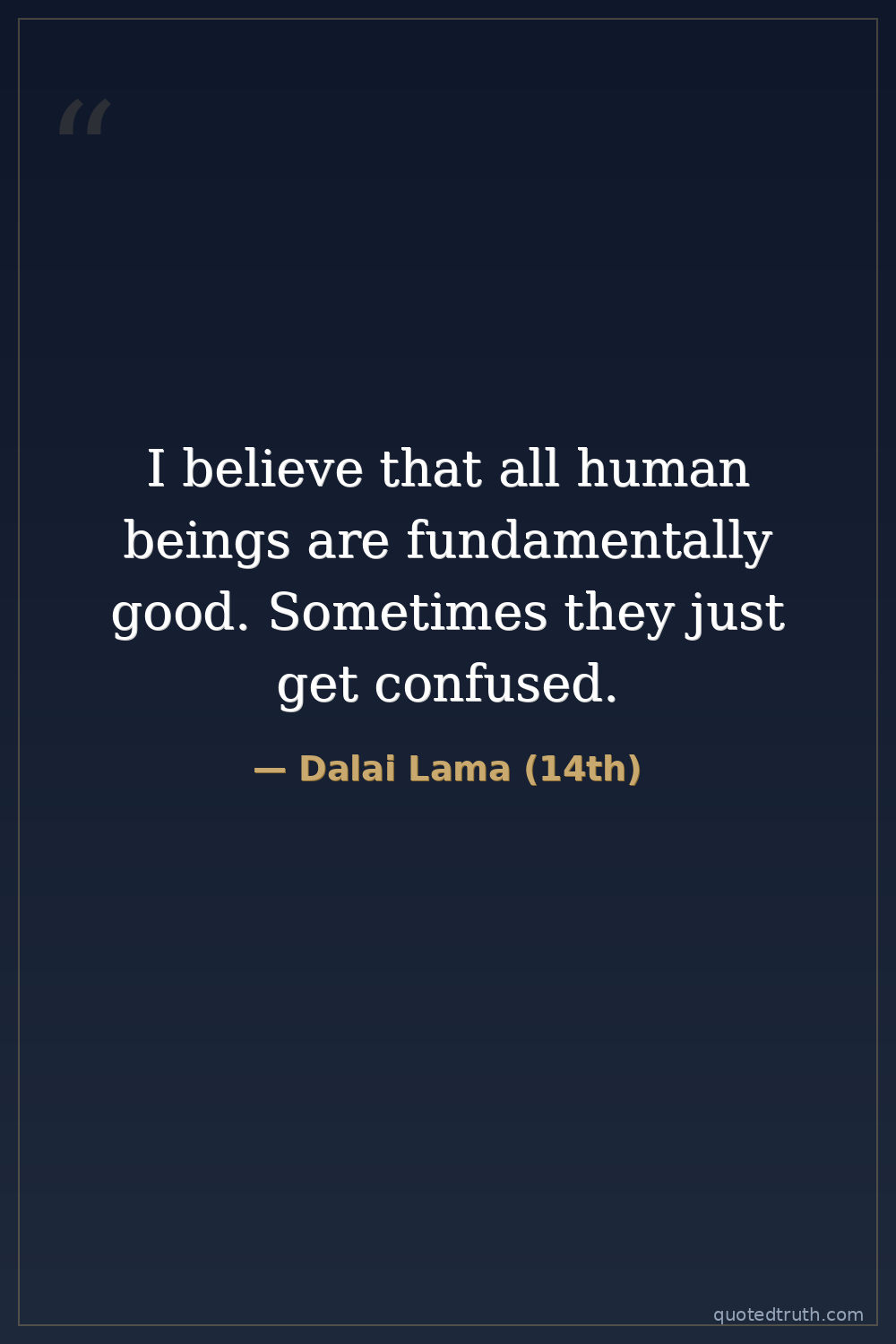
Dalai Lama (14th) — "I believe that all human beings are fundamentally good. Sometimes they just get …"
I believe that all human beings are fundamentally good. Sometimes they just get confused.
I believe that all human beings are fundamentally good. Sometimes they just get confused.
Click any product to generate a realistic preview. Up to 3 at a time.
* Initial load can take up to 90 seconds — revising the preview in another color is nearly instant.
"The more you are motivated by love, the more fearless and free your action will be."
"I am not a politician. I am a spiritual leader. My main concern is the well-being of humanity."
"Old people, they are not so much. Young people, many. So young people's minds are very important."
"Sometimes I think I am a little bit lazy."
"If you want others to be happy, practice compassion. If you want to be happy, practice compassion."
Found in 1 providers: grok
1 source checked
People are inherently good at their core — not sinful, broken, or malicious by nature. When they cause harm, act selfishly, or treat others badly, it stems from confusion, fear, or misunderstanding rather than a corrupt inner self. This reframes wrongdoing as a correctable error in thinking rather than a permanent character flaw, making compassion and understanding the logical response instead of condemnation or punishment.
Tenzin Gyatso has lived in exile since China's 1959 occupation of Tibet, witnessing destruction of monasteries, imprisonment of monks, and erasure of Tibetan culture. Yet he has consistently refused to condemn the Chinese people, only their government's actions. His Nobel Peace Prize in 1989 recognized precisely this — decades of nonviolent resistance rooted in the Buddhist conviction that even oppressors act from ignorance, not irredeemable evil.
Born into a century scarred by genocide, Cold War proxy wars, and systemic political violence, the 14th Dalai Lama articulated this belief while the world debated whether humans are fundamentally tribal and destructive. As behavioral science increasingly documented cognitive bias and in-group cruelty, his insistence on innate goodness became a deliberate philosophical counterweight, shaping interfaith dialogue and nonviolence movements from South Africa to Northern Ireland.
AI-generated insights based on extensive research and information for context. Factual errors? Email [email protected].
Your cart is empty