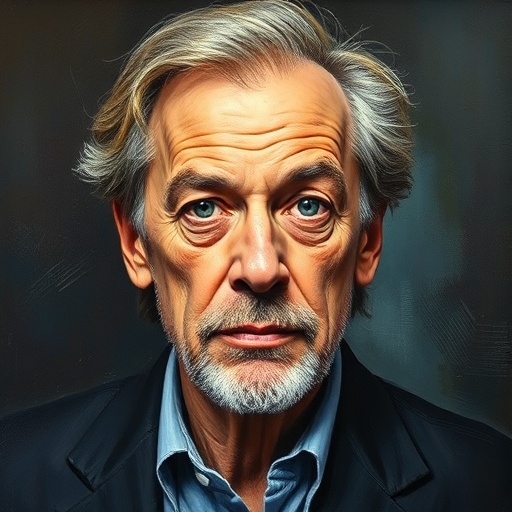
Richard Feynman — "I don't have to be a gentleman."
I don't have to be a gentleman.
I don't have to be a gentleman.
Click any product to generate a realistic preview. Up to 3 at a time.
* Initial load can take up to 90 seconds — revising the preview in another color is nearly instant.
"If you want to master something, teach it."
"I'm a great believer in the idea that if you don't understand something, you should try to explain it to someone else."
"I would like to add a third possibility, that it might be that, when we die, we just die, and that's the end of it."
"The thing about science is that it's all about discovery. It's all about trying to find out what's going on."
"I can live with doubt and uncertainty and not knowing. I think it's much more interesting to live not knowing than to have answers which might be wrong."
American theoretical physicist who shared the 1965 Nobel for QED, developed Feynman diagrams, and wrote the Feynman Lectures on Physics. Closely associated with Julian Schwinger (co-Nobelist for QED) and Murray Gell-Mann (Caltech rival and Eightfold-Way physicist). For an intellectual contrast, see Deepak Chopra, physician and quantum-mysticism author — Feynman's Caltech 'cargo cult science' commencement address is the precise template for what he saw as misuse of physics terminology — Chopra-style appropriation of quantum vocabulary for metaphysical claims is the canonical example of what Feynman called 'fooling yourself'.
Found in 1 providers: grok
1 source checked
You don't owe anyone polished behavior, social performance, or deference simply because convention demands it. Real honesty sometimes requires bluntness, rule-breaking, and refusing to play the social game. Being direct, curious, and authentic matters more than maintaining appearances or meeting expectations of respectability. Sometimes the truth and genuine engagement require shedding the costume of politeness entirely.
Feynman was legendarily irreverent — he picked locks at Los Alamos, frequented strip clubs while doing physics, argued loudly with Nobel laureates, and refused honorary degrees. He despised pretension and institutional authority. This quote captures his deliberate rejection of the stuffed-shirt academic persona expected of a Nobel laureate, physicist, and public intellectual. Being ungentlemanly was, for him, intellectual honesty in action.
Mid-to-late 20th century academic culture prized formal decorum, especially among elite scientists. The Cold War elevated physicists to near-sacred status, creating enormous pressure to perform respectability. Feynman's era saw the birth of counterculture challenging rigid social codes. His deliberate flouting of gentlemanly norms resonated as a broader rebellion against the conformist, suit-and-tie culture that dominated postwar American institutions.
AI-generated insights based on extensive research and information for context. Factual errors? Email [email protected].
Your cart is empty