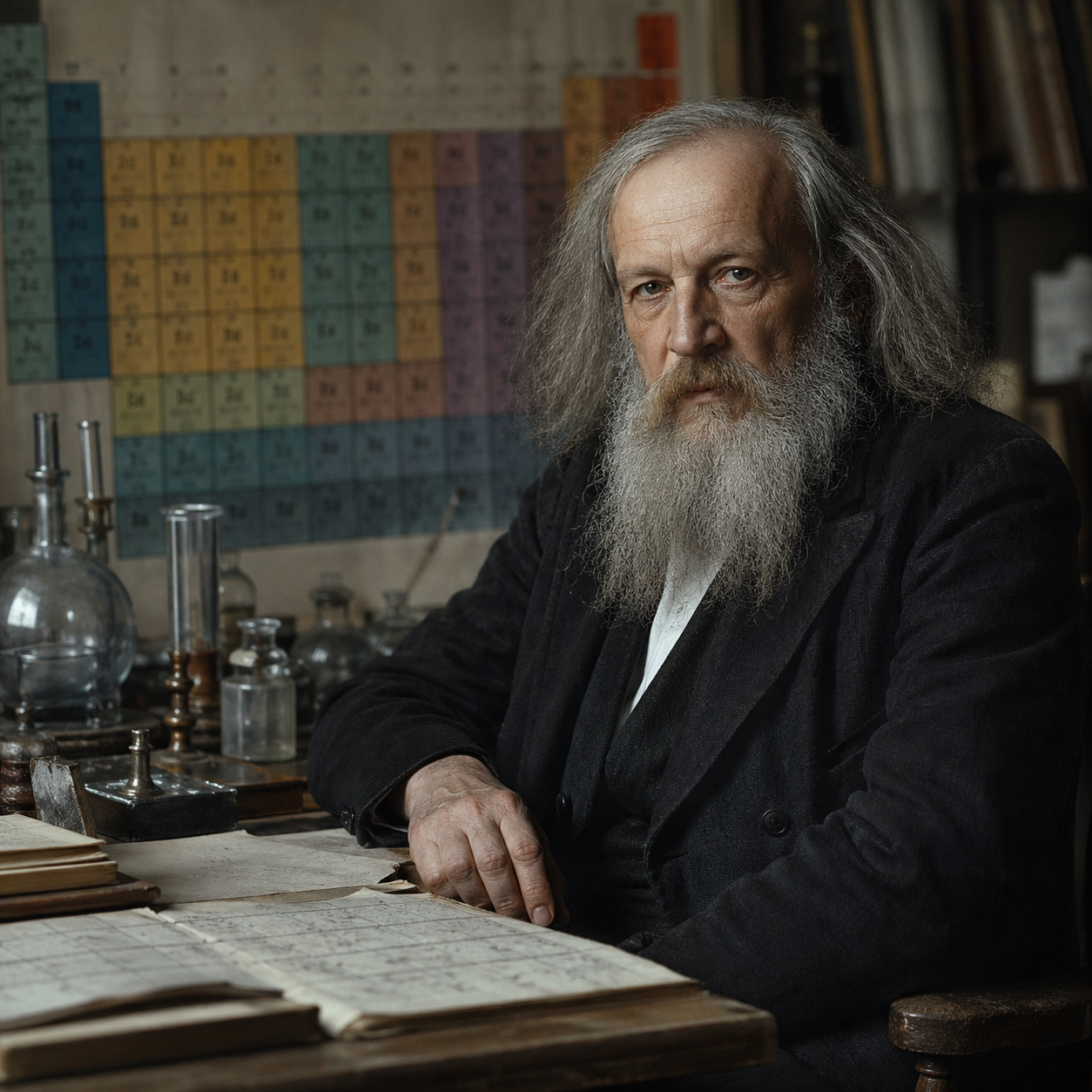
Dmitri Mendeleev — "I have achieved neither fame nor wealth, but I have learned to know the human he…"
I have achieved neither fame nor wealth, but I have learned to know the human heart.
I have achieved neither fame nor wealth, but I have learned to know the human heart.
Click any product to generate a realistic preview. Up to 3 at a time.
* Initial load can take up to 90 seconds — revising the preview in another color is nearly instant.
"The progress of science is a series of corrections."
"I consider it my duty to warn against this tendency to make a science of alchemy."
"Why do they [Americans] quarrel, why do they hate Negroes, Indians, even Germans, why do they not have science and poetry commensurate with themselves, why are there so many frauds and so much nonsens…"
"he reproached the modern scientific thought because it “got entangled in ions and electrons”."
"It is the duty of the chemist to teach the world how to use the elements wisely."
Found in 1 providers: deepseek
1 source checked
The speaker admits that despite a long life of work, they did not win public glory or financial success. What they did gain, through experience and observation, was a deep understanding of people, their motives, emotions, and contradictions. The statement reframes a conventional sense of failure as a quieter, more meaningful reward: insight into human nature matters more than recognition or money.
Mendeleev's phrasing fits a man who faced setbacks alongside achievement. He was denied the 1906 Nobel Prize in Chemistry by one vote, endured a scandalous remarriage that barred him from the Russian Academy, and held modest government posts weighing currency and tariffs. Though the periodic table brought him lasting scientific stature, he never grew rich, and decades spent mentoring students and negotiating bureaucracy taught him how people actually behave.
Mendeleev lived through late Imperial Russia, from serf emancipation in 1861 to the 1905 Revolution. Science was rapidly professionalizing, yet Russian academia remained entangled with church authority, tsarist censorship, and aristocratic patronage. Reputations rose and fell on court politics, not merit. Industrialization was transforming oil, agriculture, and currency, all fields he advised on, giving him close contact with ministers, peasants, and workers and exposing the gap between official honors and genuine human worth.
AI-generated insights based on extensive research and information for context. Factual errors? Email [email protected].
Your cart is empty