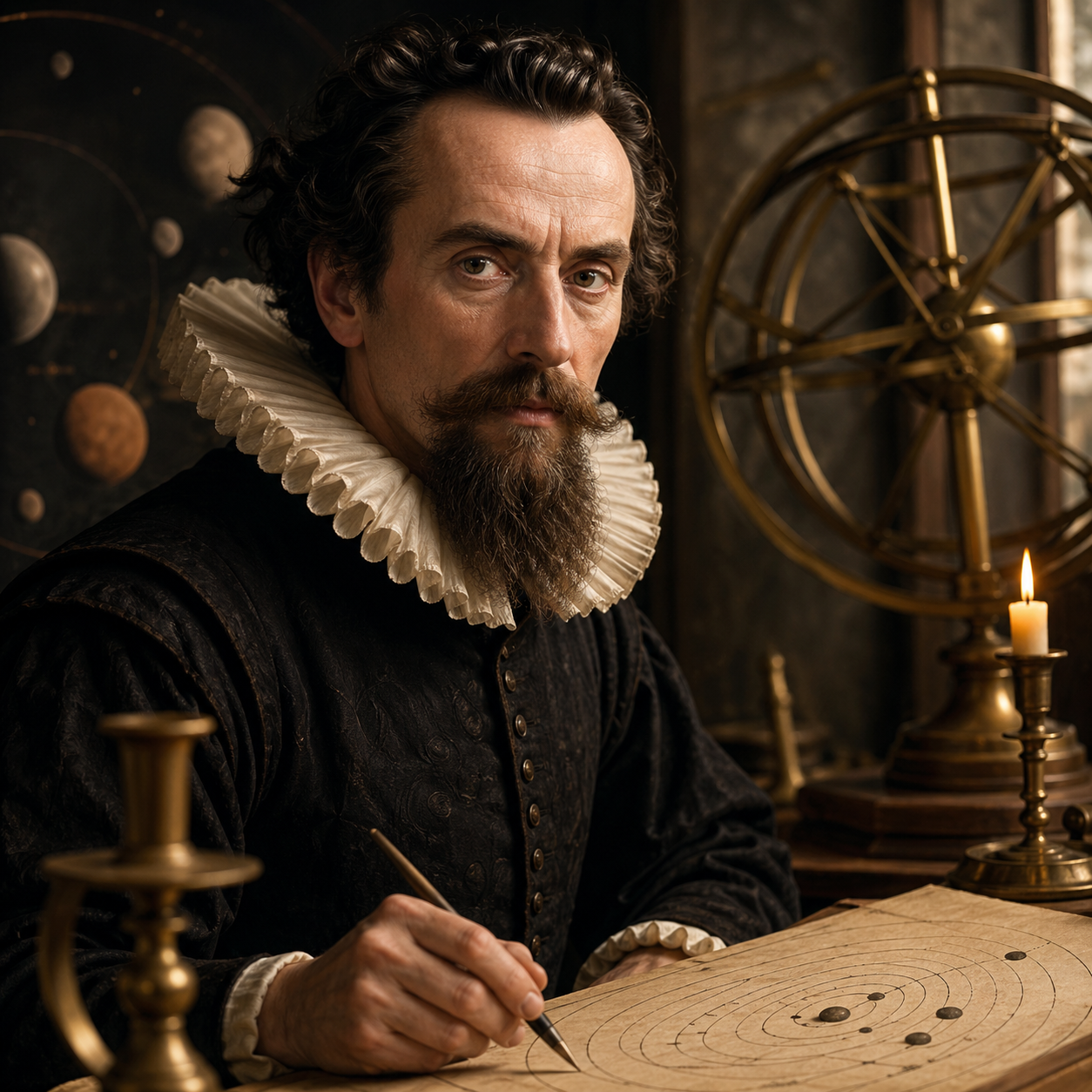
Johannes Kepler — "I have been a fool, but I have learned from my folly."
I have been a fool, but I have learned from my folly.
I have been a fool, but I have learned from my folly.
Click any product to generate a realistic preview. Up to 3 at a time.
* Initial load can take up to 90 seconds — revising the preview in another color is nearly instant.
"I am a Christian. I believe in the Trinity."
"I confess that I have often erred in my youth, but I have always corrected my errors."
"Repudiating the sensible world, which he neither sees himself nor believes from those who have, the Peripatetic joins combat by childish quibbling in a world on paper, and denies the Sun shines becaus…"
"I have been a man of faith, and I have trusted in God's plan."
"I have often been accused of being a dreamer."
Found in 1 providers: grok
1 source checked
Admitting you got something wrong is not weakness but progress. The speaker acknowledges past mistakes openly and frames them as the raw material of growth. Rather than hiding errors or defending a failed position, they treat the experience of being wrong as a teacher. Wisdom, in this view, is not avoiding foolishness but recognizing it after the fact and extracting the lesson.
Kepler repeatedly revised his own work, abandoning the circular orbits he had defended for years once Tycho Brahe's Mars data refused to fit. He publicly corrected his earlier Platonic-solids cosmology and rewrote conclusions as evidence demanded. A devout Lutheran who wrestled with astrology, mysticism, and rigorous math, he treated error as a step toward truth, a stance that produced his three laws of planetary motion.
Kepler worked during the early 1600s, when the Copernican model was still contested and the Catholic Church was moving against Galileo. Natural philosophers were expected to defend inherited Aristotelian systems, not discard their own theories. The Thirty Years' War displaced Kepler repeatedly, and his mother was tried for witchcraft. In that climate, publicly admitting intellectual folly and revising cherished ideas was both scientifically radical and personally risky.
AI-generated insights based on extensive research and information for context. Factual errors? Email [email protected].
Your cart is empty