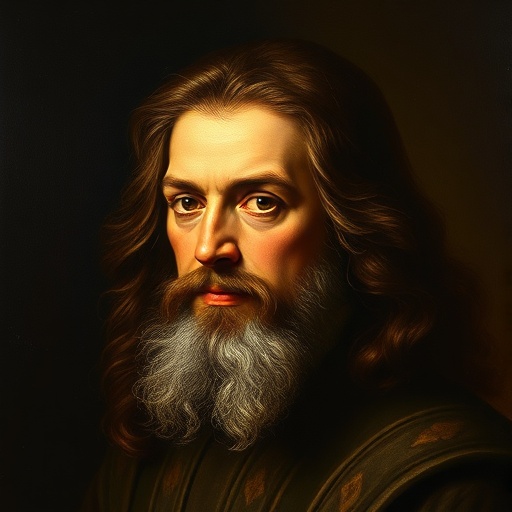
Leonardo da Vinci — "I have offended God and mankind because my work didn't reach the quality it shou…"
I have offended God and mankind because my work didn't reach the quality it should have.
I have offended God and mankind because my work didn't reach the quality it should have.
Click any product to generate a realistic preview. Up to 3 at a time.
* Initial load can take up to 90 seconds — revising the preview in another color is nearly instant.
"The human foot is a masterpiece of engineering and a work of art."
"Among the great things which are to be found among us, the Being of Nothingness is the greatest."
"It is better to imitate ancient than modern work."
"Where there is shouting, there is no true knowledge."
"Iron rusts from disuse; stagnant water loses its purity and in cold weather becomes frozen; even so does inaction sap the vigor of the mind."
Found in 1 providers: deepseek
1 source checked
Profound regret over the gap between potential and actual achievement. The speaker feels they have failed both God and humanity by not fully realizing their capabilities. It captures the anguish of someone haunted by impossibly high self-standards — not performative humility, but genuine grief over work left incomplete and a lifelong vision that always exceeded what hands, time, and circumstance could ever deliver.
Da Vinci left thousands of notebook pages unpublished and dozens of paintings unfinished — the Adoration of the Magi, Saint Jerome, Leda and the Swan. He was notorious for abandoning commissions mid-project. His journals reveal inventions centuries ahead of their time: flying machines, anatomical studies — never completed or shared. This deathbed lament reflects his lifelong torment: boundless curiosity constantly outpacing what one human lifetime could accomplish.
The Italian Renaissance prized human achievement as a form of divine expression — the uomo universale, the complete man mastering art, science, and philosophy. Patrons like the Sforzas and Francis I funded artists expecting masterworks. The Church taught that God-given talent carried moral obligation; squandering it was sinful. Da Vinci died in Amboise, France, in 1519, amid a Europe reshaping itself through humanism, exploration, and the opening tremors of the Reformation.
AI-generated insights based on extensive research and information for context. Factual errors? Email [email protected].
Your cart is empty