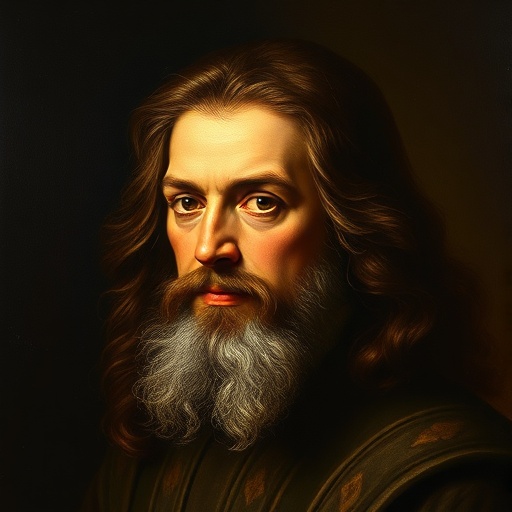
Leonardo da Vinci — "The greatest deception men suffer is from their own opinions."
The greatest deception men suffer is from their own opinions.
The greatest deception men suffer is from their own opinions.
Click any product to generate a realistic preview. Up to 3 at a time.
* Initial load can take up to 90 seconds — revising the preview in another color is nearly instant.
"The human foot is a masterpiece of engineering and a work of art."
"I have been impressed with the urgency of doing. Knowing is not enough; we must apply. Being willing is not enough; we must do."
"The noblest pleasure is the joy of understanding."
"Water is the driving force of all nature."
"Oh, how many times have I been deceived by my own opinions!"
Found in 2 providers: grok,gemini
2 sources checked
People are most reliably deceived not by con artists or enemies, but by their own unchecked assumptions and biases. When we mistake opinion for objective truth, we stop perceiving reality clearly and instead filter everything through what we already believe. This self-deception is uniquely dangerous because we cannot guard against a lie we don't recognize as one — we have already accepted it as fact.
Leonardo built his entire intellectual identity on direct observation over received dogma — his guiding principle was essentially 'know how to see.' He repeatedly challenged Aristotelian orthodoxy and corrected ancient anatomists like Galen through dissection. His notebooks show relentless self-revision. As a self-taught polymath crossing art, anatomy, engineering, and optics, he witnessed daily how scholars defending inherited opinions blocked the empirical discoveries he was actively making.
Renaissance Italy was rediscovering classical antiquity but often treated ancient authorities like Aristotle and Galen as infallible. Scholastic tradition calcified these 1,500-year-old opinions into doctrine that could not be questioned. Meanwhile, the printing press was accelerating the spread of both knowledge and unfounded belief. Leonardo lived precisely at the fault line where reverence for inherited opinion clashed with a new commitment to direct, empirical investigation of the natural world.
AI-generated insights based on extensive research and information for context. Factual errors? Email [email protected].
Your cart is empty