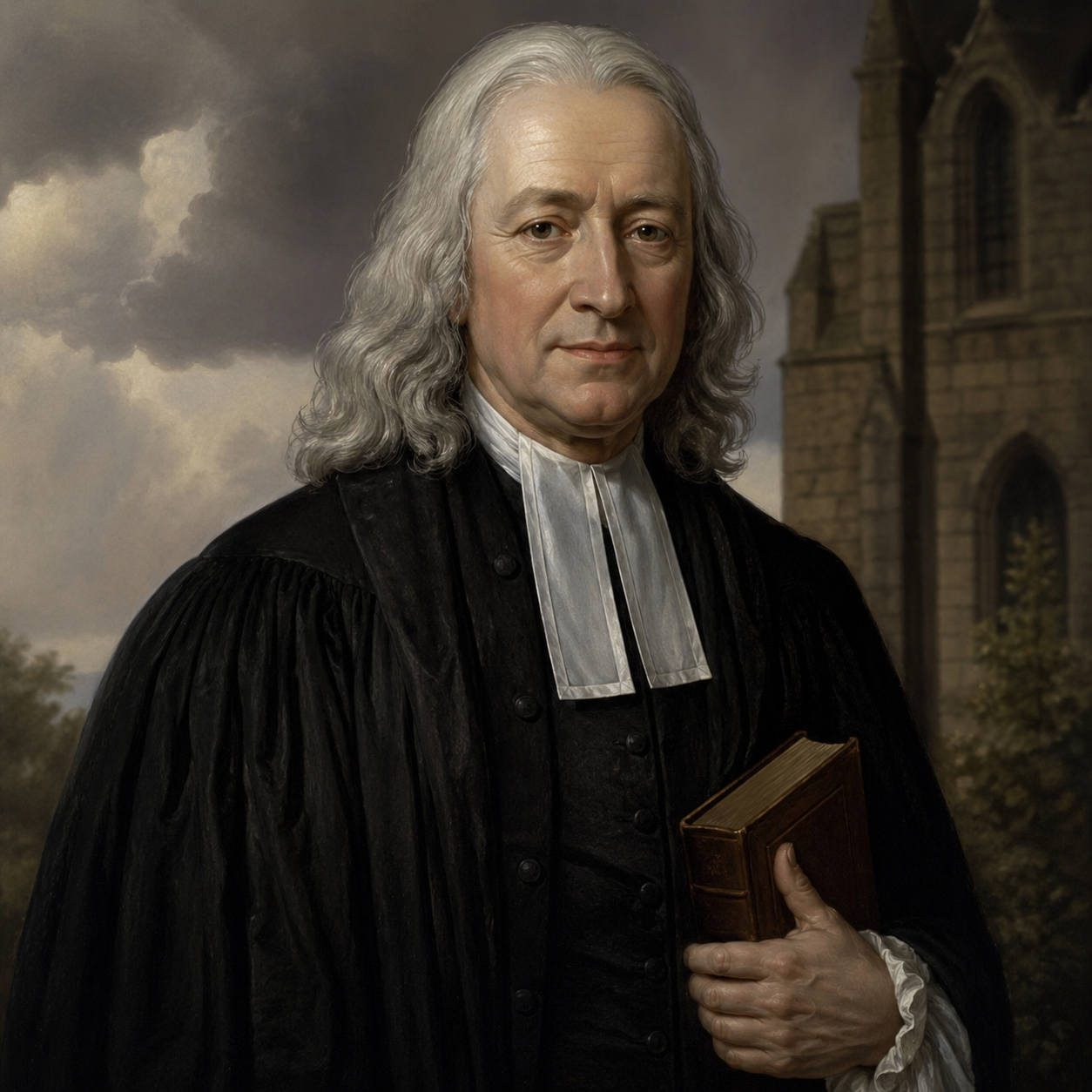
John Wesley — "I have often thought, that if I were to choose a companion to travel with, it sh…"
I have often thought, that if I were to choose a companion to travel with, it should be one that would talk little.
I have often thought, that if I were to choose a companion to travel with, it should be one that would talk little.
Click any product to generate a realistic preview. Up to 3 at a time.
* Initial load can take up to 90 seconds — revising the preview in another color is nearly instant.
"I do not think that I have ever spent an hour in my life, from the age of twenty-one to this day, without employing it in some useful way."
"I have not much time to spare for trifles."
"The world is my parish."
"When I have money, I get rid of it quickly, lest it find a way into my heart."
"I have often wished, that all the books in the world were burnt, except the Bible."
English Anglican cleric and founder of Methodism, whose open-air preaching and class-meeting structure created the largest 18th-century evangelical revival. Closely associated with Charles Wesley (his hymn-writing brother) and George Whitefield (early co-revivalist, later doctrinal opponent). For an intellectual contrast, see George Whitefield, Calvinist evangelical revivalist — Whitefield's predestinarian Calvinism vs Wesley's free-grace Arminian theology split the early Methodist movement permanently in the 1739-41 break. The founding evangelical Calvinist-Arminian schism — the two parallel evangelical traditions American Christianity descends from.
Found in 1 providers: grok
1 source checked
When choosing a travel companion, Wesley would prefer someone quiet over someone talkative. He valued silence and inner reflection over constant conversation, finding that a person who speaks little creates better conditions for thought, prayer, and observation during long journeys together.
Wesley traveled roughly 250,000 miles on horseback across Britain preaching, often journaling and composing sermons mentally during rides. As a disciplined Methodist who structured every hour for spiritual purpose, constant chatter would have disrupted prayer, sermon preparation, and the contemplative practice central to his faith and ministry.
In 18th-century Britain, travel was arduous and weeks-long, largely on horseback or by coach. The Enlightenment prized rational self-improvement and disciplined thought, while Wesley's evangelical revival emphasized personal holiness through structured reflection. Long journeys offered rare unstructured time, making a companion's conversational habits a genuine determinant of productive spiritual and intellectual work.
AI-generated insights based on extensive research and information for context. Factual errors? Email [email protected].
Your cart is empty