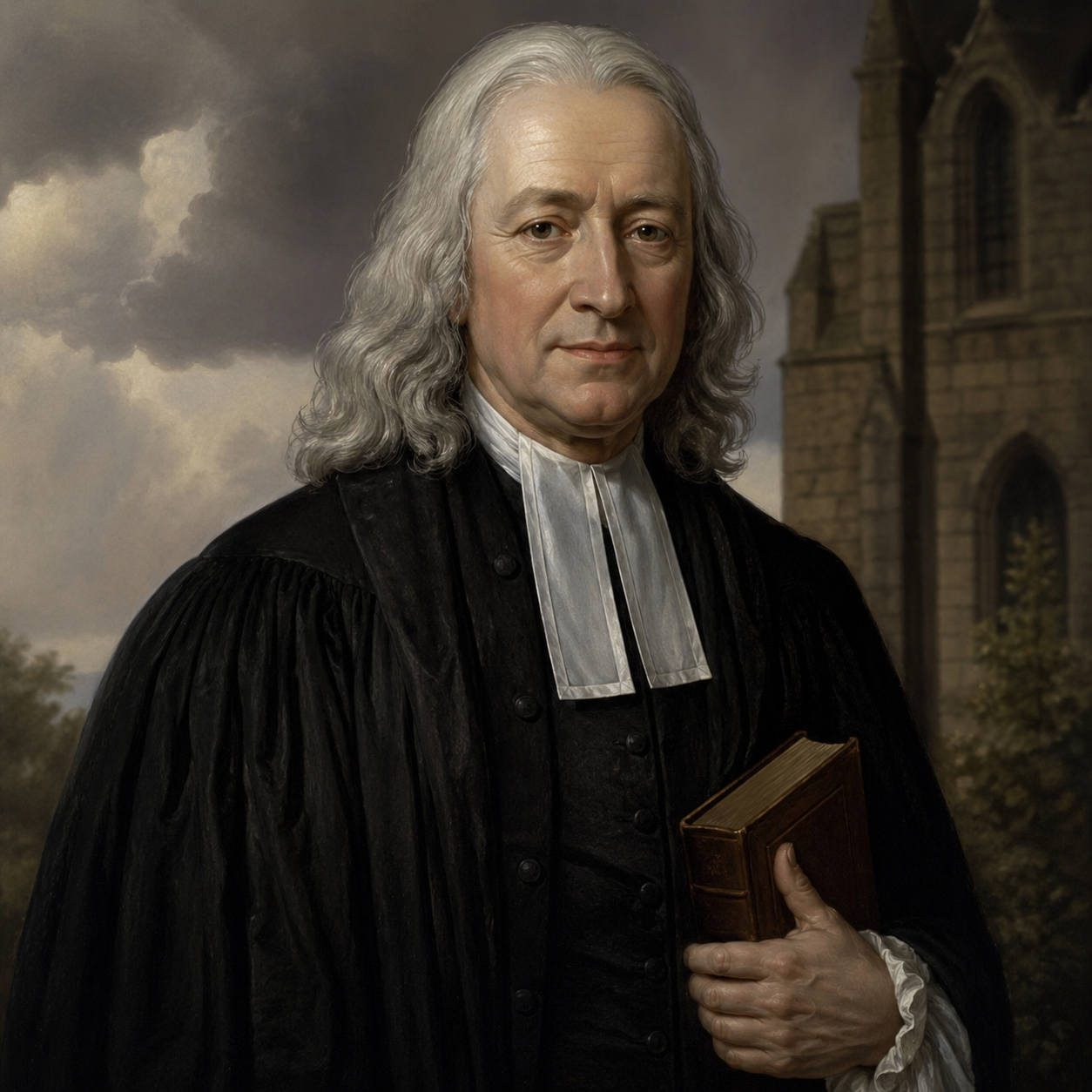
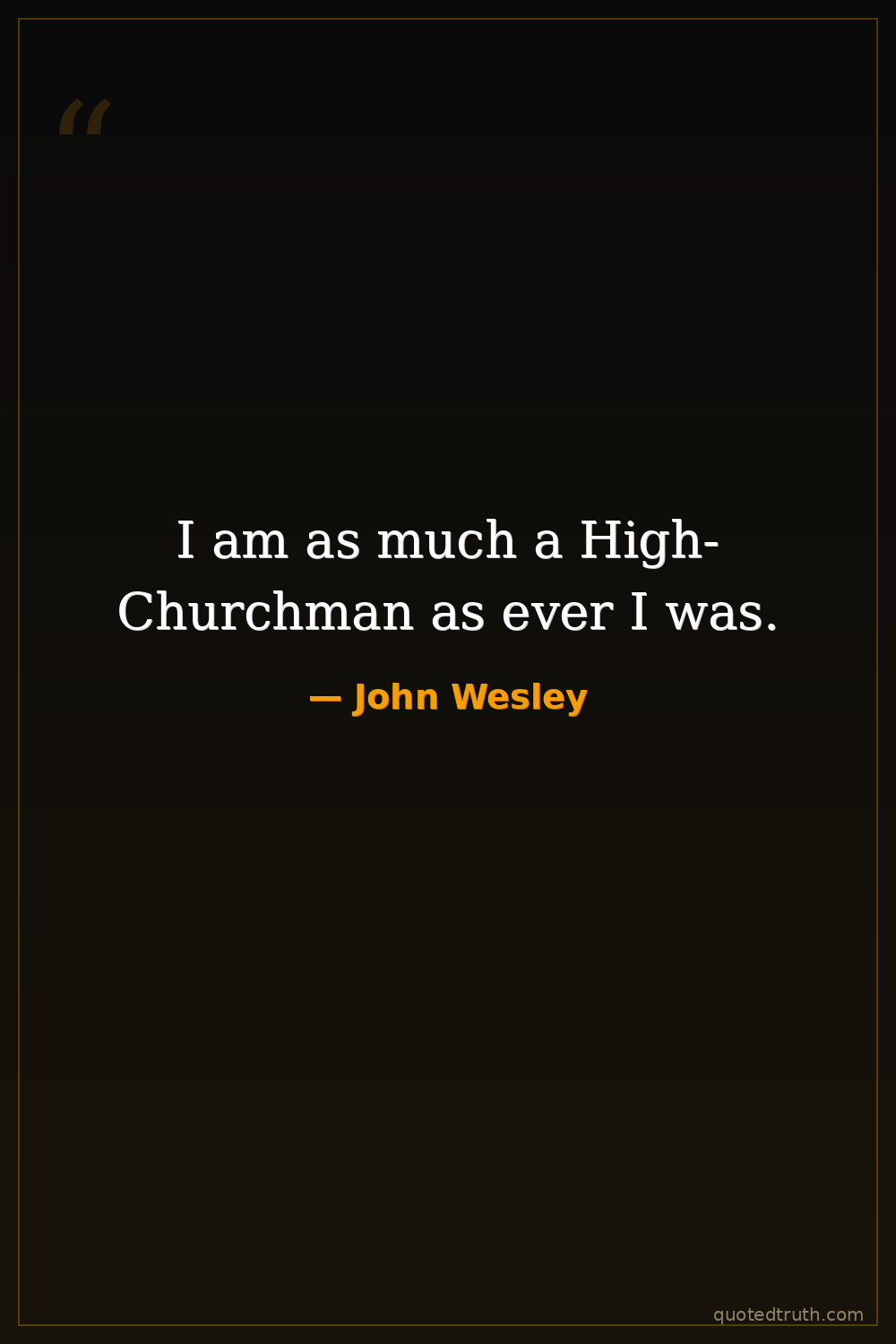
John Wesley — "I am as much a High-Churchman as ever I was."
I am as much a High-Churchman as ever I was.
I am as much a High-Churchman as ever I was.
Click any product to generate a realistic preview. Up to 3 at a time.
* Initial load can take up to 90 seconds — revising the preview in another color is nearly instant.
"I have but one point in view, to promote, as far as I am able, vital, practical religion."
"Cleanliness is indeed next to godliness."
"I set myself on fire, and people come to watch me burn."
"Though I am an old man, I am but a little child; for I am just beginning to learn the alphabet of salvation."
"I have often wondered that any man, who has tasted of the pleasures of retirement, can ever be prevailed upon to quit them."
English Anglican cleric and founder of Methodism, whose open-air preaching and class-meeting structure created the largest 18th-century evangelical revival. Closely associated with Charles Wesley (his hymn-writing brother) and George Whitefield (early co-revivalist, later doctrinal opponent). For an intellectual contrast, see George Whitefield, Calvinist evangelical revivalist — Whitefield's predestinarian Calvinism vs Wesley's free-grace Arminian theology split the early Methodist movement permanently in the 1739-41 break. The founding evangelical Calvinist-Arminian schism — the two parallel evangelical traditions American Christianity descends from.
Found in 1 providers: grok
1 source checked
Wesley insists his commitment to Anglican High-Church principles—sacramental practice, liturgical order, and church authority—remains unchanged despite his controversial field preaching and Methodist societies. He's defending against accusations of abandoning the established church's traditions. The point: innovation in method doesn't equal abandonment of doctrine. You can organize open-air revival meetings and still hold exactly the theological and ecclesial convictions that Anglo-Catholic High-Churchmen prize.
Wesley was an ordained Anglican priest who never formally left the Church of England. Steeped in High-Church tradition at Christ Church Oxford and the Holy Club, he insisted Methodism was a renewal society within Anglicanism, not a breakaway denomination. He administered sacraments, revered liturgy, and believed in apostolic order. This quote captures the painful tension he carried lifelong: a High-Churchman whose movement inevitably became a separate church only after his death.
In 18th-century England, High-Churchmen and evangelical reformers were in open conflict inside the Church of England. Wesley's open-air preaching and lay preachers looked exactly like Dissent to his critics—and Dissenters faced real legal disabilities under the Test and Corporation Acts. Claiming High-Church identity wasn't theological vanity; it was Wesley positioning himself as a reformer working within the establishment rather than a Nonconformist outsider, a distinction that carried serious social and legal weight.
AI-generated insights based on extensive research and information for context. Factual errors? Email [email protected].
Your cart is empty