John Wesley — "I have often thought, that if I were to choose a book to read, it should be the …"
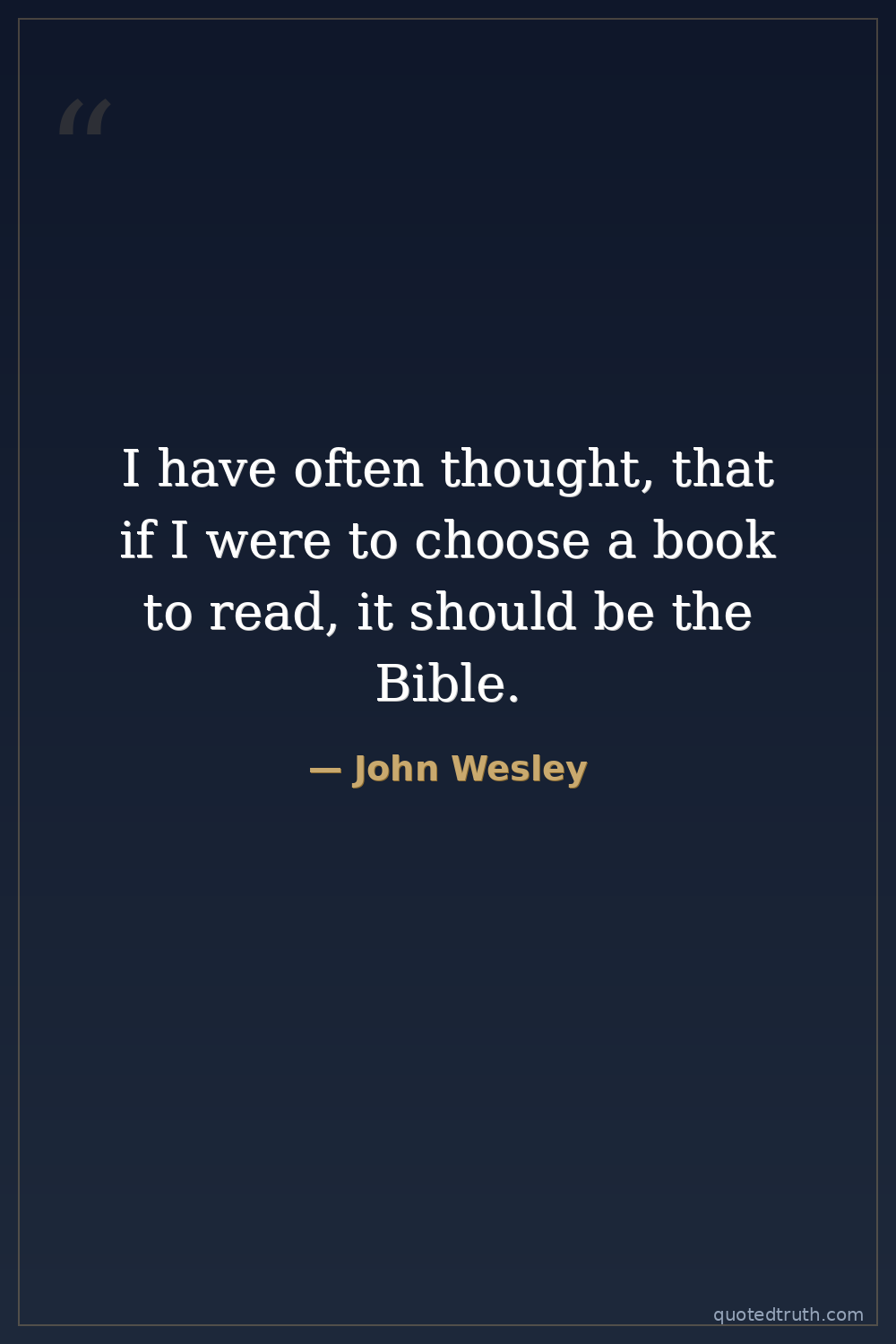
I have often thought, that if I were to choose a book to read, it should be the Bible.
I have often thought, that if I were to choose a book to read, it should be the Bible.
Click any product to generate a realistic preview. Up to 3 at a time.
* Initial load can take up to 90 seconds — revising the preview in another color is nearly instant.
"I continue to dream and pray about a revival of holiness in our day that moves forth in power and reaches to the ends of the earth."
"I was much struck with the spirit of the people, who, though poor, were neat, clean, and cheerful. They seemed to have no care, but to please God."
"Holiness of heart and life is the one great end of all our preaching."
"I was much disgusted at the first sight of the people. They were as rude and ill-favoured as their houses."
"Though I am an old man, I am but a little child; for I am just beginning to learn the alphabet of salvation."
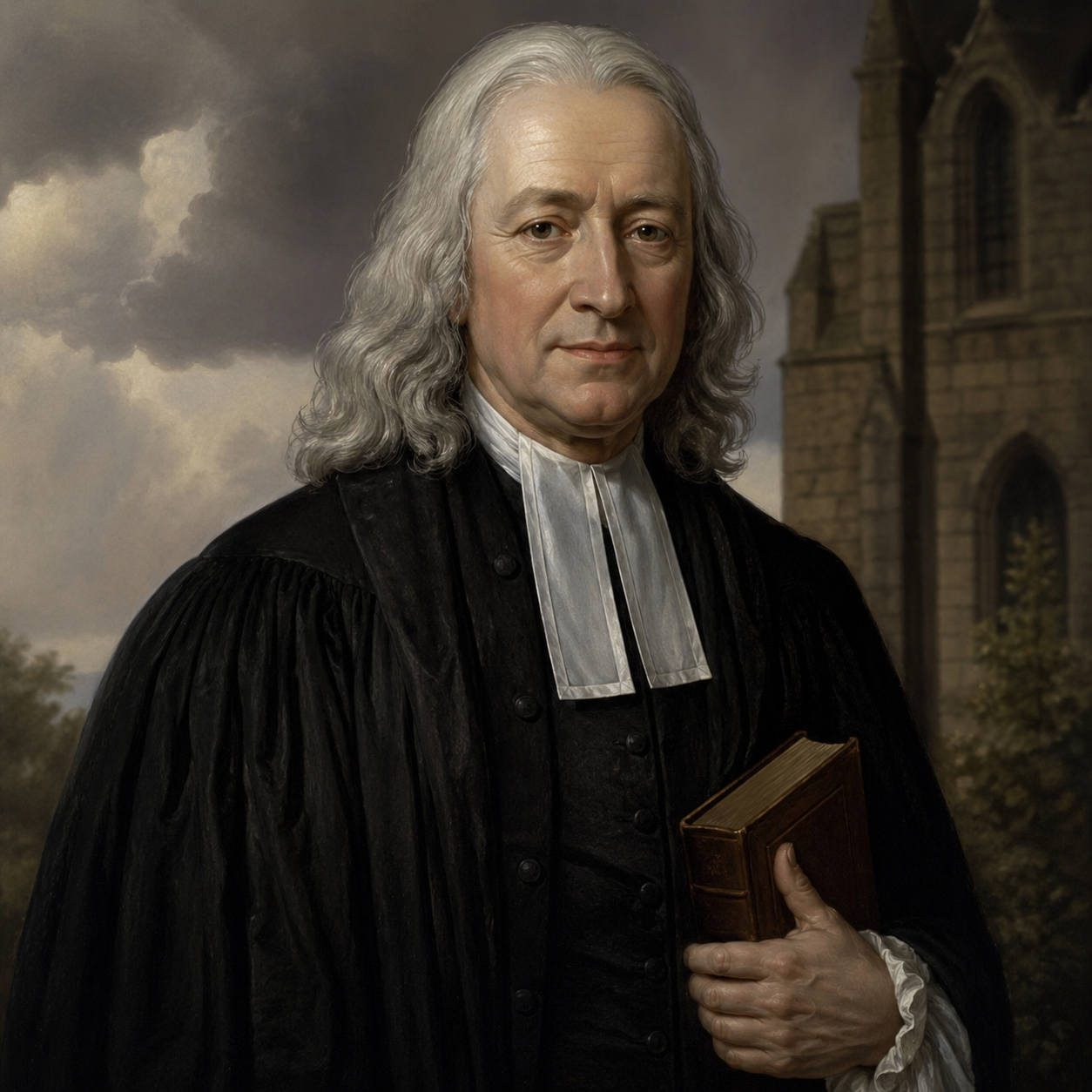
English Anglican cleric and founder of Methodism, whose open-air preaching and class-meeting structure created the largest 18th-century evangelical revival. Closely associated with Charles Wesley (his hymn-writing brother) and George Whitefield (early co-revivalist, later doctrinal opponent). For an intellectual contrast, see George Whitefield, Calvinist evangelical revivalist — Whitefield's predestinarian Calvinism vs Wesley's free-grace Arminian theology split the early Methodist movement permanently in the 1739-41 break. The founding evangelical Calvinist-Arminian schism — the two parallel evangelical traditions American Christianity descends from.
Found in 1 providers: grok
1 source checked
When choosing what to read above all other books, the Bible stands alone as the most valuable. The speaker isn't dismissing other literature but ranking scripture as the single most worthwhile text — containing wisdom, guidance, and depth that no other writing matches. It's a personal declaration of priority: given free choice, this is where attention belongs.
Wesley read the Bible compulsively throughout his life, studying it in Greek and Hebrew, preaching from it daily while riding thousands of miles across Britain. His Oxford 'Holy Club' was mockingly called 'Methodists' partly for their methodical scripture study. His entire theological framework — salvation by grace, sanctification, social justice — derived directly from intensive biblical engagement over seven decades of ministry.
In 18th-century Britain, literacy was expanding rapidly through printing presses, coffeehouses, and circulating libraries. Secular novels, political pamphlets, and Enlightenment philosophy competed for readers' attention as never before. Wesley himself wrote and published prolifically to reach common people. His elevation of the Bible above this flood of new print was a deliberate counter-cultural statement defending scripture's authority during the Age of Reason.
AI-generated insights based on extensive research and information for context. Factual errors? Email [email protected].
Your cart is empty