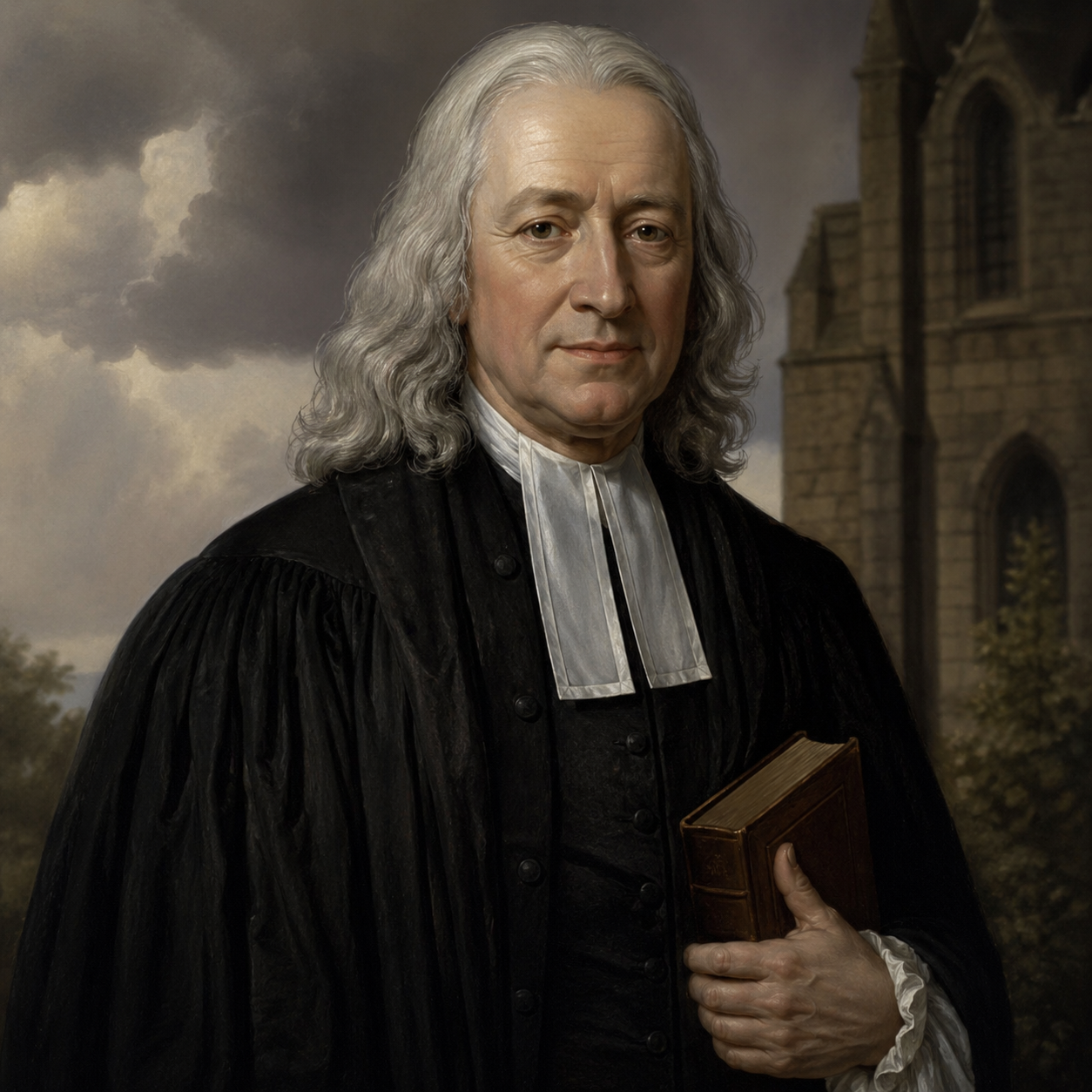
John Wesley — "I have often thought, that if I were to choose a carriage to ride in, it should …"
I have often thought, that if I were to choose a carriage to ride in, it should be a plain one.
I have often thought, that if I were to choose a carriage to ride in, it should be a plain one.
Click any product to generate a realistic preview. Up to 3 at a time.
* Initial load can take up to 90 seconds — revising the preview in another color is nearly instant.
"Give me one hundred preachers who fear nothing but sin, and desire nothing but God, and I care not a straw whether they be clergymen or laymen; such alone will shake the gates of hell and set up the k…"
"I believe that all true Christians are brothers and sisters, whatever their denomination."
"The Gospel of Christ knows of no religion but social; no holiness but social holiness."
"Do all the good you can, by all the means you can, in all the ways you can, in all the places you can, at all the times you can, to all the people you can, as long as ever you can."
"I should be glad if I could spend my whole life in reading and writing."
English Anglican cleric and founder of Methodism, whose open-air preaching and class-meeting structure created the largest 18th-century evangelical revival. Closely associated with Charles Wesley (his hymn-writing brother) and George Whitefield (early co-revivalist, later doctrinal opponent). For an intellectual contrast, see George Whitefield, Calvinist evangelical revivalist — Whitefield's predestinarian Calvinism vs Wesley's free-grace Arminian theology split the early Methodist movement permanently in the 1739-41 break. The founding evangelical Calvinist-Arminian schism — the two parallel evangelical traditions American Christianity descends from.
Found in 1 providers: grok
1 source checked
Wesley is saying he would deliberately choose the simplest, most unadorned carriage rather than an ornate or prestigious one. It's a statement against status-seeking and material display — that what you ride in shouldn't signal your importance. Living plainly, even when you could afford more, reflects genuine values rather than performance. Wealth and comfort are traps; simplicity keeps a person honest about what actually matters.
Wesley earned substantial sums from his published journals, sermons, and hymn collections — yet gave virtually everything away, dying in 1791 with almost nothing. He preached that Christians should earn all they can, save all they can, and give all they can. He traveled 250,000 miles on horseback across Britain, deliberately avoiding the luxury of a private carriage. His coarse clothing and bare lodgings were intentional disciplines, not poverty — they were his theology made visible.
In 18th-century Britain, one's carriage was among the most visible markers of social rank. Elaborate coaches with gilded crests and velvet interiors signaled aristocratic standing, while the rising merchant class used increasingly ornate vehicles to broadcast new wealth. Wesley's Methodist movement explicitly pushed back against this culture — he preached in fields to miners, weavers, and the urban poor. Choosing a plain carriage wasn't modesty; it was a political act against a class system the established Church quietly endorsed.
AI-generated insights based on extensive research and information for context. Factual errors? Email [email protected].
Your cart is empty